Canidae · DOG
Lhasa Apso
🌟 You may have met one
In Tibetan the breed is called Abso Seng Kye - Bark Lion Sentinel Dog. In 1933, the 13th Dalai Lama gifted a pair to Colonel Charles Suydam Cutting, whose Hamilton Farm Kennel in New Jersey became the fountainhead of every North American pedigree.
Overview
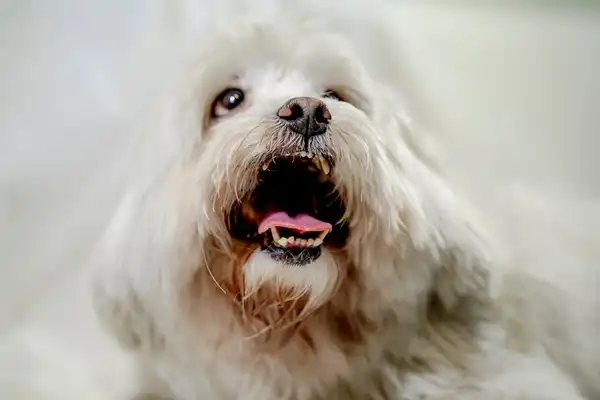
The Lhasa Apso (拉萨犬/西藏拉萨阿普索) is a small dog breed weighing 5.4–8.2 kg with a 12–15-year lifespan. An ancient Tibetan sentinel with more than 1,000 years of monastery history. AKC-registered since 1935 and grouped as Non-Sporting from 1959, standing 25-28 cm and cloaked in a heavy double coat that once served as high-altitude insulation. Small in body, big in attitude - historically the inside guardian of Buddhist monasteries, alerting after the Tibetan Mastiff at the gate. Averages 12-15 years and thrives in apartments, provided owners handle a serious grooming schedule and lead with quiet consistency.
Feeding
Feed a high-protein adult formula in two daily meals; wipe the muzzle after each meal because the beard traps food. Weight creeps up under all that coat, so measure by weight, not by eye.
Exercise
30-45 minutes of walking plus indoor sniff and fetch is enough. Not built for jogs. Above 25 C, walk early or late - the Tibetan altitude coat overheats fast.
Grooming
One of the highest-maintenance long coats. Full coat requires daily line-brushing; the puppy cut needs a professional trim every 6-8 weeks. Trim around the eyes every 2-3 weeks to prevent corneal ulceration. Bathe every 3-4 weeks with thorough drying to avoid sebaceous adenitis.
Health
Screen for familial renal dysplasia (FRD), progressive retinal atrophy (PRA-prcd), keratoconjunctivitis sicca, cherry eye, patellar luxation, and sebaceous adenitis. Older dogs commonly develop periodontal disease and mitral valve degeneration.
Gallery
A closer look at the Lhasa Apso
From origins and personality to daily care and health — helping you judge whether this little companion is really the one for you.
Origin & history
Origin & history
The Lhasa Apso's line traces back more than two thousand years on the Tibetan plateau, making it one of the oldest recognized dog breeds on earth. In the 2004 Science paper by Elaine Ostrander's group at UCLA on the genetic structure of purebred dogs, the Lhasa Apso was placed among the 14 most ancient basal breeds, alongside the Chow Chow, Shar-Pei, Tibetan Mastiff, and Afghan Hound. [1][2][5]
Inside Tibet the Lhasa had two clear roles. First, as an inside sentinel in the Potala winter palace, the Norbulingka summer palace, and Buddhist monasteries - barking to alert the humans after the Tibetan Mastiff at the outer gate had already engaged. Second, as a personal companion to lamas and aristocrats. Its Tibetan name, Abso Seng Kye, means 'Bark Lion Sentinel Dog', referencing the mythical snow lion and marking the breed as a sacred talisman - never sold, only given as a religious or diplomatic gift. [3][4][5]
The breed's Western debut is credited to Colonel Charles Suydam Cutting and his wife Mary. Two Tibetan expeditions during the early 1930s, and a personal friendship with the 13th Dalai Lama Thubten Gyatso, produced a gift pair (Le and Ming) around 1933. Their Hamilton Farm Kennel in Gladstone, New Jersey became the foundation of North American Lhasa Apso lines. [3][5]
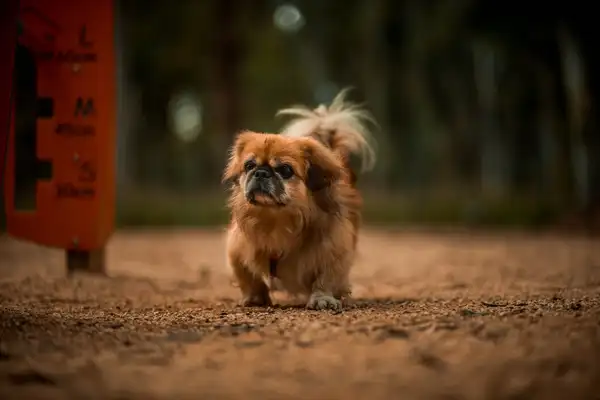
The AKC first registered the breed as the Lhasa Terrier in 1935, then renamed and reclassified it in 1959 as the Lhasa Apso in the Non-Sporting Group - it is not a real terrier. [1] Through the 1970s, Westerners commonly confused it with the Shih Tzu; in fact the Shih Tzu is a downstream Ming/Qing dynasty cross of Tibetan Lhasa Apsos with Pekingese and Pug in the imperial Beijing court - the two are cousins, not the same breed. [3][5]
Looks & breed standard
Looks & breed standard
The current AKC standard (approved 1978, revised 2011) defines the Lhasa Apso as a compact, well-built small dog longer than tall, cloaked in a heavy double coat. Ideal male height is 10.75 in (about 27 cm), females slightly less; typical weight is 5.4-8.2 kg. The length-to-height ratio is roughly 5:4 - the mildly elongated frame is exactly what let it slip along monastery corridors. [6]
Head: a moderate skull, medium stop, and a muzzle about one-third of the total head length - AKC explicitly warns against breeding a shorter face, which pushes the dog toward the Shih Tzu type. Bite is a level or reverse scissors, one of the breed's identifiers. [6]
Eyes: dark brown ovals of medium size, forward-set, never bulging or showing sclera. Ears: pendant, heavily feathered. Tail: carried in a screw over the back, a kink at the tip is accepted, not a fault. [6]
Coat: outer coat straight, hard, dense, heavy - never woolly, never silky. Length reaches the ground and covers the eyes; undercoat is medium. Any color is acceptable - golden, sandy, honey, dark grizzle, smoke, parti-color, black, white, brown - and the classic monastery color is sooty gold with black tips on ears and beard. [6] Movement is free, jaunty, and springy with strong hindquarter drive - the same engine that powered generations of stone-step Tibetan life. [6]
Personality in depth
Personality in depth
The AKC picks four adjectives: confident, comical, smart, regal. The Lhasa's self-image is wildly disproportionate to its size - a 6 kg dog that behaves like a 60 kg guardian. That comes straight from a millennium of monastery sentinel work: a hard line between 'my people' and 'strangers', deep affection for family, prolonged reserve toward visitors. [1][3][5]
It is a classic one-family dog. Loyalty runs deep, but 'warming up' to guests takes far longer than an outgoing Golden or Lab - the first meeting may end with the Lhasa observing from a corner, occasionally announcing its opinion. Force training does not work. The Lhasa refuses commands issued from an unfriendly source, and punishment-based methods can trigger resource-guarding bites. [1][4][5]
Intelligence sits above average, but Coren's Working and Obedience ranking puts it near the bottom - not because it fails to learn, but because once it learns it decides whether to comply. Classic ancient-breed independence. Training rules: short, positive, embedded in daily life, and consistent across household members. Five-to-fifteen minute high-frequency sessions beat long drills every time. [3][5]
With children, boundaries are sharp: fine with respectful kids over six, not for toddlers. When yanked by the coat or robbed of a toy, the Lhasa will growl and quick-nip as a warning. Same-sex dog friction happens; opposite-sex pairs are calmer. Cats can cohabit, but early socialization matters. [1][4]
The overall tone throughout life is 'quiet but not boring': meditative in stillness, sudden bursts of chase or roll on the couch. Owners commonly describe a dual character - regal and clownish - and it is exactly that mix that keeps the breed devoted admirers. [1][3]
Daily care
Daily care
Exercise: The Lhasa is a low-to-moderate exercise breed - AKC labels it Exercise Level 2 out of 5. Two daily walks totaling 30-45 minutes plus indoor fetch or nose games is plenty; it is not a running or biking companion. Cold-hardy but heat-sensitive - the plateau coat overheats above 25 C, so walk in the early morning or late evening in summer. [1][4][5]
Grooming: The single largest ownership cost. A full coat requires daily line-brushing with a pin brush and comb, focusing on ears, armpits, inner thighs, and groin - four spots that mat first. Non-show homes overwhelmingly opt for a puppy cut - keeping 3-5 cm length and trimming every 6-8 weeks at 30-50 USD per session. Face trims around the eyes every 2-3 weeks prevent hair from touching the cornea. [1][3][5]
Bathing: Every 3-4 weeks with a hypoallergenic shampoo. Rinse thoroughly, especially the beard, tail base, and inner legs; dry the coat all the way to the skin - residual dampness is the classic trigger for sebaceous adenitis and yeast. Wipe the eyes daily with an alcohol-free cleaner to prevent tear stain oxidation. [3]
Diet: The Lhasa gains weight easily and the coat masks it. Owners should manually feel ribs every 2-4 weeks. Feed a 26-30% protein, 12-14% fat adult formula at 1-1.5% of body weight per day, split into two meals. Skip long bones - beard hair tangles in food. Wipe muzzle and beard after every meal. [1][5]
Environment: Great for apartments; content in cold weather, air-conditioned in summer. Noise reactivity is moderate - short alert barks at doorbells and footsteps, not endless hysteria; a natural doorbell dog. [3][5] Training: complete socialization by 5 months (people, dogs, environments) to reduce adult reserve. Housetraining is slower than average and can regress in cold, wet weather - use fixed spots and positive reinforcement. [1]
Health & lifespan
Health & lifespan
The Lhasa Apso is famously long-lived. AKC and insurance data both give an average of 12-15 years; 18-plus is common with good care, and a California Lhasa named Adjih was reported at an unofficial 27 years in 2018. [1][3][5] Hardy overall, with a short list of hereditary issues to screen:
1) Familial Renal Dysplasia (FRD) - a Lhasa-specific recessive disorder in which renal cortex development is incomplete. Onset is between 6 months and 3 years, presenting as polyuria, polydipsia, weight loss and azotemia; there is no cure. UPennLDS offers DNA testing, and reputable breeders publish the FRD status of both parents. [7]
2) Progressive Retinal Atrophy (PRA-prcd) - autosomal recessive, adult-onset progressive rod-cone degeneration ending in blindness. DNA test through OptiGen and Wisdom. [7]
3) Keratoconjunctivitis Sicca (dry eye) - insufficient tear production causing chronic corneal irritation. AKC recommends an annual CAER exam. [1][7]
4) Cherry Eye - prolapse of the third eyelid gland, usually before age two. Surgical replacement is required; excision produces lifelong dry eye and should be avoided.
5) Patellar luxation - typical small-dog orthopedic issue; OFA data put Lhasa incidence at 4-6%. The classic sign is a sudden three-legged skip after a jump.
6) Sebaceous Adenitis - a Lhasa-prevalent immune-mediated skin disease showing scaling, alopecia, and odor. Confirmed by biopsy; long-term management includes mineral oil soaks and omega-3 supplements. [3]
7) Older-age issues: periodontal disease (daily brushing plus annual professional cleaning), portosystemic liver shunts, mitral valve degeneration.
The AKC and ALAC recommended breeding screening panel: annual CAER, OFA patellar grade, cardiac auscultation, FRD DNA, PRA-prcd DNA. [1][7]
Common myths & adoption tips
Common myths & adoption tips
Myth 1: Lhasa Apso equals Shih Tzu. - Related but distinct. The Lhasa is Tibetan, longer than tall, longer-muzzled, more independent and vigilant; the Shih Tzu is Beijing-court, shorter and taller-set, shorter-faced, cuddlier. Verify the breeder's pedigree paperwork before you buy. [3][5]
Myth 2: Long-coat Lhasas are impossible for pet owners. - A puppy cut cuts grooming labor by roughly 70%. Six-to-eight-week trims are all that most pet homes need - less work than many long-haired cats. What you cannot skip is weekly line-brushing and daily eye care. [1][5]
Myth 3: The Lhasa is stubborn and untrainable. - It refuses pressure, not learning. Positive reinforcement and consistency work; a certified trainer using clicker methods can install basic sit, down, and recall in 2-3 weeks. [1][3]
Myth 4: Long coat means non-shedding and hypoallergenic. - The Lhasa is double-coated with a spring and autumn undercoat blowout. Long strands tangle instead of falling loose, but no double-coated breed is truly hypoallergenic. Allergic owners should test a live meeting first. [3]
Myth 5: Barky and unfit for apartments. - Alert barking is short and episodic, not continuous hysteria. With early socialization and a 'quiet' cue, apartment adaptation is often better than for the Bichon or Miniature Schnauzer. [1][3]
Adoption tips: The American Lhasa Apso Club and regional Lhasa rescues place many settled adults with confirmed medical histories. When buying a puppy, ask the breeder for both parents' CAER, OFA patellar, FRD DNA, and PRA-prcd DNA reports; visit at 8 weeks and check muzzle length and bite, eye clarity, and coat texture. Avoid marketing labels like 'mini Lhasa' or 'teacup Lhasa' - the AKC standard has no such subtypes. [1][3][7]
References
This is an educational overview — for specific health and care advice, please consult the authoritative sources below and your veterinarian.
- [1] Lhasa Apso - American Kennel Club (AKC)Official
- [2] Parker HG et al., Genetic Structure of the Purebred Domestic Dog, Science, 2004Study
- [3] Lhasa Apso - WikipediaEncyclopedia
- [4] American Lhasa Apso Club (ALAC)Official
- [5] History of the Lhasa Apso - ALAC Historical ArchiveHistory
- [6] AKC Lhasa Apso Breed Standard (Approved 1978)Official
- [7] OFA CHIC Requirements for Lhasa ApsoVeterinary