Canidae · DOG
Miniature Pinscher
🌟 You may have met one
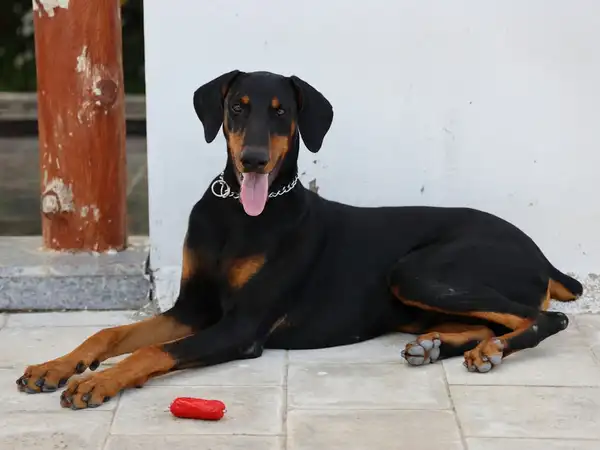
Contrary to popular belief, Min Pins are not miniature Dobermans — they predate Dobermans by at least two centuries. Karl Louis Dobermann himself said in 1890 that he wanted 'a giant terrier that looks like the five-pound Reh Pinscher but fifteen times heavier'.
Overview
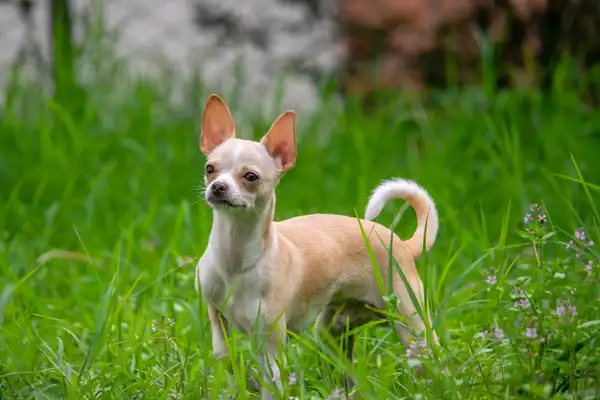
The Miniature Pinscher (迷你笃宾犬 / 鹿犬) is a small dog breed weighing 3.5–5 kg with a 12–16-year lifespan. Not a shrunken Doberman — the Miniature Pinscher is an older, independent German breed originally bred to hunt vermin on farms. Nicknamed the Reh Pinscher for its resemblance to the small red deer of German forests, the breed struts with a distinctive high-stepping hackney gait and is fondly called the King of Toys.
Feeding
Small-breed food, roughly 1/4 to 1/2 cup per day split into two meals; treats must be measured because they gain weight easily.
Exercise
30-60 minutes of walking plus indoor play daily. They are athletic escape artists, so a fence at least 1.2 m tall is a must.
Grooming
Sleek short coat needs only a weekly soft-brush pass; poor cold tolerance means a coat below 5 degrees Celsius.
Health
Watch for Legg-Calve-Perthes disease, patellar luxation, PRA, and inherited epilepsy.
Gallery
A closer look at the Miniature Pinscher
From origins and personality to daily care and health — helping you judge whether this little companion is really the one for you.
Origin & history
Origin & history
The Miniature Pinscher (German: *Zwergpinscher*) is an ancient German breed and emphatically **not** a downsized Doberman. In 1935 AKC Gazette journalist Helen Coster wrote to the German Kennel Club in Stuttgart and received a formal reply stating that "the Zwerg or Dwarf Pinscher is a pure German breed from olden times, with nothing to do with the Doberman or the Manchester Terrier".[1][2]
It is a member of the ancient German Pinscher family — a group that also produced the Standard Schnauzer, the Affenpinscher and other Pinscher-Schnauzer types. Most historians accept H. G. Reinchenbach's 1836 conclusion that the breed descends from small smooth-haired German Pinschers, Italian Greyhounds and smooth Dachshunds — the Italian Greyhound blood is what gave it the signature high-stepping hackney gait.[1][3]
Because the red individuals resembled the small *Reh* deer of German forests, the breed was affectionately called the *Reh Pinscher*. The Pinscher-Schnauzer-Club (PSK) was founded in 1895 and the breed made its debut at the 1900 Stuttgart Dog Show. Around 1919 it followed German immigrants to the United States; the first AKC registration was recorded in March 1925 as "Pinscher (Toy)" for a black-and-rust female named Asta von Sandreuth. **The Miniature Pinscher Club of America (MPCA) was founded and recognised by the AKC in 1929**; the breed was moved to the Toy Group in 1930 and **officially renamed Miniature Pinscher in 1972**. The FCI recognised the breed in 1955 under Standard No. 185, Group 2 Section 1 (Pinscher/Schnauzer type).[2][3][4]
Looks & breed standard
Looks & breed standard
AKC standard: **10-12.5 in (25-32 cm) at the withers and 3.5-5 kg**, with the ideal at 11.5 in — the height range is a strict disqualification zone. The body is nearly square, the frame lean and finely boned, and the overall impression must be one of noble elegance.[4][5]
The breed's most recognisable feature is the **hackney-like gait** — the front legs bend gracefully at the shoulder and pastern and are flung forward like a trotting Hackney horse. The Miniature Pinscher is the only breed for which this gait is a required standard element, a legacy of the Italian Greyhound cross.[4][5]
**Head**: a lean, elegant wedge, forehead flat and unwrinkled and parallel to the muzzle. **Eyes**: full, slightly oval, dark to jet black (except in chocolates). **Ears**: set high and erect; may be cropped or natural, though most European countries now ban cosmetic cropping. **Tail**: traditionally docked, though banned in the UK (2007) and Germany (1998).[4]
**Four AKC-approved colours**: solid clear red, stag red (red with black hairs), black and rust, and chocolate and rust. **White or white markings are disqualifications** — since the breed's earliest formalisation, white has been treated as evidence of outcrossing and excluded. The coat is smooth, hard, short and lies close to the body; a bright, glossy sheen is the key coat-quality criterion.[4][5]
Personality in depth
Personality in depth
The AKC and MPCA agree on the label — **"King of Toys"** — earned by a big personality packed into a small body. Miniature Pinschers are **fully independent**, high-energy, endlessly curious, and self-confident far beyond their size. The MPCA warns bluntly that "living with a Min Pin is like sharing a house with a roomful of two-year-olds who never grow up" — this is not a beginner's breed.[1][2]
**Alertness and guarding**: as direct descendants of farm ratters, Min Pins react to every sound at the door and make excellent alarm dogs. They are reserved with strangers and passionately attached to family. Their guarding instinct is stronger than most toy breeds', but a **five-kilo guard dog** is more liability than asset in real conflict — the owner's real job is to teach them when to stop, not to encourage barking.[2][6]
**Intelligence and training**: Coren ranks the breed 37th in working obedience — not top-tier, but a fast learner. The training challenge is their extreme **independence and "selective hearing"** — instant response when they feel like it, complete deafness when they don't. Reward-based, short and frequent sessions (5 minutes at a time, several a day) work far better than long drills.[6][7]
**Sociability**: Min Pins get along fine with sensible children, other dogs and cats; but because of their fragile size **households with toddlers under six are discouraged** — the risk isn't that the dog bites the child, it's that the child rolls off the sofa and crushes the dog. Same-sex conflict is occasional; prey drive toward small pets like hamsters is strong.[6][7]
Daily care
Daily care
**Exercise**: energy density in a Min Pin far outstrips its size, and the AKC lists it as a high-energy toy breed. Plan for **30-60 minutes of walking plus indoor play daily** — otherwise expect chewing, incessant barking, or compulsive paw-licking. They are jumpers and escape artists — MPCA recommends a fenced yard **1.2-1.5 m high with 30 cm of buried skirt**, and even indoors avoid steep sofa-to-coffee-table drops (broken legs are common).[6][7]
**Diet**: small-breed puppy food to 12 months, then adult; a total of about 1/4-1/2 cup (35-60 g) split into two meals. **Puppies are prone to hypoglycaemia**, so feed small amounts often and carry a glucose gel for emergencies. Metabolism is high but appetite is small — owners often mistake this for pickiness and pile on treats, producing a chubby adult.[6][7]
**Coat and skin**: single short coat, ultra-low maintenance — a weekly soft-brush pass, a bath every 4-6 weeks, daily tooth brushing from puppyhood (periodontal disease is universal in toy breeds). **Cold tolerance is poor** — a coat below 5 °C is essential and outdoor-only living is out of the question. Heat is tolerated better but avoid midday walks above 30 °C.[6]
**Consistency in training**: the whole household must agree on the rules — "couch: yes/no", "jumping on people: yes/no". Min Pins read moods sharply, and harsh corrections destroy trust in a single session. **The 8-16 week socialisation window is critical**: expose the puppy to as many people, dogs, sounds and surfaces as possible to head off small-dog syndrome later.[6][7]
Health & lifespan
Health & lifespan
Miniature Pinschers live **12-16 years** (Britannica median 14) and are among the longer-lived toy breeds. Overall health is good but a handful of hereditary conditions merit attention at purchase and screening.[3][6]
**1) Legg-Calve-Perthes disease**: avascular necrosis of the femoral head, presenting between 4 and 11 months of age with unilateral hind-limb lameness and muscle wasting; treated with femoral head ostectomy (FHO). Min Pins are one of the highest-incidence breeds, alongside patellar luxation.[6][8]
**2) Patellar luxation**: common in toys and moderate-to-high in Min Pins; grade I-II is watched conservatively, grade III-IV is surgical. Ask breeders for OFA patella scores.[6][8]
**3) Progressive retinal atrophy (PRA)**: night blindness from 6-8 years progressing to daytime vision loss; a validated DNA test allows responsible breeders to screen parents.[6]
**4) Inherited epilepsy**: appears between 6 months and 3 years in some lines and typically requires lifelong medication.[6]
**5) Demodectic mange**: localised puppy hair loss (face, forelegs) as the immune system matures — usually self-limiting or topically treated.[6]
**6) Others**: congenital heart disease (patent ductus arteriosus, mitral valve dysplasia), hypothyroidism, and periodontal disease (daily brushing plus annual dental cleaning is standard for every toy breed).[6][7]
**Screening plan**: puppy — orthopaedic (patella, hip, femoral head) plus eye (PRA DNA) plus cardiac auscultation; adult — annual physical plus dental cleaning; senior (10+) — abdominal ultrasound and full biochemistry.[6][8]
Common myths & adoption tips
Common myths & adoption tips
**Myth 1: The Min Pin is a miniature Doberman.** — The classic misconception. In fact **Miniature Pinschers predate Dobermans by at least two centuries**; the German Kennel Club officially confirmed in 1935 that the two breeds are unrelated. When Karl Louis Dobermann developed his own breed in 1890 he explicitly said he wanted "a giant terrier that would look like the five-pound Reh Pinscher but fifteen times heavier". The imitation runs the other way around.[1][2]
**Myth 2: Small dogs are easy and don't need training.** — Min Pins are one of the most likely breeds to develop small-dog syndrome: excessive barking, resource guarding, jumping on people, fear-based biting — nearly always the result of owners skipping training. Their intelligence and stubbornness combine to make "no training" a genuine disaster.[6][7]
**Myth 3: Cropping ears and docking tails looks better.** — Banned in 25+ EU countries, Australia and parts of Canada; increasingly discouraged by veterinary bodies in mainland China. Neither procedure carries any medical benefit for adult dogs, and both come with anaesthesia, infection, and pain-stress risk during puppyhood.[4]
**Adoption tips**: shelter Min Pins are frequently surrendered as "too active, too loud, too stubborn" — labels that mostly reveal the previous owner's failure to prepare. If buying from a breeder, insist on parents' **OFA patella, cardiac and ophthalmic** evaluations and PRA DNA results; ask to meet the dam and see the litter's environment (socialisation quality is visible on inspection).[6][8]
References
This is an educational overview — for specific health and care advice, please consult the authoritative sources below and your veterinarian.
- [1] Miniature Pinscher History - Miniature Pinscher Club of America (MPCA)Official
- [2] Everything You Ever Wanted to Know about a Miniature Pinscher - MPCAOfficial
- [3] Miniature Pinscher - Encyclopaedia BritannicaEncyclopedia
- [4] Miniature Pinscher Official Breed Standard - AKCOfficial
- [5] FCI Standard No. 185 - Miniature Pinscher (Zwergpinscher)Official
- [6] Miniature Pinscher Breed Guide - VCA Animal HospitalsVeterinary
- [7] Miniature Pinscher - WikipediaEncyclopedia
- [8] OFA CHIC Health Screening Recommendations - Miniature PinscherStudy