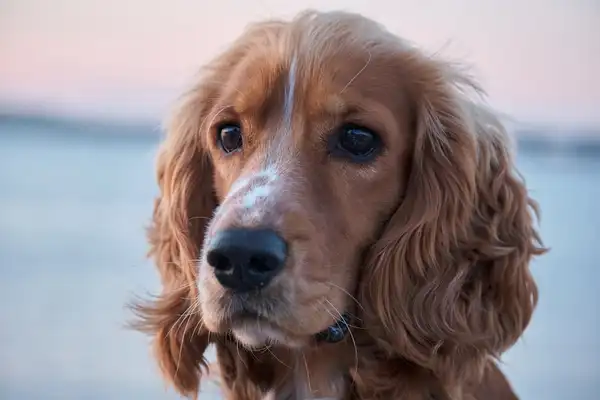
Canidae · DOG
Cavalier King Charles Spaniel
🌟 You may have met one
In 1926, American Roswell Eldridge stood at Crufts offering a 25-pound prize for a Toy Spaniel that looked like the ones in van Dyck's paintings - long muzzle, flat skull. That bounty single-handedly redirected British breeding programs; five years later the Cavalier King Charles Spaniel was named as its own breed, and the UK Kennel Club recognized it in 1945. The AKC did not follow until 1995.
Overview
The Cavalier King Charles Spaniel (查理王骑士猎犬) is a small dog breed weighing 5.9–8.2 kg with a 9–14-year lifespan. Named for King Charles II, the Cavalier was reintroduced in 1926 when American fancier Roswell Eldridge offered a 25-pound prize at Crufts to recover the original 'van Dyck-type' Toy Spaniel. Personality-wise it is arguably the most gentle, non-aggressive breed in the toy group - a textbook velcro dog. Health, however, is the breed's biggest challenge: mitral valve disease and syringomyelia are alarmingly common. Insist on cardiac and MRI screens on the parents before you buy.
Feeding
A high-protein, low-sodium adult formula, fed twice a day in measured portions. Skip salty treats - the breed is heart-sensitive.
Exercise
40-60 minutes of walking a day plus indoor play. Avoid heat and hard sprints, and use a chest harness rather than a neck collar.
Grooming
Long silky coat with drop ears - brush every 2-3 days, focusing on ears, armpits, and feathering. Bathe monthly and check ears weekly.
Health
Watch closely for mitral valve disease (MVD), Chiari malformation and syringomyelia (CM/SM), patellar luxation, ear infections, dry eye, and hip dysplasia.
Gallery
A closer look at the Cavalier King Charles Spaniel
From origins and personality to daily care and health — helping you judge whether this little companion is really the one for you.
Origin & history
Origin & history
The Cavalier King Charles Spaniel descends from the toy spaniels favored in 16th- and 17th-century British courts. The most famous fan was King Charles II (1630-1685), who is said to have carried these little spaniels into Parliament and reputedly issued a decree that they be admitted to any public place in England. That royal enthusiasm is exactly where the King Charles Spaniel name comes from. [1][3]
By the late 19th century, however, extensive crossings with Pugs and Japanese Chins had shortened the muzzle and flattened the skull, giving rise to what is now called the English Toy Spaniel. In 1926, American fancier Roswell Eldridge visited the British Crufts show hunting for the long-muzzled, flat-skulled toy spaniel of van Dyck's painting Charles II with His Children - and could not find one. Frustrated, he offered a 25-pound prize at Crufts, running for five years, to any British breeder who could produce dogs closest to that original type. [3][5]
That bounty rewrote the breed. Several British breeders undertook "reverse breeding," reconstructing the type from surviving individuals with old-form features. An unofficial breed club formed in 1928, and in 1945 the UK Kennel Club recognized it as its own breed - Cavalier King Charles Spaniel - explicitly distinct from the short-muzzled King Charles Spaniel (UK) / English Toy Spaniel (US). [3][5] The AKC lagged far behind, only recognizing the Cavalier in 1995 and placing it in the Toy Group. The FCI added it to Group 9, Section 7, breed 136 back in 1954. [1][3]
Looks & breed standard
Looks & breed standard
The current AKC standard (approved April 1995) describes the Cavalier as an active, graceful, well-balanced toy spaniel. Height at withers is 12-13 in (30-33 cm), weight 13-18 lb (5.9-8.2 kg), body about square, four legs standing straight - overall unexaggerated. [4] The skull is only slightly rounded (very different from the pronounced flat top of the King Charles Spaniel), ears are high-set and heavy with silky feathering, muzzle is about 3.8 cm long, nose is black, and eyes are large and round without protruding. That long-muzzle, round-eye "van Dyck" combination is exactly what Roswell Eldridge was after. [3][4]
The coat is medium length, silky, slightly wavy but never curly, with generous feathering on ears, chest, legs, and tail. The four official colors ("the Cavalier four") are a breed hallmark: (1) Blenheim - white with rich chestnut markings, often carrying the small "Blenheim Spot" or Duchess thumb on the top of the head, mythologically the imprint of the Duchess of Marlborough's thumb pressing on her pregnant dog's head while her husband fought at Blenheim; (2) Tricolor - black-and-white with tan points; (3) Ruby - solid rich chestnut without white; (4) Black and Tan - black with tan points. [3][4]
Temperament requirements: gentle, affectionate, non-aggressive, tail carried "happily" - never tucked. All of that lines up with its history as a comforter dog. [1][4]
Personality in depth
Personality in depth
The Cavalier is widely considered the toy group's gentlest breed. The AKC uses four keywords: affectionate, gentle, graceful, easygoing - essentially non-aggressive and universally likable. It is a textbook velcro dog: it follows you room to room, climbs into laps the moment you sit, sleeps by your head, and waits at the bathroom door. [1][3]
Cavaliers are wonderful with children and older adults, and even friendly to strangers - which makes them outstanding emotional support and therapy candidates but poor watchdogs, since they simply do not alert to suspicious visitors. [1][3]
They retain a spaniel's chase instinct outdoors - birds and squirrels will pull them, so leash walking is mandatory. Energy is moderate: not the agility rocket a Papillon or Jack Russell is, but they still need 40-60 minutes of daily walking plus indoor engagement. [1][2]
Separation anxiety is a real problem. Behavioral surveys rank the Cavalier among the least tolerant of solitude in the toy group - a full workday alone often means barking, chewing, and accidents. The breed suits couples, retirees, remote workers, or multi-dog households, and does poorly in empty homes. [2][3] Training is easy - short positive-reinforcement sessions land well; harsh tones make them shut down.
Daily care
Daily care
Exercise: A moderate-exercise breed. Aim for 40-60 minutes of walking a day plus indoor play and training. Avoid heat and humidity (they load the heart and airways) - walk early or late in summer. Always use a harness rather than a collar; the breed's high CM/SM prevalence makes neck pressure risky. [1][3]
Diet: Adults do best on two measured meals a day, roughly 55-65 kcal per kg body weight. Obesity worsens MVD-driven heart failure and aggravates disc and knee problems. Once cardiologists diagnose ACVIM stage B1 or beyond, prescription low-sodium diets plus omega-3 supplementation are common. [3][6]
Coat: Silky mid-length feathering; brush every 2-3 days, focusing on ears, armpits, inner thighs, and tail plume - the classic mat zones. Bathe monthly and dry the ear canals thoroughly. [1] Trimming is minimal - just paw pads and sanitary areas.
Ears: Long, drop, humid ears are one of the breed's chronic issues. Check weekly, address odor or redness immediately, and dry ears fully after any swim. [3][6]
Dental: Small dogs are prone to dental disease; brush daily and get a professional cleaning yearly. Because seniors often become poor anesthesia candidates due to MVD, staying ahead of dental problems avoids future risks. [6]
Sleep: Provide low, soft beds and discourage jumping off furniture - IVDD and patellar luxation both correlate with repeated jumps. [3]
Health & lifespan
Health & lifespan
The Cavalier is one of the toy group's most health-loaded breeds, averaging 9-14 years and a median around 11 - well below Papillons and Chihuahuas. [1][3][6] The pattern reflects a small foundation gene pool and appearance-first breeding history. Buyers must know the following:
1) Myxomatous Mitral Valve Disease (MMVD/MVD). Roughly half of Cavaliers develop a heart murmur by age five, and by age ten the breed is nearly 100% affected. It is the number-one cause of death. ACVIM staging runs A/B1/B2/C/D, with drug therapy (Pimobendan) beginning at B2. Annual cardiologist exams plus echo are recommended. [6][7]
2) Chiari-like Malformation and Syringomyelia (CM/SM). The skull is too small for the cerebellum, blocking CSF flow and forming fluid syrinxes in the spinal cord. Studies show more than 70% of Cavaliers show some SM on MRI. Signs include "phantom scratching" (scratching near the neck without contact), neck pain, and morning stiffness. Diagnosis requires MRI. Treatment is mainly analgesia (gabapentin), with foramen magnum decompression in severe cases. The BVA/KC 2012 CM/SM breeding protocol requires at least a 12-month-old MRI grade before breeding. [5][6][7][8]
3) Patellar luxation, hip dysplasia, and intervertebral disc disease (IVDD). 4) Eye disease: dry eye (KCS), cataracts, retinal dystrophy. 5) Idiopathic epilepsy, Episodic Falling Syndrome (EFS - a breed-specific dystonia; DNA test available), Dry Eye and Curly Coat Syndrome (DE/CC - another DNA-testable inherited disorder). [3][6] 6) Chronic ear infections and portosystemic shunt. [6]
Recommended screens: annual cardiac auscultation and echo from age one; MRI-based CM/SM grading at 12 months or older; CAER eye certification; patellar grade; EFS, DE/CC, and Curly Coat DNA tests. [6][7]
Common myths & adoption tips
Common myths & adoption tips
Myth 1: Cavalier = King Charles Spaniel; the names are interchangeable. - Wrong. The UK Kennel Club and AKC both list them as two separate breeds: Cavalier King Charles Spaniel is the post-1945 "van Dyck-type" long-muzzled restoration; King Charles Spaniel (UK) / English Toy Spaniel (US) is the 19th-century short-muzzled crossbreed. [3][5]
Myth 2: Cavaliers are gentle little lap dogs and safe for anyone. - The gentleness is real, but the genetic heart and neurological load is not optional. Insist on cardiac reports on parents aged 5+ and CM/SM MRI reports at 12 months+ - both, not one. US clubs do not mandate MRI, but the UK BVA/KC has a public grading scheme. [6][7][8]
Myth 3: Cavaliers just need company; exercise and training are optional. - Skipping exercise fuels obesity, which loads the heart and shortens life. AKC recommends 40-60 minutes of daily activity plus mental work. [1]
Myth 4: Phantom scratching is just ear mites. - Phantom scratching is the classic early sign of syringomyelia. If it appears with night crying, head-lifting yelps, or neck tenderness, MRI is the priority - not another tube of ear-mite ointment. [7][8]
Adoption tips: Cavalier Rescue (US ACKCSC / UK CKCS Rescue Trust) is the first stop - adult dogs come with clear medical histories. From a breeder, always request parents' 5+ cardiac exam, 12-month+ MRI CM/SM grade, hip, patellar, and eye reports. Reputable breeders volunteer these; anyone dodging the paperwork is a red flag. [3][6]
References
This is an educational overview — for specific health and care advice, please consult the authoritative sources below and your veterinarian.
- [1] Cavalier King Charles Spaniel - American Kennel Club (AKC)Official
- [2] American Cavalier King Charles Spaniel Club (ACKCSC)Official
- [3] Cavalier King Charles Spaniel - WikipediaEncyclopedia
- [4] AKC Cavalier King Charles Spaniel Breed Standard (Approved 1995)Official
- [5] Cavalier History - The Kennel Club (UK)Official
- [6] Cavalier King Charles Spaniel Health Guide (VetLens)Veterinary
- [7] Bach et al. - Relationship between syringomyelia and MMVD in CKCS (JVIM, 2024)Study
- [8] BVA/KC 2012 CM/SM Breeding Protocol (CavalierHealth.org)Study