Canidae · DOG
Great Dane
🌟 You may have met one
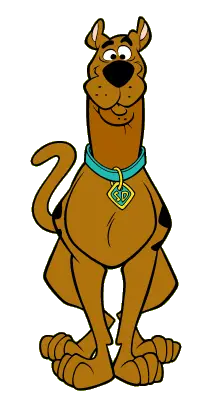
Scooby-Doo, the timid but food-loving cartoon dog, was designed after a Great Dane. It's also the poster child for gentleness among giant breeds.
Overview
The Great Dane (大丹犬) is a giant dog breed weighing 50–82 kg with a 7–10-year lifespan. Nicknamed the 'Apollo of Dogs', the Great Dane is one of the tallest breeds in the world. Imposing in appearance but a true gentle giant at heart — deeply affectionate with family.
Feeding
Large-breed formula, split into multiple meals to prevent gastric torsion.
Exercise
About one hour of walking per day.
Grooming
Short coat, brush once a week.
Health
Watch for GDV, dilated cardiomyopathy (DCM), and hip dysplasia.
Gallery
A closer look at the Great Dane
From origins and personality to daily care and health — helping you judge whether this little companion is really the one for you.
Origin & history
Origin & history
The Great Dane is a German breed and has nothing to do with Denmark. Its direct lineage traces to the 16th century, when England exported many English Mastiff × Irish Wolfhound crosses to continental Europe. German, Austrian, and Polish nobility used them for hunting large game (boar, bear, deer) and as estate guardians and bedchamber companions — 'Kammerhunde' with gold collars kept beside the master's bed. In German-speaking regions these dogs were then called 'Englische Dogge' [1][2].
The 'Dane' in the English name comes from French naturalist Comte de Buffon, who in his 18th-century 'Natural History' called the German giant 'Grand Danois' (Great Danish). The mistranslation stuck in English as 'Great Dane', though Denmark had nothing to do with the breed's development [1][3].
The true renaming happened in 1878: a German canine committee chaired by Dr. Bodinus in Berlin renamed 'Englische Dogge' to 'Deutsche Dogge' (German Great Dog), publicly claiming its nationality. In 1876 the Deutsche Dogge was made the German national dog; Chancellor Otto von Bismarck kept multiple Great Danes as 'Reichshunde' (dogs of the Reich), further elevating the breed's political and cultural stature [1][2]. In 1888 Germany's Deutsche Doggen-Club published the first breed standard; the AKC recognized the Great Dane in 1887 (Working Group); in 1889 the Great Dane Club of America was founded [3][4]. In 20th-century America the breed rapidly rose as the 'gentle giant' family dog — Hanna-Barbera's Scooby-Doo used a Great Dane as its design template. The nickname 'Apollo of Dogs' captures its regal, sun-god-like bearing [3].
Looks & breed standard
Looks & breed standard
The AKC size requirement is one of the strictest in the working group: males minimum 30 inches (76 cm) at the shoulder, ideally 32 inches or more; females minimum 28 inches (71 cm), ideally 30 inches or more; adult weight 110–175 lb (50–80 kg), some males exceeding 200 lb (90 kg) [4][5]. The overall silhouette is officially described as 'dignified, regal, square-built' — a long narrow rectangular head with deep jaws, large ears (naturally dropped or historically cropped upright), dark eyes, long muscular neck, deep chest, powerful hindquarters, and long saber-like tail. Zeus (an American Great Dane) held the Guinness world record for tallest dog at 44 inches (111.8 cm) for many years [1].
The AKC standard officially recognizes 7 colors: fawn (pale yellow with a black mask), brindle, blue (steel blue via dilute), black, harlequin (white base with irregular black patches), mantle (black-and-white 'blanket' pattern), and merle — the last color, merle, only officially added in 2019 [4]. Special attention to harlequin and merle: double-merle (MM) individuals suffer hearing and vision defects, so responsible breeders never breed merle × merle or merle × harlequin. Ear cropping is a historical practice (to avoid boar-hunting injuries); it's now banned in the UK, Australia, and most of Europe, still permitted in AKC show but no longer required [4].
Personality in depth
Personality in depth
The Great Dane is arguably the mildest-tempered giant — the AKC uses 'friendly, patient, dependable' and calls it the Gentle Giant, a stark contrast to its 80 kg body [4][5]. Owners describe intense attachment: the Dane is a 'lap dog with a size problem', unashamed to lean, sit, or lie on its human.
With children the Great Dane is famously patient — high tolerance for pulling and slapping — but sheer weight difference means any child under 3 needs adult supervision (not to prevent aggression, but to prevent tumbling). With strangers the Dane is a natural guardian — sharp hearing, high alertness, instinctive family defense — but its style is 'deterrence, not attack'; standing up to display 80 kg of dog usually ends the conversation. With other dogs the Dane is generally sociable, especially with early socialization; with small pets, size disparity requires careful supervision to avoid accidental injury [5].
Training: intelligent and biddable but slow to mature — mental adulthood arrives at 2–3 years, hence the nickname 'Eternal Puppy'. Before age three the Dane may act like an oversized klutz — knocking over furniture, tripping over its own feet, endlessly demanding cuddles. It's an excellent family dog provided you have the space and training time.
Daily care
Daily care
The most important daily focus is meal timing — split feeding is mandatory: 2–3 small meals per day, with at least one hour of rest before and after each meal to prevent GDV (see health) [4][6]. Diet must be a large- or giant-breed formula (balanced calcium/phosphorus, 22–25% protein); excess calories or protein accelerate skeletal growth and cause joint problems; strictly no human food or free-feeding during puppyhood. 16–18 hours of daily sleep is normal — this isn't laziness, it's the metabolic cost of giant-breed physiology [3].
Grooming: brush 1–2 times a week — the smooth coat needs only a rubber glove or short-coat brush; bathe every 6–8 weeks (a workout given the size). Teeth brushing 2× weekly, nails every 3–4 weeks, ears every 2 weeks.
Exercise: the Great Dane is a moderate-energy dog — not a GSD-level 'must run daily or go crazy' breed. 60–90 minutes of walking plus short bursts of running is plenty. Puppies must not do long-distance running, jumping, or stair climbing — bones close only at 18 months, and early high-impact exercise causes epiphyseal separation and permanent joint damage [4]. A padded surface (thick rug or large dog bed) is a household must-have — long hours of lying on hard floors gives the Dane elbow calluses or bursitis.
Health & lifespan
Health & lifespan
The Great Dane bears a bittersweet nickname — Heartbreak Breed — because its average lifespan is only 7–10 years, one of the shortest of any mainstream breed. Multiple lethal diseases concentrate at this size [7][8].
First is the cardiac cluster: dilated cardiomyopathy (DCM) is the top killer, with high incidence and early onset (5–8 years), presenting as exercise intolerance, cough, ascites, sudden fainting, or sudden death; the Great Dane also has elevated congenital heart defects — tricuspid valve dysplasia, patent ductus arteriosus. The AKC parent club recommends annual echocardiographic screening [4][7].
Second is GDV (Gastric Dilatation-Volvulus) — the number-one cause of death in deep-chested giants; the Great Dane has the highest lifetime GDV risk of any breed (~40%). Once GDV occurs, mortality exceeds 30% without emergency surgery within 4–6 hours. Most breeders and vets now perform 'prophylactic gastropexy' during puppy spay/neuter — suturing the stomach wall to the abdominal wall to prevent torsion [7][8].
Third is osteosarcoma — large-breed bone cancer, with the Dane joining Saints, Rotties, and Labs at the top of incidence, usually at distal radius or tibia and typically late-stage at diagnosis [7]. Also: Wobbler syndrome (cervical spinal disease) is a hallmark disease of the Great Dane, with cervical instability causing hindlimb ataxia; hip dysplasia, hypothyroidism, and double-merle deafness/blindness all warrant attention [7][8]. Adams 2010 UK KC data list Great Dane median lifespan at 6.5 years — extremely short; before purchase, insist on cardiac genetic screening and reputable breeding decisions.
Fit for your space
Fit for your space
Contrary to intuition, the Great Dane is one of the most apartment- or detached-home-friendly giant breeds: 16–18 hours of sleep, minimal indoor movement, moderate exercise (60–90 minutes daily). As long as ceilings aren't too low, furniture can bear the weight, and a thick pad is provided, an apartment works fine [3][5]. What the Dane needs is less space and more time — hours of daily family presence matter far more than a 200 m² empty yard.
Climate: cold-tolerant but heat-sensitive — the smooth coat makes it very heat-vulnerable (above 30°C requires AC and strict outdoor limits), while winter suits it well. Family structure: the Dane thrives in households with a stable routine — sensitive to family atmosphere, unstable schedules or frequent moves affect its psychological stability. Not recommended for: children under 3, homes with steep stairs (puppy joints get injured), and financially tight households (daily food, vet, and medication costs run 3–5× a small breed).
Finally, lifespan expectation — deciding on a Great Dane means accepting a 7–10 year companionship, well below the 12–15 years many owners expect. Legitimate breeders will run DCM cardiac genetics, OFA hips, and CAER eyes at minimum — verifying these reports is the buying-in bar for a Great Dane puppy.
References
This is an educational overview — for specific health and care advice, please consult the authoritative sources below and your veterinarian.
- Wikipedia — Great Dane(Englische Dogge / 1878 更名 / Bismarck / Zeus 记录)综合百科
- Britannica — Great Dane: origin, description, temperament百科全书
- AKC — Great Dane 品种档案(Apollo of Dogs、1887 承认、7 色标准)AKC 官方
- AKC — Official Standard of the Great Dane品种标准
- Great Dane Club of America(AKC 家长俱乐部)犬种俱乐部
- PetMD — Great Dane: Care, Nutrition and Common Conditions宠物医学网站
- UFAW — Great Dane Genetic Welfare Problems(DCM、GDV、Wobbler、双 Merle 综述)动物福利综述
- Adams et al. 2010 — Methods and mortality results of a health survey of purebred dogs in the UK(大丹中位寿命 6.5 岁)学术论文
- Parker et al. 2017 — Genomic analyses reveal the influence of geographic origin on canine breed formation学术论文