Canidae · DOG
Akita Inu
🌟 You may have met one
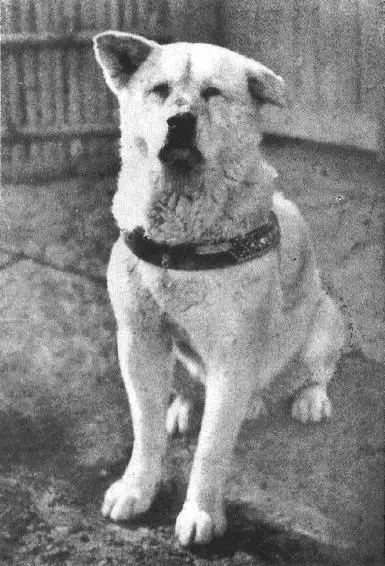
Hachikō was an Akita. From 1925 he waited every single day for his deceased owner at Shibuya Station — for nine years. His statue still stands there today.
Overview
The Akita Inu (秋田犬) is a large dog breed weighing 23–45 kg with a 10–14-year lifespan. The real-life inspiration for Hachikō, loyal to the last day. Composed and fiercely independent, deeply devoted to their person but requiring early socialisation.
Feeding
Large-breed formula, mind the joints.
Exercise
About 1 hour of walking daily.
Grooming
Thick double coat, brushed 2–3 times a week.
Health
Watch for hip dysplasia, thyroid, and autoimmune disease.
Gallery
A closer look at the Akita Inu
From origins and personality to daily care and health — helping you judge whether this little companion is really the one for you.
Origin & history
Origin & history
The Akita's ancestor is the "Akita Matagi-Inu" — a medium-sized bear-hunting dog from the mountains of Akita Prefecture in northeastern Japan, prick-eared and curl-tailed, and a centuries-long companion of the Matagi hunters[1]. In the Edo period (from 1603) local aristocrats used them for dog fighting and simultaneously began selecting for greater size.
The real crisis came after the 1868 Meiji Restoration: seeking bigger fighting dogs, breeders crossed the Matagi-Inu with Tosa, Mastiffs, St. Bernards, and Great Danes. The dogs did get larger, but the original spitz features (pointed muzzle, prick ears, curled tail) were diluted[2]. Dog fighting was banned in 1908, but the enlarged breed survived, and in July 1931 the Japanese government designated nine outstanding individuals as **National Natural Monuments**, making the Akita the only large Japanese breed to hold that honour[3].
WWII nearly wiped them out: the government requisitioned dog pelts for military use, and every breed except the German Shepherd was ordered surrendered. Some owners crossed their Akitas with Shepherds to hide them. Only a dozen or so survived, split into three lines — "Matagi Akita" (original hunting type), "Fighting Akita" (with Mastiff blood), and "Shepherd Akita" (with GSD blood). Post-war breeders backcrossed to the Matagi Akita to restore purity[4].
The most famous Akita is **Hachikō** — born in 1923, whose owner Professor Hidesaburō Ueno of the Imperial University of Tokyo died of a stroke in 1925. For the next 9 years Hachikō walked to Shibuya Station on schedule to wait for him, until his own death in 1935. **Helen Keller** was gifted two Akitas (Kamikaze and Kenzan) during her 1937 visit to Japan — the first Akitas to reach the United States[1]. The AKC officially recognised the breed in October 1972, and Akitas began competing in the Working Group in April 1973.
Looks & breed standard
Looks & breed standard
The Akita is the largest of the native Japanese breeds. FCI standards give males roughly 67 cm at the shoulder and females 61 cm (±3 cm), weighing 32–59 kg; American-line Akitas run larger[5]. The head is the most defining feature: a broad blunt-triangle skull, paired with the curled tail into a perfect head-and-tail geometric echo. Eyes are small, dark brown, almost triangular; ears small, thick, and forward-tipped — a drop ear is a disqualification under AKC rules.
Colour is strictly regulated. FCI accepts only four: red fawn, sesame (red with black tips), brindle, and white. Aside from white, all colours must show "Urajiro" — creamy-white markings on muzzle sides, cheeks, jaw, throat, chest, belly, and inner legs[5]. American Akitas accept every colour, including pinto — the key difference between the Japanese and American types.
The double coat is remarkably dense: outer coat coarse, straight, about 5 cm long; undercoat soft and thick; withers and rump feathering can reach 5 cm, and the tail carries the longest hair on the body[5]. That construction lets them work in Akita's –30 °C winters. Length-to-height ratio is 10:11, with females slightly longer than males.
Personality in depth
Personality in depth
The Akita's core temperament is captured in FCI's four adjectives: **composed, faithful, docile, and receptive**[5]. But that faithfulness is fiercely exclusive — most Akitas bond deeply with a single person for life; Hachikō is only the extreme case.
At home they are gentle protectors, sometimes stepping between children and strangers on their own; toward outsiders they stay watchful, and toward same-sex dogs they are highly intolerant — "same-sex aggression" is the theme every Akita club revisits, a legacy of both fighting and guarding lines. Unlike a Golden Retriever, they do not perform for food from anyone; they are more like an opinionated cat — one classic English description reads *"dignified and cat-like"*.
Trainability is rated **high** difficulty (strong-willed and independent) — smart but easily bored by drilling. Trainers recommend short, high-frequency, positive-reinforcement sessions; harsh commands or physical correction shatter their trust instantly. Extensive socialisation during the 3–14-week window is critical to reducing adult same-species aggression. Akitas rarely bark but stay hyper-alert — the classic silent watchman.
Daily care
Daily care
The Akita is the poster child for **"blowing coat"** — twice a year (spring and autumn) they shed the entire undercoat over 3–4 weeks; a single blow can fill an entire trash bag. Daily maintenance means 2–3× a week brushing, ramping up to daily during coat blows with an undercoat rake; miss a session and the loose down mats into thick felt near the skin, trapping heat and inviting hot spots and infection[5]. Akitas are naturally clean — they groom themselves like cats and rarely smell, so a bath every 4–6 weeks is enough.
Exercise needs are lower than expected: 60–90 minutes of walking a day is enough, and pack-work or weight pulling channels their energy well. On diet, keep the calcium/phosphorus ratio around 1.2:1 — over-supplementing calcium in puppies causes bone spurs[6]. They are extremely cold-tolerant (able to work at –30 °C for hours) but very heat-intolerant — anything above 26 °C requires air conditioning or cooling mats to avoid heat stroke.
Important warning: Akitas are **more than 2× as sensitive to anaesthesia** as the average dog — always inform the vet of the breed and use the lowest starting dose of propofol. They also fall into the Japanese breeds prone to ivermectin sensitivity (MDR1-related), so double-check dewormer choices with your vet.
Health & lifespan
Health & lifespan
The U.S. OFA CHIC (Canine Health Information Center) programme mandates four screenings for the Akita: hip evaluation (OFA or PennHIP), CAER ophthalmic exam, thyroid panel (T4, TSH, TgAA), with elbow, cardiac, and vWD DNA recommended[7].
Three common issues stand out: **(1) Hip dysplasia** — the large-breed staple. Japanese-line Akitas show a 37% lower incidence than most large breeds, but radiographs are still recommended after 24 months[6]. **(2) Hypothyroidism** — one of the highest-incidence breeds; annual thyroid panels from age 2 are advised[8]. Classic signs: weight gain, rat-tail hair loss, cold skin, sad expression. **(3) Autoimmune disease** — sebaceous adenitis is significantly more common in Akitas, causing symmetrical hair loss and skin scaling and requiring lifelong management; immune-mediated haemolytic anaemia, pemphigus, and VKH-like syndrome (uveodermatologic syndrome) also show breed predispositions[9].
Others: gastric dilatation-volvulus (deep-chested build — no strenuous activity within 1 hour of meals), juvenile cataracts, progressive retinal atrophy, and epilepsy. Japanese Akitas average 10–14 years, American Akitas 10–12; from healthy lines, dogs remaining active past 12 are not unusual.
Fit for your space
Fit for your space
Akitas do not fit tiny apartments — not because they bark much (in fact, they are very quiet), but because their size and activity needs demand space. They are naturally cold-hardy and heat-intolerant, so the ideal home has a yard, cool temperatures (15–22 °C), and an owner with plenty of time to be around. Summer requires air conditioning, shade, and constant access to cool water.
Akitas suit three household types best: **(1) no other same-sex dog** — same-sex aggression is written into the genes; multi-dog homes need male + female raised together from puppyhood; **(2) no small children** — patient with their own family's kids, but sudden shrieking and pulling from unfamiliar children can trigger a defensive reaction; the AKC recommends "households with older children"; **(3) experience with large independent breeds** — they need clear leadership, and a first-time owner is easily out-negotiated by their willpower.
Cultural presence: in Japan the Akita is a family talisman — new-parent households often receive a small Akita figurine as a symbol of long life. Russian President Vladimir Putin was gifted an Akita named Yume in 2012. The 2009 Hollywood remake of *Hachi: A Dog's Tale* made the breed famous in the West — but also triggered a wave of impulse purchases and later abandonment. Please read up on the stubborn, independent side of the breed before committing.
References
This is an educational overview — for specific health and care advice, please consult the authoritative sources below and your veterinarian.
- Akita Inu Hozonkai (AKIHO) — 秋田犬保存会 Breed History官方品种保存会
- Royal Knight Akitas — 日本秋田犬到美国秋田犬完整历史犬舍学术资料
- AKC — 秋田犬 1972 年承认与工作组分类AKC 品种档案
- 科普中国 — 秋田犬:1927 保护协会 / 1931 天然纪念物 / 1937 海伦·凯勒科普中国
- FCI 标准 N°255(2001)— 秋田犬 Urajiro 与四色标准FCI 官方标准
- 犬髋关节发育不良全指南 — 高发犬种与筛查临床指南
- Akita Club of America — CHIC 健康筛查(髋、CAER 眼、甲状腺、vWD)AKC 家长俱乐部
- 元医课堂 — 犬甲状腺功能减退病因、诊断与治疗兽医内分泌综述
- Furrycritter — 秋田犬(Akitaken)CHIC 项目与皮脂腺炎品种档案