Canidae · DOG
Belgian Malinois
🌟 You may have met one
In 2011, the only military dog on the SEAL Team 6 raid that killed Osama bin Laden was a Belgian Malinois named Cairo. SEALs shifted from German Shepherds to Malinois partly because Malinois are lighter, more heat-tolerant, and better parachute jumpers.
Overview
The Belgian Malinois (比利时马利诺牧羊犬) is a large dog breed weighing 18–36 kg with a 14–16-year lifespan. A late 19th-century Belgian herding dog from the city of Malines — widely regarded as the world's most capable working dog. First choice of US Navy SEALs, IDF Oketz, and Chinese public-security K9 units; Cairo, the SEAL Team 6 dog on the bin Laden raid, was a Malinois. Extreme work drive and vigilance are not a family-companion trait set — this is not a first-time or casual family dog.
Feeding
An active large-breed formula, high protein and fat, portioned by daily training load in adulthood.
Exercise
At least 2 hours of high-intensity daily activity plus daily mental work. Plain walking is nowhere near enough.
Grooming
Short double coat, brush 1-2 times a week; noticeable seasonal shedding but excellent all-weather coat.
Health
Watch hip/elbow dysplasia, PRA, epilepsy, cataracts, and pyloric stenosis.
Gallery
A closer look at the Belgian Malinois
From origins and personality to daily care and health — helping you judge whether this little companion is really the one for you.
Origin & history
Origin & history
The Belgian Malinois emerged in late 19th-century Belgium as one of four Belgian Shepherd varieties, alongside the long-coated black Groenendael, long-coated mahogany Tervuren, and rough-coated Laekenois. In 1891, veterinarian Prof. Adolphe Reul organized Belgium's first national survey of native shepherd dogs in Brussels, sorting them into four groups by coat and color. The short-coated fawn dogs came from the city of Malines — hence the name Malinois. [1][3]
The FCI still classifies all four Belgian Shepherd varieties as a single breed (No.15), while the AKC and UK Kennel Club treat Malinois, Groenendael, and Tervuren as separate breeds (AKC recognized the Belgian Sheepdog in 1959 and split the Malinois into its own breed in 1965). This taxonomic split remains a live debate in breeding circles. [1][2][4]
By the early 20th century, the Malinois was already deployed by Belgian police and military. After WWII, its lighter frame, better heat tolerance, and more relentless work drive gradually displaced the German Shepherd as the top pick for Western military and police K9 units. Today the US Navy SEALs, US Army Delta Force, IDF Oketz, French GIGN, and Dutch Royal Marines all use Malinois as primary K9s — Cairo, the military dog on the bin Laden raid, was one of them. [3][4]
Looks & breed standard
Looks & breed standard
AKC standard: males 24-26 in (61-66 cm) and 27-36 kg; females 22-24 in (56-61 cm) and 18-27 kg. The overall silhouette is emphatically square — body length approximately equal to shoulder height — the most compact and squarely built of the herding breeds. Compared to the German Shepherd, the Malinois is lighter and shorter, closer to a true square, with clear efficiency and endurance advantages. [1][2]
Coat is the most immediate identifier: short double coat, straight and stiff outer, dense short undercoat; excellent all-weather resilience — better in both heat and cold than a German Shepherd. Standard color is fawn to rich mahogany with a black mask, black ears, and some black tipping. Any white beyond a small chest star and toe tips is disqualifying. [1][2]
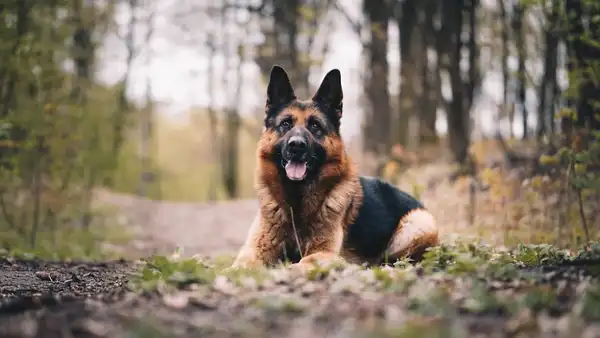
Head is the simplest way to distinguish from a German Shepherd: cleaner, flatter skull, shorter muzzle, smaller, straight, standard triangular ears. The German Shepherd shows a sloping topline; the Malinois topline is nearly level. And the eyes — a Malinois eye always carries a certain "currently evaluating you" sharpness. [1][3]
Personality in depth
Personality in depth
AKC and FCI both describe the Malinois as confident, smart, hard-working, and protective. It is widely acknowledged in the industry that the Malinois has the most extreme work drive of any breed — it needs a job. Under-worked Malinois turn destruction, chasing, and biting into their own entertainment (yes, those wall-climbing viral videos are real). [1][3]
Deeply loyal, strongly protective, naturally reserved to alert with strangers. Among herding breeds, the Malinois has the highest rate of same-sex dog aggression and the strongest chase drive — running children, cats, and squirrels all trigger instinctive pursuit and bite-and-hold. That's the foundation of its bite work and police utility, and also the biggest risk factor in a family setting. [1][4]
High intelligence and fast learning are a double-edged sword. On one hand it can absorb hundreds of commands quickly; on the other, without proper guidance it "self-teaches" the wrong behaviors and locks them in fast. Malinois demand near-perfect trainer consistency, timing, and energy — a proving ground for professional handlers. Absolutely not for beginners, families with young children, working households living alone, or owners without solid dog behavior knowledge. [1][4]
Daily care
Daily care
Exercise: The Malinois has the highest exercise requirement of any AKC-recognized breed — at least 2 hours of high-intensity daily activity plus mental work. Walking alone is far from enough; the plan needs to include running, tug, retrieving, scent work, obedience, and agility. Under-exercised Malinois show severe anxiety, destruction, and self-harm behaviors like tail-chasing OCD. [1][3]
Coat: The short double coat is easy — 1-2 slicker/comb sessions per week is enough. Shedding is moderate to heavy in spring and fall, and an undercoat rake helps. No trimming or styling needed. Weather resilience is excellent, and the breed can work in outdoor kennels year-round. [1][3]
Diet: As a high-intensity working dog, the Malinois needs more energy and protein than same-size companions. A working-dog or K9 formula fits best. Obesity is uncommon, but calories still need control to protect joints. Puppy joints are equally fragile — the AKC recommends avoiding high-impact work before 12-18 months. Mental stimulation is as important as physical exercise; at least 30 minutes of focused training per day is a floor, not a target. [5][6]
Health & lifespan
Health & lifespan
Average lifespan is 14-16 years — long-lived and generally healthy for a large working breed. Most Malinois breeders prioritize working ability, avoiding the structural problems that show-line over-selection produced elsewhere. Compared to the German Shepherd, hip dysplasia rates are markedly lower (OFA reports ~4-5% abnormal, versus ~20% in the GSD), and structural defects like sloping hips and rear-end paralysis are rare. [6][7]
Main genetic conditions: progressive retinal atrophy (PRA-CNGB1, with commercial genetic testing available), cataracts, hypertrophic pyloric stenosis, epilepsy (shared across all four Belgian Shepherd varieties), and rare but present MDR1 mutations that cause sensitivity to certain dewormers and anesthetics. When choosing a breeder, confirm parental OFA hip/elbow scores, an eye CAER exam, and PRA / MDR1 genetic testing. [6][7]
Most non-genetic risks come from the intense workload: muscle and ligament injuries (cruciate ligament tears especially), joint wear, and chase-related trauma. Older-age problems include arthritis and some tumors (hemangiosarcoma, lymphoma). Working K9s typically retire at 8-10 years old and can then live 5-6 more years as family companions. [6][7]
Common myths & adoption tips
Common myths & adoption tips
Myth 1: The Malinois is just a smaller German Shepherd. — Wrong. Despite the visual similarity, work-drive intensity, chase reflex speed, and energy release patterns are entirely different. The Malinois is closer to a bite-ready athletic machine, while the GSD is a stable multi-purpose guardian. Applying GSD husbandry to a Malinois usually ends with an exhausted owner or a re-homed dog. [1][3]
Myth 2: Smart dogs are easy to raise. — Intelligence and easy ownership are not the same. The Malinois is one of the breeds most in need of professional-handler-level care. Extreme intelligence plus extreme drive equals a partner you cannot be lax with for a minute — it will self-teach opening doors, jumping fences, chasing anything that moves. Family homes without professional guidance see far higher rates of biting, dog fights, and behavior collapse than with other breeds. [1][4]
Myth 3: The Malinois I saw online looks cool — it must be fine as a family dog. — The Malinois in short videos and film is almost always the product of years of professional handler work. Family owners cannot replicate that training intensity, nor can they meet the daily 2+ hour high-intensity output plus mental work. Malinois surrender rates in North American shelters have been climbing, mostly for one reason — "we brought it home and can't keep up." [1][4]
Adoption tips: Unless you work in police, military, SAR, or professional dog sports, most families should not choose a Malinois. If you're set on it, buy only from working-line breeders with KNPV, IPO, or Ring Sport pedigrees, and prepare psychologically for 2 hours of training a day for 15+ years. In China, retired police and working-to-family transitions are still uncommon — non-professionals should not decide impulsively.
References
This is an educational overview — for specific health and care advice, please consult the authoritative sources below and your veterinarian.
- [1] Belgian Malinois - American Kennel Club (AKC)Official
- [2] FCI Standard No.15 - Belgian Shepherd DogOfficial
- [3] Belgian Malinois - WikipediaEncyclopedia
- [4] American Belgian Malinois Club (ABMC)Official
- [5] VCA Animal Hospitals - Belgian Malinois Care GuideVeterinary
- [6] UFAW - Genetic Welfare Problems of Belgian Shepherd DogsReview
- [7] OFA Statistics - Belgian Malinois Health ReportsStudy