Canidae · DOG
German Shepherd
🌟 You may have met one
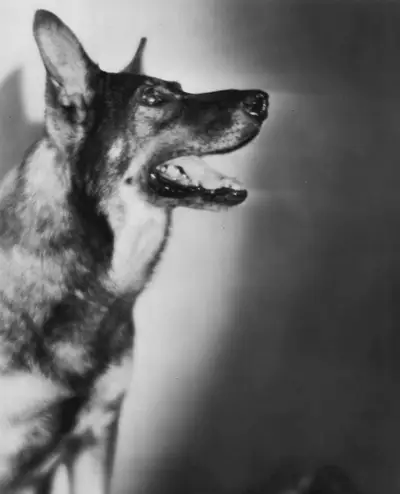
The first-ever canine box-office star, Rin Tin Tin, was a German Shepherd. Rescued from a WWI battlefield by an American soldier, he went on to headline 27 Hollywood films.
Overview
The German Shepherd (德国牧羊犬) is a large dog breed weighing 22–40 kg with a 9–13-year lifespan. One of the world's top working breeds - the go-to choice for police, military, and search-and-rescue work. A sharp mind and total loyalty, but expect clear commands and serious training.
Feeding
Large-breed formulas with joint-support ingredients.
Exercise
1.5-2 hours daily of high-intensity exercise plus training.
Grooming
Double coat: brush 3 times a week; daily during coat blows.
Health
Prone to hip and elbow dysplasia - X-ray screening in puppyhood is recommended.
Gallery
A closer look at the German Shepherd
From origins and personality to daily care and health — helping you judge whether this little companion is really the one for you.
Origin & history
Origin & history
The story of the modern German Shepherd can be pinned to a single date - April 22, 1899. That day, at a dog show in Karlsruhe, Germany, retired cavalry captain Max von Stephanitz spotted a wolfish tan-and-gray herding dog named Hektor Linksrhein - a dog who "understood the shepherd's hand signals without any training at all." He bought Hektor on the spot, renamed him Horand von Grafrath, and on the same day founded the Verein fur Deutsche Schaferhunde (SV, the German Shepherd Dog Club). Horand became SZ1, the first entry in the breed studbook. [1][2][3]
von Stephanitz's motto was "utility and intelligence first; beauty is secondary." He blended distinctly different herding types from northern and southern Germany, used deep line-breeding on Horand and his brother Luchs to fix type, and brought in outside blood via Audifax and Adalo to dodge recessive faults. [1][2]
The breed went global after WWI. The AKC recognized it in 1908, but during the war anti-German sentiment ran hot - the AKC briefly renamed it "Shepherd Dog," and the UK Kennel Club rebranded it "Alsatian" (Alsatian Wolf Dog). After the war, American GIs brought this "brave, brilliant German war dog" home; combined with Hollywood star power from Rin Tin Tin (rescued from a WWI battlefield by a US soldier and later starring in 27 films), the breed's popularity exploded. [1][2]
As of 2025, the German Shepherd sits at #4 on AKC registration rankings, and the global WUSV federation has more than 2 million registered dogs. [3][8]
Personality in depth
Personality in depth
The German Shepherd is famously a "three-in-one" dog: the alertness of a herder (always tracking every family member), the loyalty of a guardian (reserved with strangers), and the drive of a working dog (once given a task, it finishes with almost obsessive focus). That combination has made it one of the most-used police, military, search-and-rescue, and guide-dog breeds on earth. [3]
Coren's canine intelligence rankings put the German Shepherd at #3, behind only the Border Collie and the Poodle - meaning most GSDs learn a new command in fewer than five repetitions and obey it more than 95% of the time. [3] But high intelligence is a double-edged sword: it needs to be "employed." Without clear rules and daily training, a Shepherd will invent its own "job" - patrolling the yard, alarm-barking every delivery driver, or herding family members into "safe" rooms.
von Stephanitz warned it a century ago: a Shepherd without a job "becomes neurotic, suspicious, even aggressive," and the observation still holds today. [2] Owning a family GSD demands at least 1.5 hours a day of high-intensity exercise plus structured training (obedience, scent work, tug), and systematic socialization from puppyhood - lots of exposure to different people, dogs, and environments so it doesn't become over-vigilant as an adult.
Daily care
Daily care
The German Shepherd is a medium-large, double-coated dog. Adult males stand 60-65 cm at the shoulder and weigh 30-40 kg; females 55-60 cm and 22-32 kg. [3] Double coat means "year-round shedding plus a big spring-and-fall blow" - a normal week is 2-3 brushings, but during coat blows daily brushing barely keeps up, or the floor turns into a Shepherd-colored carpet.
On feeding: because large-breed skeletons take 18-24 months to close their growth plates, you must use a "large-breed puppy formula" (with a more conservative calcium-to-phosphorus ratio) to avoid rapid growth and joint disease. Adults get two meals a day. Weight management is a lifelong job - AKC data shows every 10% of overweight roughly doubles the odds of hip dysplasia. [6][7]
Exercise: the classic Shepherd formula is "1.5-2 hours a day plus mental games": walk twice at dawn and dusk, and slot obedience or scent work in between. Skip high-impact running and jumping under 12 months (open growth plates mean irreversible bone damage). A 2020 study from Hart's team at UC Davis also found that GSDs neutered before 12 months had significantly higher rates of joint disease than those neutered as adults - so the "6-month spay/neuter" many domestic vets recommend needs a second thought for this breed. [6]
Health & lifespan
Health & lifespan
The UK VetCompass study (O'Neill et al. 2017), based on 455,000 dogs, gives the German Shepherd a median lifespan of 10.3 years (interquartile range 8.0-12.1); the 2022 VetCompass life-tables study confirms it at 10.16 years - two independent studies backing each other up. [6] Compared with Labs and Goldens at 12-13 years, the GSD is on the shorter-lived end for large breeds.
The signature health risks are orthopedic. The OFA registry, scoring hip X-rays for about 107,000 GSDs registered between 1970 and 2015, flagged 18.9% as dysplastic; elbow dysplasia ran 17.8% (Oberbauer et al. 2017). [7] PetNexa's larger sample (115,000 dogs, 1974-2015) puts hip dysplasia at 20.4% - one of the highest rates among common breeds. [6]
Beyond joints, the GSD carries several near-signature conditions: - **Degenerative myelopathy (DM)**: caused by the SOD1 gene mutation, progressive hind-limb ataxia leading to paralysis after age 8; DNA testing lets you screen ahead. [6][8] - **Exocrine pancreatic insufficiency (EPI)**: higher incidence than any other breed - the classic sign is "eats more, gets thinner." [6][8] - **Gastric dilatation-volvulus (GDV / bloat)**: a large deep-chested breed's core risk - avoid vigorous activity within an hour of eating; consider prophylactic gastropexy. [8] - **Pannus (chronic superficial keratitis)**: a breed-specific eye disease requiring lifelong immunosuppressive drops. [8] - **Perianal fistulas**: a painful chronic condition almost unique to the GSD. [8]
The GSDCA-recommended CHIC health-screening panel has 7 items: OFA hips + OFA elbows + cardiac + thyroid + DM SOD1 DNA + eye + EPI. [8] Always ask breeders for both parents' certificates before adopting.
Fit for your space
Fit for your space
The GSD is not an apartment dog. Its exercise needs, alert-barking, and territorial instincts all point to "fenced yard plus long stretches outdoors." The classic conflict for high-rise apartments in big Chinese cities is: buildings sit close together with heavy foot traffic and elevator dings, and every stray sound triggers a bark - both owner and neighbors burn out fast.
On temperature: the double coat gives incredible cold tolerance (comfortable outdoors at -20 C), but heat dissipation is limited above 30 C. **Never shave the coat** (it destroys thermal and UV protection), and skip midday sun exposure in summer.
Multi-pet homes need caution: a Shepherd's work-drive is easily triggered by small dogs, cats, or even squirrels - chase mode kicks in fast. Same-sex large-dog conflicts are also common, especially two intact males, which usually needs an experienced handler to keep the peace.
Homes with young children are actually a great fit: the Shepherd naturally treats small family members as "resources to protect." The prerequisite is that the dog grew up with the child, and the child has been taught to respect the dog's rest space.
Common myths & adoption tips
Common myths & adoption tips
**Myth 1: "German Shepherds always bite."** In reality, GSD aggression is far below rumor. UK VetCompass shows about 4.5% of Shepherds seeking care for aggression - about the same as Labs. The real issue is "large body + serious consequences per bite," so socialization and boundary training are non-negotiable. [6]
**Myth 2: "The lower the back slope, the more beautiful the Shepherd."** A very dangerous aesthetic trap. SV's original standard describes the topline as "gently sloping and strong-straight." Post-1980s American show ring pursued extreme rear angulation, breeding "banana-back" Shepherds so sloped they almost sit as they walk - and hip and spinal dysplasia rates spiked accordingly. [3][8] When picking a puppy, choose working lines over show lines, prefer flatter toplines, and require both parents to have OFA hip ratings of at least Good.
**Myth 3: "Judge Shepherds by color alone."** Black-and-tan is the classic look, but pure white German Shepherds are an outright disqualification under AKC standards (not eligible for showing and not recommended for breeding), because the white gene is often paired with recessive problems like deafness and skin disease. [3] Long-coats are recessive - they're gorgeous but shed heavier and overheat faster. Confirm you can handle the grooming load before you buy.
**Adoption tips**: legitimate GSD kennels in China are mostly in Shandong, Jiangsu, and the Northeast, at 6,000-15,000 RMB. Steer clear of "giant Shepherds" and "bear-type Shepherds" - non-standard sizes are riddled with joint and heart problems. Before adopting, insist on seeing OFA hip and elbow scores and a negative DM SOD1 DNA test for both parents. [8]
References
This is an educational overview — for specific health and care advice, please consult the authoritative sources below and your veterinarian.
- [1] German Shepherd Dog - AKC 官方品种介绍Official
- [2] GSDCA Breed History - 美国德牧俱乐部品种史Official
- [3] SV Verein für Deutsche Schäferhunde 官方历史Official
- [4] Max von Stephanitz & German Shepherd HistoryEncyclopedia
- [5] The Remarkable History of the German Shepherd DogEncyclopedia
- [6] State of the German Shepherd - 综合健康数据快照 (O'Neill 2017, Oberbauer 2017)Study
- [7] Breeding German Shepherd Dogs - CHIC 健康筛查完整指南Study
- [8] German Shepherd 50+ Diseases 数据库 (2025-2026)Study