Canidae · DOG
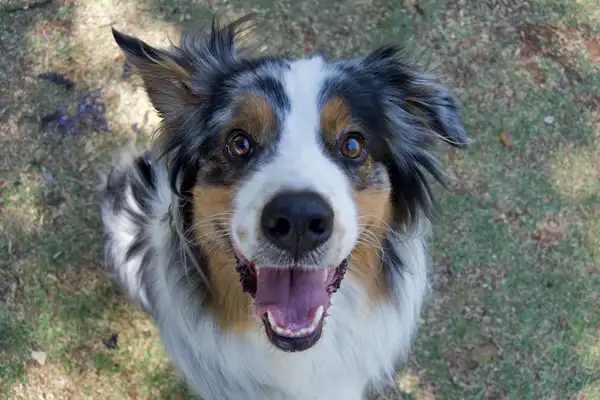
Border Collie
🌟 You may have met one
The all-time #1 on the canine intelligence rankings. A Border Collie named Chaser was scientifically shown to recognize the names of 1,022 different objects — the largest documented vocabulary of any dog.
Overview
The Border Collie (边境牧羊犬) is a medium-sized dog breed weighing 12–20 kg with a 12–15-year lifespan. Widely acknowledged as the world's smartest dog. Their learning ability is a little terrifying — you have to keep both mind and body engaged, or they'll design their own "remodel-the-house" project. Not a beginner breed. Best for active owners who can invest a lot of time.
Feeding
High-protein formula, and pay attention to gut health.
Exercise
Two hours of exercise a day plus mental work — frisbee, agility, or brain games.
Grooming
Medium double coat — brush twice a week, and daily during coat blows.
Health
Watch for hip issues and Collie Eye Anomaly (CEA); genetic screening is strongly recommended.
Gallery
A closer look at the Border Collie
From origins and personality to daily care and health — helping you judge whether this little companion is really the one for you.
Origin & history
Origin & history
The Border Collie was not born in a kennel. It evolved through centuries of real herding work in the border hill country between Scotland and England. In these windy, high-altitude regions, sheep were widely dispersed, and shepherds urgently needed a dog that could control flocks over long distances without constant commands. Whether it could bring the sheep back home was the only selection criterion — appearance did not matter. [1][3]
The modern Border Collie was truly shaped by a stud dog named **Old Hemp**, bred by Adam Telfer in Northumberland, England in 1893. Old Hemp worked with unusual quiet, using his signature "eye" and low-crouching stance to move flocks effortlessly. He is said to have never lost a herding trial and, before his death in 1901, sired hundreds of offspring. Nearly every registered Border Collie today can be traced back to him. [2][3]
The International Sheep Dog Society (ISDS), founded in 1906, established the working ability assessment and trial system. In 1915, ISDS secretary James Reid officially adopted the name "Border Collie" to distinguish working dogs from other appearance-based collies. The AKC did not recognize the breed until 1995 — the delay was caused by long-standing resistance from the working-dog community, which feared show-oriented appearance breeding would erode working ability. That divide still exists today. [1][2][3]
Personality in depth
Personality in depth
The Border Collie is most often labeled the "smartest dog." Psychologist Stanley Coren's *The Intelligence of Dogs* ranked 138 breeds on obedience and working intelligence, and the Border Collie came out on top: **learning a new command in fewer than 5 repetitions on average**, with **first-time correct execution of learned commands ≥ 95%**. A 2022 University of Helsinki smartDOG study confirmed the Border Collie's dominance in social cognition, inhibitory control, and spatial problem-solving. [4][5]
The most iconic evidence is a South Carolina Border Collie named **Chaser**, trained by Professor John Pilley, who could identify **1,022 toys by name** and understand simple grammatical structures (verb + noun) — the largest documented canine vocabulary on record. [5]
But "high IQ" doesn't mean "easy to raise." Border Collies react to stimuli exceptionally fast and instinctively chase noises, moving objects (cars, bikes, running children) — this is their innate herding drive. Without work or exercise, they easily develop compulsive behaviors: tail-shadowing, light-fixation, shadow-staring, repetitive licking or chewing — canine behaviorists list these as breed-specific high-frequency issues. [3][6]
Daily care
Daily care
Exercise: An adult Border Collie needs **more than 2 hours** of moderate-to-vigorous activity plus at least one session of mental training a day. Walking + fetch is nowhere near enough. The most instinct-aligned combinations are: sniff-walking, obedience training, frisbee/agility, flyball, and even actual sheep-herding classes. [3][6]
Puppyhood, on the other hand, requires "restraint." Border Collie growth plates don't fully close until 12-18 months. Jumping, stairs, and repeated hard-surface running worsen the hip/elbow dysplasia risks discussed later. The industry-standard "5-minute rule" recommends structured walks of no more than 5 minutes per month of age, with the rest of the time spent on free sniffing and floor training, until agility jumping is introduced after 12-15 months. [6][7]
Coat: Medium double coat, in either rough or smooth varieties. Brush and comb 2-3 times a week normally, daily during spring and autumn coat blows. Classic black-and-white is only the most common — actual color range is very wide. [3]
Training: High intelligence means "quick to learn well" and "quick to learn badly" both apply. Punishment-based training easily causes withdrawal or hardened avoidance responses in Border Collies. Positive reinforcement + clear rules + structured living is the standard approach. They are extremely sensitive and remember your tone and expression — that's both what makes them intimidating and what makes deep partnership possible. [3][6]
Health & lifespan
Health & lifespan
Border Collies are a long-lived breed overall. UK VetCompass 2024 analysis based on veterinary records showed a **median life expectancy of about 13.1 years** for Border Collies — above the 12.7-year average across all purebred dogs. [7]
Orthopedics: Hip dysplasia (HD) affects about **10-12%** of Border Collies, elbow dysplasia (ED) about **5-7%** — both lower than in Golden Retrievers or Rottweilers, but still important screening items. Working-line Border Collies have high pain tolerance and often show delayed symptoms — OFA or PennHIP imaging is standard before breeding. [6][7][8]
Ophthalmology: **Collie Eye Anomaly (CEA)** is nearly synonymous with the breed, caused by a NHEJ1 gene deletion. Mild cases don't affect life; severe cases can progress to retinal detachment and blindness. DNA testing can determine carrier status directly in puppyhood. Progressive Retinal Atrophy (PRA) is another risk — genetic screening before breeding is recommended. [6][7]
Drug sensitivity: **The MDR1 (ABCB1) gene mutation** can cause life-threatening sensitivity to ivermectin, loperamide, and certain anesthetics. Reported carrier rates in Border Collies vary — most studies fall in the **5-35% range** (with clear differences between breeding lines). A one-time DNA test is highly recommended; once the genotype is known, medication protocols can be safely adjusted. [6][8]
Other breed-specific issues worth screening for: idiopathic epilepsy (estimated 3-5% prevalence), **TNS (Trapped Neutrophil Syndrome)**, **NCL (Neuronal Ceroid Lipofuscinosis)**, **IGS (Imerslund-Gräsbeck Syndrome / selective B12 malabsorption)** — the latter three are rare but potentially fatal, and all have available DNA tests. [6][7]
Fit for your space
Fit for your space
The Border Collie's ideal setting is: **a yard + owner mostly at home + fixed daily training and exercise slots**. They aren't inherently against apartment life, but a pure apartment + one walk per day will send them into extreme anxiety. A Border Collie without mental output is the "house wrecker" — not exercise itself. [3][6]
Attitude toward strangers falls between "reserved" and "friendly." They make excellent household alarm dogs but poor guard dogs. With children and other pets they are usually gentle, but they instinctively want to "gather" them — circling running kids or crouching and staring is a behavior that needs desensitization training upfront. [1][3]
They handle temperature well (working-line dogs herded year-round in the Scottish Highlands), though summer heat calls for hydration and cooling. Alone-time tolerance is low — no more than 4-6 hours a day is recommended, and beyond that, puzzle toys, dog walkers, or daycare are important interventions. [3][6]
Common myths & adoption tips
Common myths & adoption tips
Myth 1: "Border Collies are the smartest, so they're the easiest to raise." — The opposite is true. High intelligence means "needs more mental output." Without training or work, Border Collies are more prone than average dogs to house-wrecking, car-chasing, and compulsive behaviors. Both AKC and BCSA repeatedly warn beginners to reconsider. [1][3]
Myth 2: "A big yard + let them run themselves out is enough." — Border Collies need "purposeful exercise," not aimless running. Left alone in a yard, they invent their own jobs: chasing chickens, herding cats, circling, digging, jumping fences. Once these habits form, they're extremely hard to correct. [3][6]
Myth 3: "Working-line and show-line are the same." — ISDS/ABCA-registered working Border Collies and AKC show-line Border Collies have already noticeably diverged in size, energy, and appearance. Working lines are more energetic; show lines emphasize appearance uniformity. Knowing the pedigree upfront helps predict adult temperament. [2][3]
Adoption tips: **Buy from AKC/BCSA or ISDS/ABCA-registered breeders first** and ask for parents' **OFA hip/elbow scores plus CEA/PRA/MDR1/TNS/NCL/IGS genetic certificates**. Border Collie rescues also take in retired working dogs and behaviorally rehomed individuals — best suited for owners with training experience and time. [6][7]
References
This is an educational overview — for specific health and care advice, please consult the authoritative sources below and your veterinarian.
- [1] Border Collie - American Kennel Club (AKC)Official
- [2] Border Collie Society of America (BCSA) - Breed FlierOfficial
- [3] Border Collie Breed Profile & History - BreedToolsReview
- [4] The Intelligence of Dogs - Stanley CorenStudy
- [5] Chaser (border collie) - 1022 word recognitionStudy
- [6] Border Collie Health Guide (2026) - LifeAtHerPawVeterinary
- [7] The Complete Border Collie Guide - InThePetReview
- [8] Border Collie Gesundheit 2026 (HD / Epilepsy / MDR1) - dogssupremeVeterinary