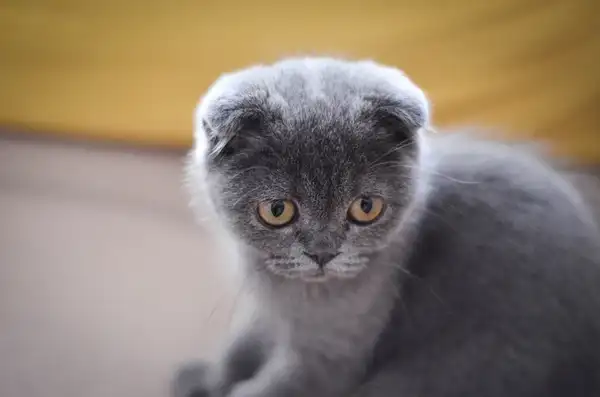
Felidae · CAT
Munchkin
🌟 You may have met one
The name comes directly from the little people ("Munchkin") in The Wizard of Oz. Its short legs come from a naturally-occurring mutation discovered in 1983 in the United States, making it one of the youngest formally recognised cat breeds.
Overview
The Munchkin (曼基康矮脚猫) is a small cat breed weighing 2–4 kg with a 12–15-year lifespan. The "dachshund of the cat world" — short-limbed thanks to a genetic mutation. Playful and affectionate, but the short-leg gene brings skeletal risks; both breeding and buying require caution.
Feeding
Prone to weight gain — measured portions of low-fat, high-protein cat food.
Exercise
Moderate exercise; avoid prolonged jumping to protect the spine.
Grooming
Comes in short and long-haired variants; brush 1-2 times a week depending on coat length.
Health
Skeletal dysplasia and lordosis are the core risks — do thorough due diligence before purchase.
Gallery
A closer look at the Munchkin
From origins and personality to daily care and health — helping you judge whether this little companion is really the one for you.
Origin & history
Origin & history
The Munchkin has the youngest — and most controversial — history of any pedigree cat breed. In 1983, in Rayville, Louisiana, music teacher Sandra Hochenedel rescued a pregnant short-legged black-and-white female from under a truck, naming her **Blackberry**. She kept a male kitten, **Toulouse**, and gave him to a friend, Kay LaFrance — the two founding sires of the entire American Munchkin lineage. The name comes from the **Munchkin** little people in the novel and film The Wizard of Oz.
In the 1990s David Biben and Kay LaFrance pushed the Munchkin toward registered shows. **TICA** admitted it into its New Breed & Color Development Program (the NBC program, allowing display but no championship judging) in 1994, and granted **Championship status in September 2003**.
However, **CFA, FIFe, GCCF (UK), and ANFI (Italy)** to this day refuse to recognise the Munchkin, on the grounds that its founding mutation (chondrodysplasia-type gene) poses long-term skeletal risks. When TICA first publicly displayed the Munchkin in 1991, geneticist Katie Lyons even walked off the judging bench in protest. This ethical debate persists — the Munchkin is one of the most emblematic cases of "pedigreeing vs. animal welfare" in the cat world today.
It is also the foundation of several derivative short-legged breeds: Bambino (Munchkin×Sphynx), Minskin (Munchkin×Sphynx×Burmese×Devon Rex), Napoleon/Minuet (Munchkin×Persian), Skookum (Munchkin×LaPerm), Kinkalow (Munchkin×American Curl).
Looks & breed standard
Looks & breed standard
The Munchkin's core feature is **short legs caused by long-bone hypoplasia** (chondrodysplasia — an achondroplasia-type mutation). The mechanism is the same as in Dachshunds, Corgis, and Basset Hounds: **cartilage-to-bone conversion is impeded**.
Genetically it is an **autosomal dominant mutation (Mun/+)**: - Heterozygous (Mun/+): Short-legged Munchkin - Homozygous (Mun/Mun): **Embryonic lethal** (dies in utero, cannot be born)
This means offspring of two Munchkins are always in a 1:2:1 distribution: 1/4 stillborn, 2/4 short-legged, 1/4 normal-legged. **Responsible breeding never pairs Munchkin × Munchkin**; instead, Munchkin × normal-leg domestic / DSH is used (offspring: 1/2 short, 1/2 normal-leg).
**Leg length has three types** (TICA accepts all three): 1. **Standard Munchkin**: Standard short — limbs uniformly shortened by about 1/3 2. **Super-short**: Even shorter, close to Dachshund proportions 3. **Rug-hugger**: Almost floor-hugging, the shortest type
Comes in short-hair and semi-long-hair varieties. All traditional colours and patterns (solid, tabby, tortie, bicolor, point, silver) are accepted. Small to medium body (females 2-3.5 kg, males 3-4.5 kg); torso and head proportions like a normal domestic cat, only the legs are noticeably shortened.
Personality in depth
Personality in depth
The Munchkin's personality is **completely decoupled** from its appearance — the short legs don't dampen personality; on the contrary, its inability to jump high directs its attention to floor and mid-height space, and to human activity. TICA describes it as outgoing, intelligent, responsive to people, and self-assured.
Among cat lovers it's often nicknamed the "**magpie of the cat world**" — it particularly enjoys collecting small shiny items (keys, earrings, hair clips, coins) and stashing them in its bed. This isn't a bad habit; it reflects high curiosity and strong object possessiveness.
High tolerance of children, dogs, and other cats — a **highly compatible breed for multi-person / multi-pet homes**. It plays fight-games with dogs, sleeps in the same bed as other cats, and lets kids carry it around. The short legs make its "threat profile" so low that other cats rarely react antagonistically at first meet.
It retains all normal cat hunting instincts — chase, pounce, ambush — but **jump height is about 60-70% of a normal cat** (not that it can't jump, just that it can't jump high). It compensates by "standing up on hind legs to look around" — one of the Munchkin's most iconic postures.
Daily care
Daily care
The Munchkin's short legs bring some special care considerations:
1. **Low, flat home layout**: - Cat tree height 60-100 cm — avoid designs above 120 cm (jumping down concentrates impact on the short forelegs) - Provide **stairs / cat steps / ramps** to help access beds, sofas, and bay windows - Litter box entry as low as possible (<10 cm shallow-lipped tray)
2. **Weight management**: - The Munchkin is a breed for which **strict weight control is mandatory**. Any excess weight multiplies joint stress on the short legs - Keep weight within TICA standard (females 2-3.5 kg, males 3-4.5 kg); avoid free-feeding - Annual weigh-in + body condition score (BCS 4-5/9 is ideal)
3. **Exercise**: - Moderate exercise; enjoys ground-level chase, wand toys, laser pointers (with a physical target at the end to avoid frustration) - Avoid letting them jump down from heights (e.g., windowsill to floor)
4. **Grooming**: - Short-hair variety: brush once a week - Semi-long-hair variety: 2-3 times a week - Short legs make it hard to self-groom the back and tail base — owners need to help with these areas - Regular claw trimming (claws grow quickly)
5. **Indoor-only**: The Munchkin **must be kept strictly indoors** — short legs make it nearly impossible to escape dogs, cars, or falls outdoors.
Health & lifespan
Health & lifespan
The Munchkin is one of **the most controversial pedigree cats in terms of health and ethics** today. The core risk stems from the achondroplasia mutation that defines the breed.
1. **Skeletal and joint problems** (the ethical crux): - **Lordosis**: Downward curvature of the spine — can compress internal organs. Prevalence in Munchkins is higher than in ordinary domestic cats - **Pectus excavatum**: Sunken sternum — can compress heart and lungs. Lorimer 2010 J Feline Med Surg review notes elevated pectus excavatum in short-legged cat breeds - **Osteoarthritis**: Early-onset OA is more common in middle-aged Munchkins than in ordinary domestic cats - **Note**: **Not every Munchkin develops severe skeletal problems** — most individuals live comparable lifespans and quality of life to normal cats — but statistical prevalence of the above issues in the group is clearly higher than in ordinary domestic cats
2. **Ethical positions differ**: - **Opposed** (CFA, FIFe, GCCF, UK animal welfare body UFAW, Dutch Ministry of Agriculture): the breed's foundation is a disease mutation — should not be commercially bred. UFAW's "Genetic Welfare Problems of Companion Animals" lists the Munchkin as "breed foundation is disease-causing" - **Supportive** (TICA, supporting breeders): with strict screening and no Munchkin×Munchkin pairings, healthy Munchkins can enjoy a normal quality of life
3. **Recommended genetic / imaging screening**: - Before purchase, request **thoracic and spinal X-rays of both parents** - Avoid extreme rug-hugger types (the shorter the legs, the higher the skeletal load) - If the target individual already shows abnormal gait, obvious lameness, or laboured breathing, **walk away immediately**
4. **Comorbidities**: Munchkins can also carry other common domestic cat genetic diseases (HCM, PKD, rdAc PRA), unrelated to the short-leg gene.
Fit for your space
Fit for your space
Because of its unique body type and ethical controversy, the Munchkin has higher standards for both purchase and living environment than an ordinary domestic cat.
**Good fit for**: - Owners who can provide a fully indoor + low-flat furniture home - Households drawn to "small + affectionate + multi-pet compatible" - Owners committed to weight control and annual check-ups - Buyers who acknowledge the ethical debate and insist on buying from responsible breeders offering imaging screening
**Not a fit for**: - Homes unable to keep the cat indoors (outdoor free-roaming is extremely dangerous for short-legged cats) - Buyers with strong animal-welfare leanings who cannot accept the ethical debate at all (an alternative: adopt an already-existing adult Munchkin rather than support breeding) - Impulse buyers assuming "internet-famous short legs = perfect pet" - Households unable to bear high annual medical costs
**Special note**: - The Munchkin market in China is currently chaotic — **many backyard breeders (BYB)** deliberately do Munchkin × Munchkin pairings with high stillbirth rates for "leg suppression," which is a serious violation of TICA breeding ethics - **Absolutely do not** buy from breeders who "guarantee >75% short-leg rate" or "guarantee rug-hugger births" (this is essentially Munchkin×Munchkin breeding) - The Netherlands, Belgium, and other countries are considering legislation to restrict Munchkin breeding - If you already own a Munchkin, focus on **weight control + low-flat environment + annual check-ups** — this substantially reduces skeletal problem risk
References
This is an educational overview — for specific health and care advice, please consult the authoritative sources below and your veterinarian.
- TICA — Munchkin Breed Standard国际猫协标准
- TICA — Munchkin Breed Group intro & history国际猫协标准
- GCCF — Position statement on Munchkin (non-recognition)国际猫协标准
- UFAW — Genetic Welfare Problems: Munchkin achondroplasia综合科普
- Fyfe et al. 2008 Genomics — Feline dwarfism / UGDH mutation study学术研究
- Lorimer 2010 J Feline Med Surg — Feline pectus excavatum review学术研究
- Farrell & Buckland 2019 Vet Rec — Welfare of extreme conformation cats学术研究
- ICatCare — Munchkin breed & welfare position综合科普
- UC Davis VGL — Feline dwarfism testing services基因检测