Canidae · DOG
Poodle
🌟 You may have met one
The famous "lion clip" actually started as hunting attire. Poodles were originally water retrievers, and owners left long fur around joints and chest for warmth while shaving the rest for less drag in the water.
Overview
The Poodle (贵宾犬) is a medium-sized dog breed weighing 2–30 kg with a 12–15-year lifespan. The second most intelligent dog breed on record, and a barely-shedding godsend for allergy sufferers. Often trimmed into the "Teddy Bear" cut in China, Poodles are smart, affectionate, and made for apartment life.
Feeding
Small-breed formulas with coat- and color-support ingredients.
Exercise
30-60 minutes of daily walking is enough.
Grooming
Curly coat needs monthly grooming; brush regularly to prevent matting.
Health
Prone to tear stains and patellar luxation. Keep the ear canals clean.
Gallery
A closer look at the Poodle
From origins and personality to daily care and health — helping you judge whether this little companion is really the one for you.
Origin & history
Origin & history
There's a century-old international argument over where the Poodle actually comes from. France has adopted it as a **national dog** (Chien national) and calls it the Caniche (from canard, French for "duck"). The AKC and the Poodle Club of America (PCA) explicitly state in their official literature that **the breed originated in Germany** - the English word "Poodle" comes directly from the German Pudel, and Pudelhund literally means "splashing dog" (Low German puddeln = "to splash"). [1][3][4][5]
The likely truth: 15th- and 16th-century paintings from both Germany and France show early Poodle-like water retrievers - curly-coated dogs bred to retrieve waterfowl for hunters. FCI ultimately awarded registration to France while crediting Germany with the domestication. [2][4][5]
The three sizes have completely different job histories: - **Standard Poodle** (>38 cm) - the oldest, used since the 15th century as a waterfowl retriever; - **Miniature Poodle** (25-38 cm) - bred down from the Standard around 1707, used to nose out truffles in the woods; - **Toy Poodle** (<25 cm) - shrunk down further in early-20th-century France into a salon companion for the aristocracy. [2][4][6]
The AKC recognized the Poodle in 1887, one of the earliest breeds on its books. From 1960 to 1982, for 23 straight years, the Poodle held the #1 spot in AKC registrations - the true "most-popular dog of the 20th century." It's still comfortably in the AKC top 5 today. [1][2][7]
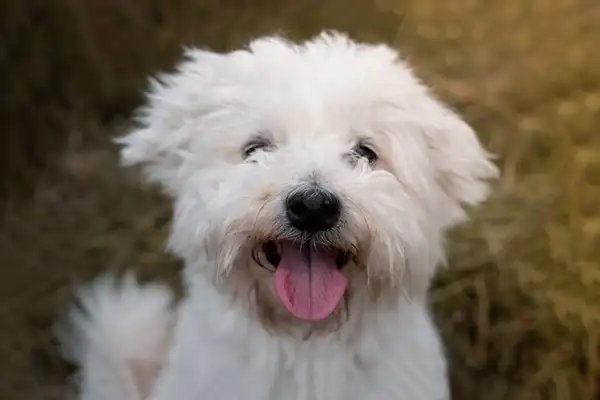
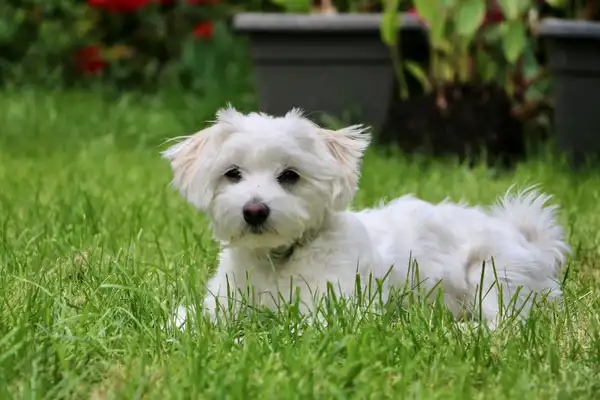
**The "Teddy" you know in China isn't a separate breed** - it's a specific rounded-head grooming style (the Teddy Bear Clip) applied to Poodles. It caught on domestically after 2000. Any "Teddy" you bring home has "Poodle" written on the pedigree.
Personality in depth
Personality in depth
In 1994 University of British Columbia psychology professor Stanley Coren surveyed 199 professional dog judges across 133 breeds for The Intelligence of Dogs. The Poodle came in at **#2** on the resulting obedience-intelligence rankings, behind only the Border Collie and ahead of the German Shepherd (#3) and Golden Retriever (#4). [7][8] That #2 doesn't come from a single size - Standard, Miniature, and Toy Poodles share the same cognitive baseline; Toys just react more sharply to environmental stimuli. [7][8]
By the numbers: Poodles learn a new command in fewer than five repetitions on average, and follow it correctly on the first try about 95% of the time. A typical dog needs 25-40 repetitions and gets it right first-time only about 50% of the time. [7][8]
But a high IQ cuts both ways: an under-stimulated Poodle will invent trouble - spinning in circles, obsessive paw-licking, fixations on random objects, extreme clinginess, separation anxiety. That's not a personality flaw; it's the inevitable output of a high-end brain running idle. [7][8]
On temperament: Poodles are extremely bonded to family (Toy Poodles especially - they can barely tolerate being alone), but keep polite distance from strangers; unlike most small breeds, they don't bark habitually - only when there's an actual reason; they're kid-friendly but suit older, calmer children better (preschoolers can startle a sensitive Toy Poodle right back).
Daily care
Daily care
Coat management is the Poodle's biggest running cost. The hair basically doesn't shed, but it grows continuously like human hair - skip trimming and it mats, mildews, clogs follicles, and can trigger skin infections. The domestic-standard routine: **brush every 2-3 days at home to prevent mats, plus a professional groom every 6-8 weeks** (150-400 RMB per session in tier-1 cities). Common looks include the Teddy Bear, the Lamb Clip, and the classic Continental. [8]
Ears are the second big pit. Poodles have long drop ears with hair growing inside the canal - a hotspot for otitis externa. Weekly checks, ear-hair plucking (a groomer service), and ear-cleaner as needed are all required. [6]
Exercise scales with size: - Standard: 1.5-2 hours a day - athletic, great for agility, canicross, swimming; - Miniature: 1-1.5 hours a day - park time plus training; - Toy: 30-45 minutes of walking a day plus indoor puzzle games - the classic city apartment companion. [7]
All sizes need **mental stimulation** - obedience training, snuffle mats, puzzle toys. Studies show Poodles lose interest fast on repetitive tasks; keep introducing new variables during training.
On feeding: Toy and Miniature Poodles are prone to hypoglycemia (especially puppies), so feed 3-4 small meals a day. The Standard Poodle is a deep-chested large breed with a **high risk of gastric dilatation-volvulus (GDV / bloat)** - OFA data puts lifetime risk at 5-8%. Skip vigorous activity within an hour of eating, and consider prophylactic gastropexy at spay/neuter time. [10]
Health & lifespan
Health & lifespan
Poodles are long-lived overall, but lifespan varies sharply with size: - Standard: median 10-13 years (about 12) - Miniature: 12-15 years (about 14) - Toy: 14-18 years (about 15-16, with individuals reaching 20). [6]
**Standard Poodles** carry the same broad risks as other deep-chested large breeds, plus a few breed-specific issues: - **Sebaceous adenitis (SA)**: the Poodle's signature hereditary skin disease; PCA/OFA data puts carrier or affected rates at 28-50%. Symptoms include symmetrical hair loss, dandruff, and an oily odor; [9] - **Addison's disease**: adrenocortical insufficiency, prevalence 1.76% in Standards - about 30 times the general canine rate of 0.06%; [9][10] - **GDV (bloat)**: 5-8% lifetime risk; [10] - **Hip dysplasia**: OFA data 12-12.6% (higher than the all-breed average, but well below the German Shepherd); [9][10] - **PRA (progressive retinal atrophy)**: prcd-form carrier rate 8-10%, DNA testable. [9][10]
**Miniature and Toy Poodles** shift over to a small-breed problem set: - **Patellar luxation**: common across small breeds; - **Tracheal collapse and mitral valve degeneration** (especially older Toys); - **Periodontal disease**: 42 teeth crammed into a small mouth means tartar builds fast - daily brushing required.
All sizes need to watch for **idiopathic epilepsy**, **von Willebrand disease** (a coagulation factor deficiency; carrier rate 1.6-8% in Standards), and **hypoglycemia** (common in Toy puppies). [9][10]
The PCA CHIC certification requires: hips + eyes + thyroid + cardiac + SA skin biopsy (Standard-specific). Ask breeders for these certificates before you buy.
Fit for your space
Fit for your space
The Poodle is one of the **very few breeds that genuinely thrives in a high-rise apartment**: no shedding (no floating hair), essentially no doggy odor, only barks when there's a reason, and available in the size you need (Toys and Minis are ideal for tight footprints). That's why it has stayed popular for decades in China's big cities.
Temperature tolerance is average. The curly coat traps insulating air pockets but there's no dense undercoat, so winter walks over 20 minutes need a coat - especially right after a short groom. In summer, watch for damp ear canals and otitis.
Poodles are great in multi-pet homes: gentle, non-domineering, and easy with cats and other dogs. They're kid-friendly, but Toy Poodles have very fragile bones (thin as bamboo skewers) - preschoolers should not handle them alone; fractures happen easily. [6]
For travel, the Poodle is essentially the ideal companion: no-shed means no hair on planes or in hotels, high socialization means less barking, and Toys and Minis fit in an under-seat carrier. [6]
Common myths & adoption tips
Common myths & adoption tips
**Myth 1: "Poodles (Teddies) are hypoallergenic - guaranteed no allergic reaction."** The PCA's official language is "minimally shedding" - they never use "hypoallergenic." The core allergen for humans is Can f1 protein, which comes from saliva, urine, and skin dander, not the hair itself. Poodles just don't shed and disperse, so household allergen buildup is genuinely lower than with other breeds. [7][8] If you have severe allergies, spend a few hours at the breeder's home before you commit.
**Myth 2: "A Teddy is its own breed."** No. Teddy is just a rounded-head grooming style applied to a Poodle - the pedigree still says Poodle. Many domestic "teacup Poodles" and "toy Teddies" are undersize Toy Poodles or crosses with Maltese or Bichon Frise, and health risks jump accordingly.
**Myth 3: "Poodles are cheap and easy."** The exact opposite. Annual grooming (every 6-8 weeks at 150-400 RMB in tier-1 cities) totals 2,000-3,000 RMB; add ear care, dental care, and biannual professional skin exams (to catch SA early), and the Poodle is one of the more expensive breeds to keep. [6][8]
**Adoption tips**: - Check coat texture - **curly, dense, and coarse** is correct; soft, silky, or sparse is a major fault and predicts skin trouble later; [9] - Eyes should be dark and oval - bulging eyes or light-colored eyes are disqualifications; - Ask the breeder whether the parents have completed the PCA CHIC five (hips, eyes, thyroid, cardiac, SA); - Skip Toy Poodles marketed as "teacup" (<2 kg) - hypoglycemia, tracheal collapse, and heart disease risks scale up sharply; - Domestic breeder pricing: Toy Poodles 3,000-8,000 RMB, Standards 5,000-15,000 RMB, show pedigrees 20,000+; anything under 1,000 is almost certainly a broker.
References
This is an educational overview — for specific health and care advice, please consult the authoritative sources below and your veterinarian.
- [1] Poodle - AKC 官方品种介绍Official
- [2] Poodle Club of America 官方历史资料Official
- [3] Poodle 中文维基百科Encyclopedia
- [4] The History of Poodles: From Water Retrievers to CompanionsEncyclopedia
- [5] What Were Poodles Bred For - 三种尺寸的原始用途Encyclopedia
- [6] Poodle Complete Breed Guide (breedbible)Encyclopedia
- [7] Poodle Breed Guide - Nomad Paws (Coren 智商 + 低敏说明)Study
- [8] The Poodle: the second most intelligent breed (Coren 199 位评审 133 个品种)Study
- [9] Breeding Standard Poodles - SA/Addison/PRA 遗传病数据Study
- [10] Poodle (Standard) Health Guide - OFA 数据 (dogmatchup)Study