Canidae · DOG
Schnauzer
🌟 You may have met one
That iconic beard is protective gear. "Schnauzer" literally means "snout" in German — the breed is named after its own face.
Overview
The Schnauzer (雪纳瑞) is a medium-sized dog breed weighing 5–48 kg with a 12–15-year lifespan. The trademark beard and bushy brows give this breed a professorial air. Smart, alert, and virtually non-shedding, the Schnauzer is a friend to allergy sufferers.
Feeding
Small-breed formula, avoid fatty or salty foods.
Exercise
About one hour of walking a day.
Grooming
Beard needs daily cleaning; professional trim monthly.
Health
Prone to hyperlipidemia, pancreatitis, and cataracts.
Gallery
A closer look at the Schnauzer
From origins and personality to daily care and health — helping you judge whether this little companion is really the one for you.
Origin & history
Origin & history
The Schnauzer isn't one breed but three: Miniature (Zwergschnauzer), Standard (Mittelschnauzer), and Giant (Riesenschnauzer). All share the beard-brows-square-face template, but AKC places Standards and Giants in the Working Group and Miniatures in the Terrier Group — even though the Standard Schnauzer Club of America (SSCA) explicitly states in official texts that the Miniature is not a terrier: "It shares neither structure nor bloodline with British terriers, and is genetically closer to continental European herding and hunting dogs." [2][3] **The Standard is the prototype**: it originated on Bavarian farms in southern Germany in the 15th century, first known as the Wirehaired Pinscher, doing triple duty as a ratter, guardian, and market escort — its recognizable form appears in 15th- and 16th-century paintings and sculptures. [1][2] Formal breeding began in 1879 when a male dog named "Schnauzer" won first prize at Hanover's third international dog show. Four years later (1884) Germany published the first breed standard, and in 1902 the Pinscher Klub (later PSK) issued its first stud book listing 353 dogs — 248 Standards, 14 Miniatures, 8 German Pinschers, and 83 Miniature Pinschers. [2] **The Miniature** was created from Standard × Affenpinscher × Poodle × Miniature Pinscher, first shown separately in 1899, and recognized by AKC in 1926. [1][4] **The Giant** was bred by Bavarian cattle drovers as Standard × Great Dane crosses, working as cattle drivers, butchers' dogs, and brewery guards, and was systematically adopted by German police in the late 19th century. [1][3] All three types served as messenger and rescue dogs for the German Red Cross during WWI. [1][2]
Looks & breed standard
Looks & breed standard
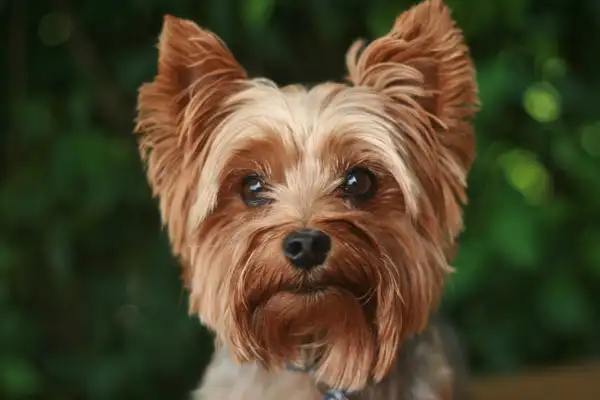
The AKC standard defines the Schnauzer as "square-built" — body length equals shoulder height. Miniature: 12-14 in (30-36 cm), 11-20 lb (5-9 kg); Standard: 17-20 in (43-51 cm), 35-45 lb (16-20 kg); Giant: 23.5-27.5 in (60-70 cm), 55-90 lb (25-41 kg). The head is rectangular, muzzle and skull equal in length and parallel — a stark contrast to the wedge head and short muzzle of British terriers. [2][4] Three colors are recognized: **salt and pepper** — each guard hair carries banded black-and-white agouti patterning, gray at a distance, three-dimensional up close; **solid black** — fixed in the late 19th century via crosses with black Poodles; **black and silver** — unique to Miniatures. Before 1907 the German standard also allowed "red pepper", but it was dropped in the second revision. [3] The beard and eyebrows aren't decoration but function — early Schnauzers were bitten on the muzzle by rodents, and a thick beard offered physical protection. In show terminology these are called "furnishings", maintained by hand-stripping to preserve harsh texture; clippers work at home but soften the coat. [1][4] The coat is double: a wiry outercoat over a soft dense undercoat, and it barely sheds.
Personality in depth
Personality in depth
Schnauzers rank #12 (Miniature), #18 (Standard), and #35 (Giant) on Stanley Coren's canine intelligence list; they master basic cues in 3-5 repetitions with over 85% obedience — a direct legacy of the versatile farm-dog role. [3][5] SSCA describes the character as "alert, affectionate, protective, reliable with a good sense of humor", specifically noting the Schnauzer isn't a one-person dog and treats the entire family as its pack, with high tolerance for children. [4] But **it is a lifelong watchdog** — territorial, wary of strangers, and quick to bark loudly at doorbells, footsteps, or other animals. Untrained Schnauzers are the textbook noisy small dog, so early socialization and a "quiet" cue are non-negotiable. [5] Miniature Schnauzers retain terrier-style **prey drive**: they will chase small rodents, birds, and squirrels, so keep them well away from hamsters or parrots. [1] The worst training approach is heavy-handed correction — Schnauzers are smart and **strong-willed**, and SSCA warns owners "you must train consistently from puppyhood", or the dog will learn its rules are negotiable and start challenging authority. [4] With other dogs, same-sex Schnauzers (especially two adult male Standards) may show same-sex aggression; multi-dog households are safer with mixed sexes or with early socialization.
Daily care
Daily care
Schnauzers barely shed (AKC calls them hypoallergenic-leaning), but they need brushing at least twice a week — a slicker for the body coat, a fine comb for the beard to prevent food debris tangles. [1][2] They also need professional grooming every 5-8 weeks in one of two schools. **Hand-stripping** — the show-ring standard: dead outer hairs are pulled out with a stripping stone or fingers so new hairs grow in wiry. Sessions run 90-180 minutes at 300-800 CNY each. **Clipping** — the household shortcut: outer hair is buzzed short with electric clippers. Fast (40-80 minutes at 200-400 CNY), but it permanently softens the coat and fades the color (black to gray). [1] **Beard cleaning is a daily task** — food and drool cling to the beard, breeding bacteria and creating "beard funk". Britannica recommends a daily wet-wipe, ideally after every meal, followed by drying. [1] Bathe every 4-6 weeks with a low-allergen dog shampoo, avoiding the eye area. Dental care is less urgent than for toy breeds but daily brushing plus annual cleanings are still recommended. Exercise: 30-45 minutes of walking a day covers Miniatures; Standards and Giants need 60-90 minutes plus a job (nose games, cart-pulling, agility). Idle Giants develop destructive behavior.
Health & lifespan
Health & lifespan
**Miniature Schnauzers** carry the heaviest disease load of the three. ① **Primary hypertriglyceridemia (HTG)** — a 2024 University of Minnesota study found that over 40% of Miniatures aged 6+ have elevated triglycerides. It's a breed-specific metabolic defect that can trigger pancreatitis, gallbladder mucocele, and proteinuria. ② **Pancreatitis** — Miniatures with hyperlipidemia are **5×** more likely to develop it; acute cases present with vomiting, severe abdominal pain, refusal to eat, and dehydration, and can be fatal. ③ **Calcium oxalate bladder stones** — in one study of 4,000 stone cases, over 15% came from Miniatures, with males at 3× the risk of females; average diagnosis at 9 years. ④ **Schnauzer Comedone Syndrome** — unique to Miniatures, blackheads form along the spine; treat secondary infections with antibacterial baths. ⑤ **Progressive retinal atrophy (PRA)** and congenital myotonia (bunny-hop gait when running) both have DNA tests available. [6][7][8] Management: lifelong low-fat diet (<1.7-2.9 g fat per 100 kcal), annual fasting lipid screening, DNA tests for PMDS, myotonia, and PRA. [7][8] **Standard Schnauzers** are the healthiest of the trio — SSCA calls them "hardy and long-lived with few hereditary illnesses", lifespan 13-16, main screening for hips and eyes. [4] **Giant Schnauzers** face the deep-chested large-breed hazard: gastric dilatation-volvulus (GDV/bloat) is the #1 killer. Skip exercise for an hour after meals, and consider prophylactic gastropexy. [6]
Fit for your space
Fit for your space
Space needs vary sharply. **Miniature** — apartment perfect: 5-9 kg, 30-45 minutes of walks, virtually no shedding and low body odor. AKC lists the Miniature in the top 20 in the US (#17 in 2024). **Standard** — needs a mid-sized home or a large apartment plus 60 minutes of exercise with stamina. **Giant** — needs a yard or suburban home; the 25-41 kg build plus busy working-dog mind means small apartments cause behavioral issues. [1][3][4] All three tolerate climate well, but need shade and water in summer (dark salt-and-pepper coats heat up fast in sun), and cold-tolerance beats short-haired breeds in winter. [1] SSCA specifically markets the Schnauzer as a family dog — unlike a Husky (aloof) or a Corgi (one-person), it distributes affection evenly and is especially good with school-age kids. [4] The **watchdog instinct** in a high-rise means talking to neighbors upfront: doorbells and hallway noise trigger barking. Train a "three-bark rule" (bark three times, then quiet on cue) rather than trying to eliminate barking entirely. [5] Separation anxiety is moderate — milder than Bichons, Poms, or Yorkies — but keep alone-time under 8 hours. Ideal for households with someone home once or twice a day, or remote workers.
References
This is an educational overview — for specific health and care advice, please consult the authoritative sources below and your veterinarian.
- [1] Schnauzer 三大品种 - Miniature/Standard/Giant 起源与用途 (Britannica 2026)Official
- [2] 标准雪纳瑞判决手册 - AKC Judges Standard (SSCA 官方 PDF)Official
- [3] Standard Schnauzer 早期历史与美国注册 (Standard Schnauzer Club of America)Official
- [4] Miniature Schnauzer 繁育与健康 - AMSC 官方资源 (Breed Tracker)Study
- [5] 雪纳瑞:自带绅士范的卷毛勇士 - Coren 智商第 12、性格分析 (南京日报 2025-11)Review
- [6] Schnauzer 三大品种健康问题详解 (Science Insights 2026-03)Study
- [7] 迷你雪纳瑞高甘油三酯基因分析 - 6 岁 >40% 患病率 (PMC/Genes 2024)Study
- [8] 迷你雪纳瑞代谢与结石专题 - 血脂/胰腺炎/草酸钙 (University of Minnesota)Study