Felidae · CAT
Bengal
🌟 You may have met one
The Bengal's spotted coat descends directly from crosses with the Asian leopard cat — its wild ancestor. Modern show Bengals are typically F5 or later generations, several steps removed from any wild parent.
Overview
The Bengal (孟加拉豹猫) is a large cat breed weighing 3.5–7 kg with a 12–16-year lifespan. A hybrid descendant of the Asian leopard cat and the domestic cat, with a wild-looking spotted coat. Energetic, smart, mischievous — a high-maintenance but magnetic companion.
Feeding
Fast metabolism — a high-protein diet fed in small frequent meals.
Exercise
Very high exercise needs. A large cat tree and 1+ hour of daily interaction are required.
Grooming
Short coat is easy — brush weekly.
Health
Prone to HCM and PK deficiency (a red-cell disease). Choose a breeder who does genetic testing.
Gallery
A closer look at the Bengal
From origins and personality to daily care and health — helping you judge whether this little companion is really the one for you.
Origin & history
Jean Mill and the 1963 domestic × Asian leopard cat cross
Origin & history
Jean Mill and the 1963 domestic × Asian leopard cat cross
The Bengal's origin is a deliberate interspecies-hybridization experiment in domestic cat history. In 1963, California breeder Jean Mill mated a black domestic cat with an Asian leopard cat (Prionailurus bengalensis), aiming to produce offspring with wild spot patterns and a domestic temperament. The experiment continued into the 1970s, unexpectedly getting a boost from a Loma Linda University leukemia research program (Willard Centerwall was using Asian leopard cats to study cancer resistance genes), which supplied additional hybrid queens.
In 1980 Jean Mill received 8 F1 females from Centerwall and repeatedly outcrossed them to domestic cats (Egyptian Maus, Burmese, Indian street cats). TICA first accepted registration in 1986, and in 1991 the Bengal was granted Championship status by TICA — the first "wild-hybrid-descended" breed to gain mainstream acceptance. CFA still refuses to recognize the Bengal, citing the persistence of wild-animal genetics in some lines.
**F-generation** is the crucial concept for this breed: F1 is domestic × Asian leopard cat (50% wild), F2 and F3 are backcrosses. Only F4 and later (at least four generations of domestic outcrossing after the initial hybrid) qualify as "Studbook Traditional" and are legal as household pets in most jurisdictions. Many countries prohibit private ownership of F1-F3.
Looks & breed standard
Spots + rosettes + glitter
Looks & breed standard
Spots + rosettes + glitter
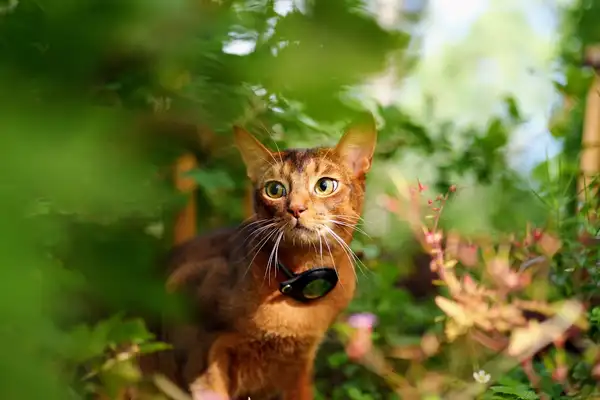
The Bengal's calling card is a wild-cat-like spotted coat. TICA recognizes three main patterns: Spotted (single-color spots, most common), Rosetted (two-tone rosette outlines like a small leopard), and Marbled (a swirled pattern derived from the classic tabby gene). Rosettes are the most direct visual evidence of Asian leopard cat ancestry.
The most distinctive optical feature is **glitter** — a metallic sheen on the coat surface visible in sunlight, brought into the breed from an Indian street cat obtained from the Delhi Zoo. About 60% of Bengals show noticeable glitter.
Body type is medium-large, lean, and heavily muscled. Adult males are 5-7 kg, females 3.5-5 kg. The head is wedge-shaped but more three-dimensional than a Siamese, with a broad nose bridge, high cheekbones, and round eyes. The tail is thick with a black tip. Overall, the Bengal reads as a small leopard rather than a house cat.
Personality in depth
Very high energy + very high intelligence + a challenging cat to keep
Personality in depth
Very high energy + very high intelligence + a challenging cat to keep
The Bengal is one of the highest-energy domestic breeds. TICA describes it as "highly active, intelligent, dog-like." It needs exercise, mental stimulation, and owner engagement well above what other domestic cats require — many first-time owners burn out within three months.
Bengals can be trained to fetch, shake, walk on a leash, and open doors and drawers. Their intelligence is roughly on par with a 2-3 year-old child. That intelligence cuts both ways — without enough enrichment, the cat will invent its own "projects": raiding drawers, upending trash cans, turning on faucets, and pushing objects off tables one by one.
Bengals love water — actively playing in sinks, bathtubs, and toilet bowls. This is a direct expression of the Asian leopard cat's wild heritage, where it hunts fish along streams as an amphibious predator.
Bengals bond deeply with their families and can live with dogs, other friendly cats, and older children — but they are not suited to households with young infants or long stretches of no one being home.
Daily care
Heavy exercise + environmental enrichment + high-protein multiple meals
Daily care
Heavy exercise + environmental enrichment + high-protein multiple meals
The Bengal's daily care needs go well beyond an ordinary domestic cat's:
1. **At least 1 hour of high-intensity interactive play daily**: Da Bird, wand toys, chase games, rotating puzzle toys. Under-exercise leads to destruction and anxiety.
2. **Environmental enrichment**: at minimum a large cat tree (>180 cm), cat wall, tunnels, and a running wheel (Bengals are among the most likely domestic cats to actually use one). Space to "do things" is a hard requirement.
3. **Diet**: fast metabolism plus muscular build calls for high-protein (>40%), moderate-fat, low-carb food. Small meals 3-4 times a day. Bengals are also among the most suited breeds for a raw (BARF) diet, but consult a veterinary nutritionist first.
4. **Grooming**: short coat is easy — once a week is enough. Shedding is on the low side.
5. **Leash training**: the Bengal is one of the few domestic cats that reliably trains to a harness. Modest outdoor walks noticeably improve their psychological well-being.
Health & lifespan
PK-Def, HCM, PRA, and immune sensitivities from wild genes
Health & lifespan
PK-Def, HCM, PRA, and immune sensitivities from wild genes
The Bengal's main breed diseases:
1. **Pyruvate Kinase Deficiency (PK-Def)**: an autosomal recessive red-cell metabolic disorder producing chronic anemia in homozygotes. Specific to Bengals through their Abyssinian ancestry, with a well-defined PKLR genetic test (Grahn et al. 2012 BMC Vet Res). All responsible breeders screen for it.
2. **Hypertrophic Cardiomyopathy (HCM)**: moderate incidence in Bengals, with annual cardiac ultrasound recommended.
3. **Progressive Retinal Atrophy (PRA-b)**: shares the same CEP290 mutation as the Abyssinian; genetic testing is available.
4. **Distal Neuropathy ("flat-foot" syndrome)**: a rare familial neuropathy causing hind-leg weakness with age-dependent onset.
5. **Immune sensitivity**: because they retain some wild ancestry, Bengals can react more strongly than domestic cats to certain vaccines (especially modified-live) and certain antibiotics — consult an experienced feline vet.
Fit for your space
Not a beginner breed: needs space, time, and experience
Fit for your space
Not a beginner breed: needs space, time, and experience
The Bengal **is not for first-time cat owners**, **is not suited to solo life in a small apartment**, and **is not suited to a home that's empty most of the day**. Both ICatCare and TICA emphasize this repeatedly.
Ideal household: at least a full room's worth of activity space plus a large cat tree, someone home 4-6 hours a day, and prior cat-owning experience. A single-family home with a yard (fitted with a cat-proof enclosure) is ideal.
Many countries and US states restrict F1-F4 generations. Check local law before purchasing — for example, New York City bans F1-F4 private ownership under Health Code §161.01, and many Chinese customs and provincial animal-quarantine authorities restrict entry of hybrid-ancestry cats.
Even for F5+ traditional Bengals, a two-person household is preferable to a solo owner. Their need for companionship approaches that of a dog.
References
This is an educational overview — for specific health and care advice, please consult the authoritative sources below and your veterinarian.
- TICA — Bengal Breed Standard国际猫协标准
- The International Bengal Cat Society (TIBCS)全国单猫种俱乐部
- Grahn et al. 2012 BMC Vet Res — Feline PK deficiency (PKLR)学术研究
- Menotti-Raymond et al. 2007 Genomics — CEP290 rdAc PRA in cats学术研究
- UC Davis VGL — Bengal Panel (PK-Def, PRA-b)基因检测
- ICatCare — Bengal breed profile综合科普
- IUCN Red List — Prionailurus bengalensis (Asian Leopard Cat)物种档案
- NYC Health Code §161.01 — Prohibited wild animal hybrids法律法规
- Bengal Cat History — Jean Mill and origin历史文献