Felidae · CAT
British Shorthair
🌟 You may have met one
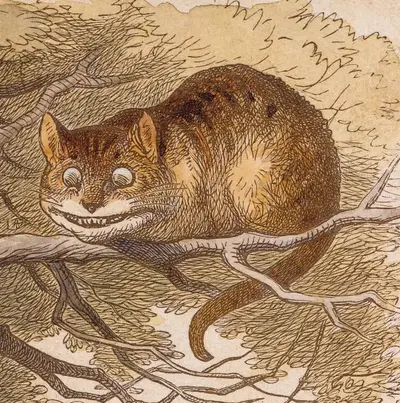
The Cheshire Cat from *Alice in Wonderland* — the smiling cat who can vanish into thin air — was inspired by the British Shorthair. That round face and naturally upturned mouth is the breed's signature.
Overview
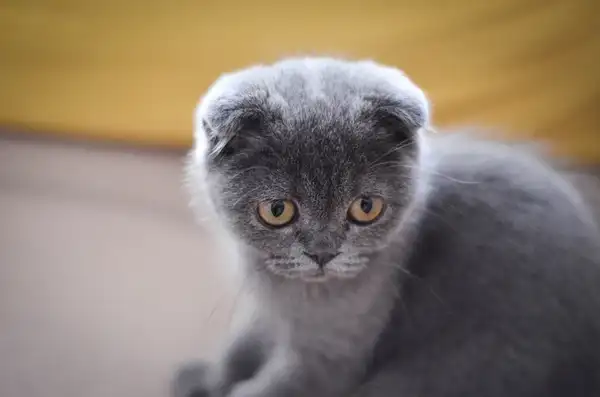
The British Shorthair (英国短毛猫) is a medium-sized cat breed weighing 4–8 kg with a 14–20-year lifespan. Round face, round eyes, and a plush coat — the poster child of the "Blue chubby." Steady, not particularly clingy, and comfortable being alone, this is universally regarded as one of the easiest family cats to raise. Blue-and-white and silver shaded coats are especially popular.
Feeding
Prone to weight gain — measure meals and manage adult weight closely. Prefer low-fat, low-allergen formulas.
Exercise
Low exercise drive. Ten to fifteen minutes of wand-toy play a day is enough — otherwise obesity sets in.
Grooming
Brush once or twice a week; shedding picks up seasonally. Clean ears and eyes routinely.
Health
Watch for hypertrophic cardiomyopathy (HCM) and obesity — annual checkups and weight management matter.
Gallery
A closer look at the British Shorthair
From origins and personality to daily care and health — helping you judge whether this little companion is really the one for you.
Origin & history
The island shorthair the Roman legions brought over
Origin & history
The island shorthair the Roman legions brought over
The British Shorthair is Britain's oldest native cat breed, tracing back 2,000 years to Egyptian domestic cats brought over by the Roman legions. On the British Isles these cats crossed with local wildcats and gradually evolved a rounded face, sturdy bone structure, and dense short coat suited to the cold and rainy climate.
In 1871 Harrison Weir — the "father of the cat show" — hosted the first modern cat show at London's Crystal Palace, and the mainstay of the exhibition was the British Shorthair. In his book that same year, *Our Cats and All About Them*, he called it "the most standardized native shorthair breed in Britain."
From the late 19th to early 20th centuries, the Persian craze pushed the breed to near extinction. After WWII, breeders outcrossed to Persians, Russian Blues, Burmese, and even Chartreux to preserve the round outline and dense coat we know today. The GCCF officially recognized the breed in 1949; the CFA didn't follow until 1980.
Looks & breed standard
The copper-plate face, blue coat, and 30+ official colors
Looks & breed standard
The copper-plate face, blue coat, and 30+ official colors
The most iconic form is the "Blue chubby" — officially British Blue, an even, unmarked blue-gray. But under GCCF and CFA standards, the British Shorthair is registered in more than 30 colors: from solids (blue, black, white, cream, chocolate, lilac) to silver tabbies, golden shaded, tortoiseshell, bicolor, and colorpoint.
Body type is classic cobby: broad chest, short legs, thick limbs. Adult males average 5-8 kg; females 4-6 kg. The head is a round "copper plate" with full cheeks; eyes are round and large — copper or deep gold in blues, green in silver shaded.
Coat texture is the giveaway feature — short, dense, standing straight up, with a heavy plush hand-feel that breeders call "crisp" or "resilient." It's a single-layer coat with no fine undercoat, so unlike Persians it doesn't mat.
Personality in depth
The reserved English gentleman, top-tier at solo time
Personality in depth
The reserved English gentleman, top-tier at solo time
The classic profile of the British Shorthair is "the gentleman cat": emotionally stable, undemanding, and rarely irritable. FIFe and GCCF breed descriptions both use *reserved but affectionate* — they love their people, but dislike invasive intimacy like being carried or having their belly rubbed.
British Shorthairs are among the most alone-tolerant of house cats. Dual-income households can leave them alone for 8-10 hours without triggering anxiety, which is why they're called "the working person's cat" in the UK. Reserved doesn't mean cold — they'll follow quietly to your feet when you come home and sit in the same room, just at their own distance.
They tolerate children and other pets well because their reactions are slow and they don't easily startle. But note: they also dislike being chased or picked up forcibly, and children need coaching to live well with them long-term.
Daily care
Low activity, easy to grow chubby — brush 1-2× weekly
Daily care
Low activity, easy to grow chubby — brush 1-2× weekly
Daily care for a British Shorthair points to one thing: control the mouth, move the legs. They have naturally slow metabolism and low exercise drive; adults over 8 kg are common, and once past 10 kg they're pathologically obese, which meaningfully shortens lifespan and can trigger HCM.
Feed at the low end of package guidelines for adult cat food, split into 2-3 meals a day. Between 6 months and 1 year is the frame-building phase — feed liberally. From 1 year on, switch to a calorie-controlled adult formula. Treats (freeze-dried, churu-type creamy treats especially) should stay under 10% of daily calories.
Brushing every 1-2 weeks is enough — only during coat blows (spring and autumn) is 2-3 times a week with a de-shedding comb needed. British Shorthairs dislike water and generally don't need bathing unless there's localized soiling.
Health & lifespan
PKD, HCM, and blood-type B — a triple screening plan
Health & lifespan
PKD, HCM, and blood-type B — a triple screening plan
The three most important breed diseases: Polycystic Kidney Disease (PKD), Hypertrophic Cardiomyopathy (HCM), and blood type B.
PKD is caused by a single-point mutation in PKD1 — kidneys develop progressive cysts in adulthood, ultimately leading to kidney failure. Fortunately, responsible breeding has driven the British Shorthair PKD-positive rate from 40%+ in the 1990s down below 5% today. Both CFA and IPFD require breeding cats to be genetically tested.
HCM is the most common fatal heart disease in domestic cats overall, and the British Shorthair is on the high-risk list. Unlike Maine Coons or Ragdolls, no breed-specific mutation is testable — annual cardiac ultrasound screening is the mainstay.
Blood type B is a key concern: about 20-40% of British Shorthairs are type B. If a type-B queen is bred to a type-A tom, the litter can develop Neonatal Isoerythrolysis (NI), and kittens must be isolated and hand-fed within the first 24 hours. Ask breeders for blood-type test reports at adoption or purchase.
Fit for your space
Zero apartment stress — the perfect roommate for solo living
Fit for your space
Zero apartment stress — the perfect roommate for solo living
British Shorthairs demand very little in space — they'd rather nap on the same sofa or rug all day than dash around the house like a Siamese or Maine Coon. A 40-square-meter one-bedroom apartment is plenty, as long as there's a sunny window perch and a scratching post.
They tolerate solitude but hate noise: moving, renovation, sudden new cats or dogs can all trigger fur loss, appetite drop, and even lower urinary tract stress in a British Shorthair. Introduce new companions using the 7-7-7 gradual method (7 days apart + 7 days behind bars + 7 days co-existing).
They are strictly indoor cats — outdoor access is not recommended. Their slow reactions and low vigilance leave them vulnerable to vehicles, dogs, and unfamiliar environments; long-term outdoor life meaningfully shortens lifespan and raises parasite, FIV, and FeLV infection risks.
References
This is an educational overview — for specific health and care advice, please consult the authoritative sources below and your veterinarian.
- CFA — British Shorthair Breed Standard官方猫协会
- GCCF — British Shorthair Standard of Points英国猫协标准
- FIFe — British Shorthair (BSH) Standard国际猫协标准
- ICatCare — British Shorthair breed profile综合科普
- Harrison Weir 1889 — Our Cats and All About Them历史文献
- Longeri et al. 2013 J Vet Intern Med — PKD1 prevalence update学术研究
- Meurs et al. 2005 HMG — HCM in cats学术研究
- UC Davis VGL — Feline Blood Type (A/B) Test基因检测
- The Cat Fanciers' Association — Article: The British Shorthair综合科普