Felidae · CAT
Exotic Shorthair
🌟 You may have met one

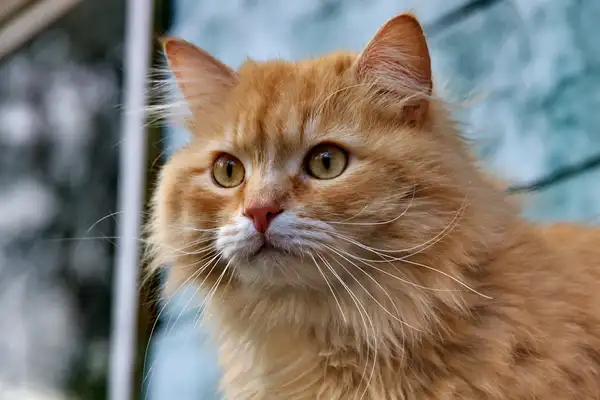
The direct inspiration for Garfield the cat. When Jim Davis drew Garfield in 1978, he drew an orange Exotic Shorthair — and "fat, lazy, lasagna-obsessed" became the Exotic's brand for good.
Overview
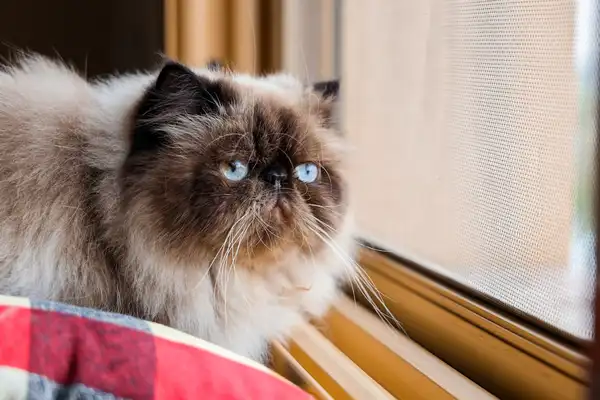
The Exotic Shorthair (异国短毛猫) is a medium-sized cat breed weighing 3–6 kg with a 12–15-year lifespan. The template for Garfield — a flat-faced, big-eyed short-haired "Persian." Zen, clingy, soft-voiced, and low-energy — a natural fit for apartment homes.
Feeding
The flat face makes eating awkward — use shallow, wide bowls and measure premium cat food.
Exercise
Very low exercise needs; play together at a leisurely pace.
Grooming
Short coat, but brush 2–3 times a week; wipe eye stains daily.
Health
Prone to polycystic kidney disease, brachycephalic airway syndrome, and HCM — check family history before buying.
Gallery
A closer look at the Exotic Shorthair
From origins and personality to daily care and health — helping you judge whether this little companion is really the one for you.
Origin & history
Origin & history
The Exotic Shorthair traces to a 1960s CFA breeding "failure." American Shorthair breeders wanted to add the Persian's silver coat to their ASH, so they crossed Persians and ASHs — but the resulting kittens generally inherited the Persian's round face and short muzzle, losing the ASH's original look.
CFA breeder Jane Martinke realized these kittens were adorable — Persian-like, but with a short coat that didn't need daily grooming. She lobbied the CFA to recognize this "short-coated Persian," and in 1966 the Exotic Shorthair became an official CFA breed, allowed to continue crossing with Persians (the two share a gene pool).
From the 1980s to the 1990s, the Exotic became fashionable as "Persian-like but low-maintenance" and briefly cracked the CFA top five in registrations. The breed standard is identical to the Persian's — the only differences are coat length and the recessive KRT71 (long-hair) gene.
Looks & breed standard
Looks & breed standard
The Exotic's appearance standard is identical to the Persian's — just with a short coat: short body, short legs, short neck, short muzzle, known in the breed as the "four shorts." It is one of the most extremely brachycephalic domestic cat breeds.
Medium body length, round and full torso; adult males 4–6 kg, females 3–5 kg. The head is spherical, the eyes are round and large, ears set widely apart. CFA standard requires the nose break to sit level with the middle of the eyes — the core of the "Garfield face."
Coat texture is the only real difference from the Persian: short, dense, and standing upright, with the plush hand-feel of a stuffed animal. The CFA recognizes 60+ colors, identical to the Persian palette.
Worth noting: **long-haired Exotics do appear** — because the Exotic gene pool still shares with Persians, roughly 25% of Exotic-Exotic litters produce long-haired kittens (Divisional Longhair), which the CFA registers as Persians.
Personality in depth
Personality in depth
The Exotic's temperament is close to the Persian's — quiet, gentle, elegant — but slightly more active, having inherited a bit of the ASH's playfulness. The CFA describes it as "sweet, gentle, playful but not hyper."
Deeply attached to family, particularly fond of lying in laps or beside knees; moderately open with strangers. Soft-voiced, rarely noisy.
Gets along well with friendly cats, dogs, and children — a natural fit for multi-pet families. But its low activity and slow reactions mean it needs supervision around very active kids or large dogs.
Daily care
Daily care
The most important daily task is **eye wiping**. The flat face bends the nasolacrimal ducts, causing tear overflow that leaves obvious red-brown stains. Wiping the eye area daily with warm-water sterile gauze or a pet tear-stain solution meaningfully reduces periocular dermatitis and pigment buildup.
Grooming a short-haired Exotic is much easier than a Persian: brush 2–3 times a week, upgrading to daily during the spring and fall coat blows. Focus on armpits, inner thighs, and the base of the tail. No weekly baths unless there's localized soiling.
Feed wet food primarily: the flat face means a short mouth and underdeveloped chin, making dry kibble hard to chew — cats often choke or swallow pieces incompletely. Use shallow, wide bowls so the nose doesn't scrape the bottom.
Exercise stays low — 10–15 minutes of interactive play a day is enough, and heavy chase games worsen breathing load.
Health & lifespan
Health & lifespan
The Exotic's health risks are almost identical to the Persian's, since the two share a gene pool.
**Polycystic Kidney Disease (PKD)**: caused by a PKD1 mutation, progressive kidney disease. Historical positivity rates were 40%+, and genetic testing has driven them substantially down (now under 5% under responsible breeding). Always check the parents' PKD genetic reports before buying.
**Brachycephalic Obstructive Airway Syndrome (BAOS)**: the extreme flat face causes chronic breathing difficulty, snoring, and reduced exercise tolerance. Exotic, Persian, Scottish Fold, and French Bulldog all share BAOS risk. UFAW and the UK RCVS both list extreme brachycephalic breeds as welfare-risk, and some European countries have begun restricting breeding.
**Hypertrophic Cardiomyopathy (HCM)**: HCM is common in Persians and Exotics, so annual cardiac ultrasound is recommended.
Lifespan 12–15 years, with kidney and heart disease as the leading causes of death.
Fit for your space
Fit for your space
The Exotic is strictly an indoor cat. The flat face limits heat dissipation and breathing — heat above 30°C in summer easily leads to overheating; winter cold plus dry air aggravates nasal and airway irritation. Ideal room temperature 22–26°C; humidity 45–60%.
Air quality matters greatly: avoid diffusers, essential oils, smoke, and dusty litters. Use low-dust tofu or pine litter, and keep the litter box in a well-ventilated spot.
Space needs are low — a 40-square-meter one-bedroom is plenty. Low, wide furniture platforms suit the Exotic better than tall skinny cat trees, since jumping ability is limited. It's an ideal companion for solo living, elderly households, and childless couples.
References
This is an educational overview — for specific health and care advice, please consult the authoritative sources below and your veterinarian.
- CFA — Exotic Shorthair Breed Standard官方猫协会
- TICA — Exotic Shorthair Breed Standard国际猫协标准
- GCCF — Exotic Standard of Points英国猫协标准
- Biller et al. 1996 JAVMA — PKD prevalence in Persians and related breeds学术研究
- Schlueter et al. 2009 J Feline Med Surg — Brachycephalic feline noses学术研究
- UFAW — Brachycephalic cat welfare动物福利
- ICatCare — Exotic Shorthair breed profile综合科普
- Gandolfi et al. 2013 Mamm Genome — KRT71 long-hair gene学术研究
- Jim Davis / Garfield — Origin story of Garfield the cat流行文化