Felidae · CAT
Himalayan
🌟 You may have met one
The name has nothing to do with the Himalayas — it comes from the coat pattern (dark points on a light body) resembling that of the Himalayan rabbit. It is essentially a Persian × Siamese cross.
Overview
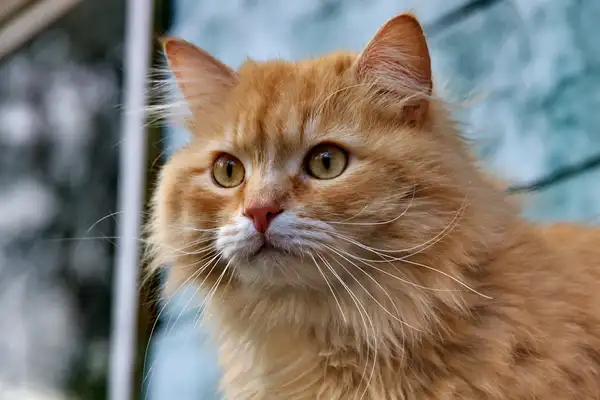
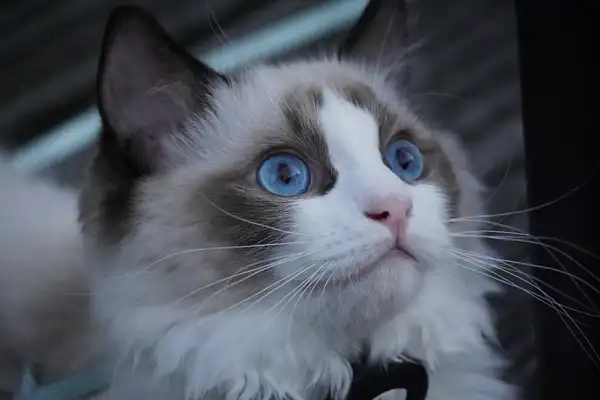
The Himalayan (喜马拉雅猫) is a medium-sized cat breed weighing 3–5.5 kg with a 9–15-year lifespan. A cross of Persian and Siamese — flat face, long coat, colour points, and blue eyes. Gentle and quiet, it combines the Persian's looks with the Siamese's colour pattern.
Feeding
Flat face requires a shallow bowl; long-coat formula plus periodic hairball paste.
Exercise
Low exercise needs; gentle interactive play is enough.
Grooming
Daily brushing is a must; tear stains around the eyes need daily cleaning.
Health
Prone to PKD, HCM, and respiratory issues — much like the Persian.
Gallery
A closer look at the Himalayan
From origins and personality to daily care and health — helping you judge whether this little companion is really the one for you.
Origin & history
Origin & history
The Himalayan (nicknamed "Himmy") was born of a thirty-year breeding experiment. In the 1930s, Harvard geneticist Clyde Keeler and Persian breeder Virginia Cobb collaborated in an effort to stably introduce the Siamese's point coloration (the temperature-sensitive cs mutation) into the Persian frame. In 1935 they produced the first colour-point long-haired cat, named **Debutante**, published as a genetic experiment model in J Hered.
World War II interrupted the project. In the 1950s British breeder Brian Sterling-Webb and American Marguerita Goforth independently rebooted the effort and stabilised the phenotype: "Persian looks + Siamese point + blue eyes." GCCF recognised it in 1955 as **Colourpoint Longhair**, and CFA recognised it in 1957 as the **Himalayan**. The name refers to the **Himalayan rabbit** (which shares the classic dark-point-on-light-body temperature-sensitive phenotype) — nothing to do with the Himalayan mountains.
In the 1980s, controversy grew inside CFA: the Himalayan and Persian were now indistinguishable in frame, skull, or coat (differing only in the point-colour gene). In 1984, CFA merged the Himalayan into the Persian breed as its **Colorpoint Division** — a colour branch of the Persian. TICA still lists it as a separate breed; GCCF retains the Colourpoint Longhair name.
Looks & breed standard
Looks & breed standard
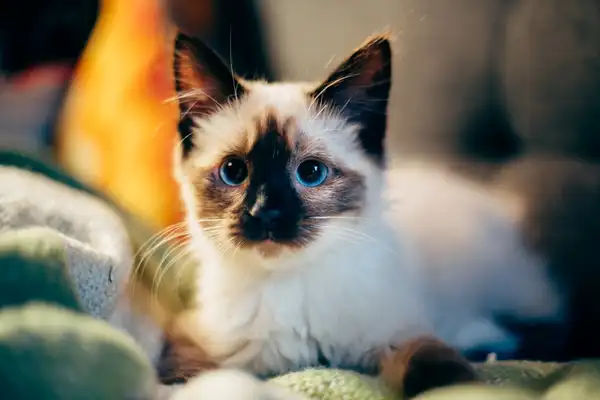
The Himalayan's body structure is entirely identical to the Persian: - **Head**: Extremely round, wide skull, large widely-spaced eyes - **Body**: Short stubby legs, round chunky torso (cobby type); adult 3-5.5 kg - **Coat**: Extremely dense double-layer long coat (guard + undercoat); heaviest shedder - **Eyes**: **Must be blue** (this is the key difference from the Persian — the Persian can have any eye colour; the Himalayan must be blue) - **Point colours**: Limited to seal / blue / chocolate / lilac / red / cream / tortie plus tabby / silver variations
Body-type extremes come in two schools (identical to the Persian): - **Traditional / Doll-face Himalayan**: Traditional face, normal-length nose bridge; nose tip slightly below eye level - **Show / Peke-face Himalayan / Ultra-typed**: Extremely flat face, nose bridge sunken to eye level — high risk of BOAS
CFA and TICA breed standards lean toward ultra-typed, but American traditional lines are still maintained by independent breeders. **Buyers should clearly distinguish between the two** — health and appearance differ dramatically.
Personality in depth
Personality in depth
The Himalayan's personality is a **blend of "the Persian's calm base with a touch of the Siamese's activity."** The CFA breed description sums it up as sweet, gentle, playful but calm.
It is 20-30% more active than a pure-blooded Persian — Siamese ancestry gives it appetite for brief wand-toy play sessions and enjoyment of interaction — but it is still far quieter than the Siamese, Oriental Shorthair, or Burmese. Most of its time is spent quietly on the sofa, in the bay window, or on the top perch of a cat tree, watching the world.
Stable attachment to family — approaches proactively but is not clingy — unlike the Sphynx or Burmese, it doesn't shadow you constantly. More like the Persian, it "is affectionate at a distance." Wary of strangers, needing a few days to a week to build trust.
Moderate-to-high tolerance of children, dogs, and other cats — suits multi-person / multi-pet homes. Note however — the Himalayan **does not suit an overly noisy or high-traffic-visitor home**; it is more sound-sensitive than average.
Daily care
Daily care
The Himalayan is **one of the most demanding cat breeds day-to-day** (tied with the Persian):
1. **Daily grooming**: This is a hard requirement, not a nice-to-have. The double-layer dense long coat mats within a day if not brushed. Use a long-tooth pin brush + fine-tooth comb + de-matter combo, 10-15 minutes a day. Shedding season (spring/autumn) needs 20-30 minutes daily. **Severely matted areas require a professional groomer — never scissor them out at home** (skin injuries very likely).
2. **Tear stain cleaning**: The flat face bends the tear ducts; tears constantly overflow onto the cheeks, forming reddish-brown stains. Wipe once or twice daily with pet-specific tear-stain remover. Light points (seal / blue / lilac) show stains more clearly than dark points.
3. **Shallow bowl**: Flat faces have trouble eating from deep bowls (whole face buried). Use a shallow plate or a flat-face-cat-specific bowl.
4. **Point-colour temperature effect**: The dark points are governed by a temperature-sensitive tyrosinase mutation (cool temperature triggers colour). **Kittens are almost entirely white at birth** (the womb is warm), then the extremities (face, ears, legs, tail) darken as temperatures drop. Colour deepens in winter and lightens in summer — this is normal.
5. **Teeth**: Flat faces cause dental crowding; gingivitis and FORL are common — annual oral checks + home brushing needed.
Health & lifespan
Health & lifespan
The Himalayan **shares all Persian breed diseases** (genetically it is Persian + point colour):
1. **Polycystic kidney disease PKD1**: Autosomal dominant PKD1 mutation — heterozygous is enough to cause disease. Biller 1996 J Am Vet Med Assoc first reported PKD prevalence in Persians / Himalayans at approximately 38%, one of the highest breed disease prevalences among domestic cats. From middle age, bilateral polycysts progressively replace normal kidney tissue, leading to chronic renal failure. **UC Davis VGL and Langford Vets offer definitive genetic testing** — all breeding cats must be screened.
2. **Brachycephalic Airway Syndrome (BOAS)**: Common in ultra-typed (flat-faced) individuals. Farnworth 2016 J Feline Med Surg and the UK RVC VetCompass both record significantly higher rates of respiratory distress, open-mouth breathing, exercise intolerance, and anaesthesia risk in flat-faced Persians / Himalayans.
3. **Hypertrophic cardiomyopathy HCM**: Moderate incidence — annual cardiac ultrasound advised.
4. **Nasolacrimal duct malformation**: The direct cause of tear stains. Ultra-typed individuals often have chronic conjunctivitis and corneal ulcers.
5. **Progressive retinal atrophy PRA**: Himalayans carry Siamese-side risk of the CEP290 (rdAc) mutation — genetic testing available.
6. **Dentition / bite issues**: Flat faces cause maxillary shortening and mandibular protrusion (brachygnathism), reducing chewing and eating efficiency.
Responsible breeders should screen for PKD1 + rdAc PRA + HCM cardiac ultrasound.
Fit for your space
Fit for your space
The Himalayan **must be kept strictly indoors** (long coat easily mats and picks up dirt, and the flat face doesn't handle outdoor running); **must be brushed daily**; **must have stable AC / ventilation** (flat-faced cats overheat easily).
**Good fit for**: - Owners with lots of at-home time and willingness to brush daily (retirees, home-office, multi-person households) - Households seeking a "quiet, elegant long-haired + blue-eyed pointed" pet - Steadily air-conditioned home environments (especially in summer) - Buyers with a budget for high grooming and medical costs (Himalayan annual medical costs are notably higher than an average cat's) - Buyers willing to accept traditional / doll-face lines (much healthier than ultra-typed)
**Not a fit for**: - Owners unable to commit to daily brushing + tear-stain cleaning - Non-AC / non-ventilated hot-humid environments (southern China's summers are a serious challenge for flat-faced individuals) - Households wanting a lively, interactive pet (choose Siamese / Oriental Shorthair / Burmese) - Beginners wanting a "low-maintenance" pet
**Special note**: Ultra-typed flat-faced individuals carry a heavy health burden. In 2020 the Netherlands, Norway, and other countries introduced legislation restricting the breeding of severely brachycephalic breeds. **When buying, prioritise traditional / doll-face lines**.
References
This is an educational overview — for specific health and care advice, please consult the authoritative sources below and your veterinarian.
- CFA — Persian breed article (含 Himalayan color division)国际猫协标准
- TICA — Himalayan Breed Standard国际猫协标准
- GCCF — Colourpoint Longhair Breed Standard国际猫协标准
- Biller et al. 1996 JAVMA — PKD prevalence in Persian cats学术研究
- Lyons et al. 2004 JASN — PKD1 mutation in Persian and derived breeds学术研究
- Farnworth et al. 2016 J Feline Med Surg — BOAS in brachycephalic cats学术研究
- Menotti-Raymond et al. 2007 Genomics — CEP290 rdAc PRA in cats学术研究
- UC Davis VGL — Himalayan / Persian panel (PKD1, rdAc, blood type)基因检测
- ICatCare — Persian & Himalayan breed profile综合科普