Canidae · DOG
Chinese Rural Dog
🌟 You may have met one
The Chinese Village Dog isn't really a single breed — it's a native genetic cluster spread across mainland China. DNA studies (Wang 2016, Cell Research) show it shares roots with Southeast Asian village dogs and represents one of the oldest genetic sources of all modern dogs, a direct descendant of the East Asian domestication branch that split from wolves around 12,000 years ago.
Overview
The Chinese Rural Dog (中华田园犬) is a medium-sized dog breed weighing 10–25 kg with a 10–15-year lifespan. Also known as the 'tudog' or Chinese Village Dog, this widespread native cluster is hardy, loyal, and highly adaptable — a superb yet often underrated companion.
Feeding
Standard dog food is enough; robust digestion and rarely picky.
Exercise
About one hour of outdoor activity per day.
Grooming
Short coat only needs brushing once a week.
Health
Generally healthy — keep routine deworming and vaccinations up to date.
Gallery
A closer look at the Chinese Rural Dog
From origins and personality to daily care and health — helping you judge whether this little companion is really the one for you.
Origin & history
Origin & history
The 'Chinese Village Dog' is not an AKC/FCI recognized breed but rather the most widely distributed native canine genetic cluster in mainland China, popularly called the 'tudog' (土狗), 'chai dog' or 'Da Huang' (Big Yellow). A whole-genome study by China Agricultural University and Uppsala University (Wang et al. 2016, Cell Research) found that the common ancestor of all modern dogs originated in southern East Asia roughly 12,000–33,000 years ago, and Chinese Village Dogs are direct descendants of that oldest domestication branch — retaining the most primitive genetic architecture, the least distorted by human selective breeding [1][2].
Across 5,000 years of Chinese agrarian history, Village Dogs have played every possible role — guardian, hunter, herder, war dog, and companion. Han-dynasty tomb figurines, Tang tri-color pottery and Song-era paintings all depict dogs virtually indistinguishable from today's Village Dog. It is the genetic ancestor of the Japanese Shiba Inu, Akita, and Korean Jindo — around 300 CE, together with rice culture, it spread through Japan and the Korean peninsula, forming today's East Asian breed lineage [1][3].
Modern fate: after Western breeds flooded Chinese cities in the early 20th century, the Village Dog was dismissed as an 'unrefined mongrel'; the reform-era pursuit of purebreds after 1980 further squeezed it out of urban life. Yet across rural China it has always remained the mainstream — with almost no artificial breeding intervention, natural selection has kept its gene pool exceptionally healthy. Since 2010, the China Village Dog Preservation Association together with Chinese Academy of Sciences (Kunming Institute of Zoology) and China Agricultural University have started systematic DNA archiving and regional-variant classification. In 2020 the FCI added related regional dogs — such as the Guangxi Tuliequan — to its watchlist [3].
Looks & breed standard
Looks & breed standard
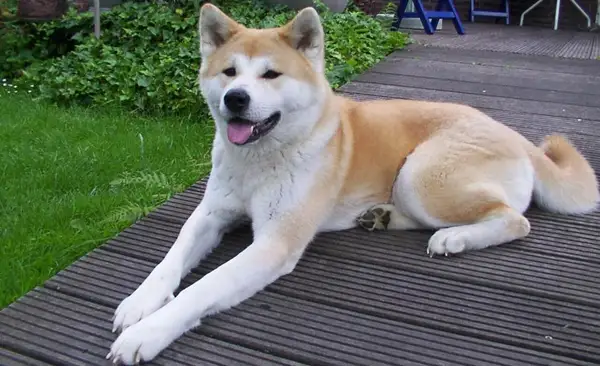
The Village Dog has no unified breed standard, but it does share a set of morphological traits that hold across regions — the classic 'primitive dog' template: V-shaped triangular face, prick ears, dark eyes, curled sickle tail, double short coat, medium build [1][2]. These features are highly consistent with what canine science calls 'basal breeds' (Basenji, Australian Dingo, New Guinea Singing Dog, Village Dog) — the ancestral form of every modern breed before human selective pressure.
Size: shoulder height 40–55 cm, weight 10–25 kg — a solid medium build. Head: mesocephalic (mid-length skull), neither brachycephalic nor dolichocephalic — this is precisely why BOAS and bite-alignment issues are extremely rare. Ears: mostly triangular and pricked or semi-pricked (folded prick). Tail: sickle-curved over the back or loosely curled, in the same family as the Shiba and Akita.
Coat colors: the most common is 'Da Huang' (fawn/red), ranging from deep red to pale yellow, seen in about 60% of individuals; then black-and-white bicolor, black, white, brindle, agouti (wolf gray), and the culturally significant 'four-eyed' (a light spot above each eyebrow) — long believed by rural families to ward off evil and see across worlds [3]. Double coat — coarse short outer, dense soft undercoat, seasonal shedding. Regional lineages include the Xiasi Dog of Guangxi, Guizhou Songshi, Wuhonggou, and Qinghai Tibetan Village Dogs — all part of the Village Dog cluster with local phenotype variation.
Personality in depth
Personality in depth
The core temperament of the Village Dog is 'primitive canine intactness' — untwisted by centuries of modern breeding, it retains all the key behaviors of the wolf-domestication branch: alertness, independent thinking, group cooperation, climate hardiness, food tolerance, robust fertility, and complete maternal instincts [1][3].
With family: Village Dog loyalty is famously lifelong — once a dog bonds with its household, that allegiance rarely changes, which is why almost every 'dog crossed hundreds of miles to find its way home' news story features a Village Dog. With strangers: highly alert with instinctive territorial protection — it warns through low growls, body positioning and tooth display in graduated escalation, making it a natural watchdog. With children: patient and tolerant, historically the classic playmate for rural Chinese kids. With other dogs: clear pack hierarchy — in multi-dog households they naturally form alpha/beta structures with far less pointless conflict than modern breeds.
Training: Village Dogs are above-average in intelligence but extremely independent — they prefer 'you tell me what to do, I decide how' rather than the mechanical obedience of a GSD or Border Collie. That independence makes them feel like partners rather than tool dogs — many owners say 'my dog just knows what to do'. Exercise needs are moderate to high — 60–90 minutes of outdoor activity per day is ideal, though tolerance for lower activity is also high (rural free-roaming Village Dogs vary enormously) [3].
Daily care
Daily care
The Village Dog has one of the lowest daily care costs of any dog — short coat needing no grooming, low-sensitivity skin, robust digestion, undemanding appetite, and lasting post-vaccination immunity [1][3].
Brushing: once a week is enough — a rubber grooming glove works fine; shedding picks up modestly during the spring and fall coat change (up to twice a week then). Bathing: every 6–8 weeks or less; the Village Dog's natural skin oils balance well and over-bathing damages the barrier. Diet: it accepts a wide range of foods, from traditional Chinese leftovers to modern kibble; for urban households however, a good-quality kibble (grain-free, chicken/fish base) plus small amounts of real food is best — long-term leftover-only diets cause calcium/phosphorus imbalance and obesity.
Exercise: an hour of walking plus free play daily is plenty. Village Dogs love walks and exploration — with sharp noses and endless curiosity, changing routes keeps them mentally sharp. A leash outdoors is mandatory — chase drive toward small animals (cats, chickens, squirrels) is fully intact, and off-leash chasing is the number-one reason they get lost.
Teeth: brush twice a week. Nails: trim every 4 weeks (outdoor active dogs wear them naturally). Ears: clean every 2 weeks. Overall, a Village Dog's yearly care bill is roughly 1/3 to 1/2 of a purebred's — the core economic reason for its ubiquity in rural China.
Health & lifespan
Health & lifespan
Because the Village Dog has never been narrowed by pedigree breeding, its gene pool is extremely broad, and 'hybrid vigor / heterosis' shows through in full: significantly lower rates of hereditary disease than purebreds, longer average lifespan, and stronger vaccine response [1][3].
Diseases with clearly reduced incidence include: hip dysplasia (about 3–5% in Village Dogs vs. 20% in GSDs or 15% in Goldens), dilated cardiomyopathy (DCM), cancer (Village Dog total cancer incidence around 20% vs. 30–40% in purebreds), allergic skin disease (about 1/3 of purebred rates), and congenital eye disease (PRA, cataracts) [3][4]. The 'Chinese Canine Genome Project' (China Agricultural University and Kunming Institute of Zoology) has systematically mapped consistent genetic risk — only one significant hereditary issue has emerged: MDR1 gene deficiency (higher in some southwestern regional dogs, shared with sheepdog lineages). Everything else falls in normal ranges.
Average lifespan: 10–15 years — rural free-roaming individuals have wider variance (accident-related), while urban house dogs commonly reach 13–15. Immune resilience is strong — resistance to distemper, parvo, and canine coronavirus is higher than in purebreds — but this is not an excuse to skip vaccines; the standard vaccination protocol is still required.
Main health risks are environmental, not genetic: rural free-roaming injuries (traffic, fights, poisoning, parasites) and geriatric joint degeneration/cataracts are the leading causes of death. Deworming is critical — parasite exposure is high in free-roaming settings, so quarterly internal + monthly external deworming is standard.
Common myths & adoption tips
Common myths & adoption tips
Village Dogs face three deeply rooted misconceptions in China, each worth clarifying:
Myth one: 'tudogs are unrefined, unintelligent, disloyal.' The opposite is true. Village Dog IQ is not separately ranked in Stanley Coren's 'Intelligence of Dogs' (because it isn't an AKC breed), but scientific studies show its problem-solving, social cognition, and emotional-response abilities are on par with Huskies and Border Collies; loyalty is arguably the highest of any lineage [1][3]. The word 'tu' (土) refers to its geography (native soil), not its quality — much like 'homeland' means one's roots, not that a country is 'unrefined'.
Myth two: 'Village Dogs can only be tied up in the yard, not kept indoors.' Completely wrong. They adapt superbly, from rural courtyard to urban apartment, provided they get daily exercise and social interaction. Plenty of urban families now keep Village Dogs as house dogs with excellent results — low shedding, low odor, low barking, low food-fussiness make it a truly barrier-free family dog.
Myth three: 'Village Dogs have no identity or heritage value.' The Chinese Ministry of Agriculture and multiple research institutes have launched a 'Chinese Native Village Dog Preservation Program'. Regional variants like Guangxi's Xiasi, Sichuan's Chinese Crested, Guizhou's Xiasi Ao, and Guangdong's Shar-Pei (already AKC-recognized) all diverged from the Village Dog cluster; the CKU and China Animal Husbandry Association both maintain Village Dog registries and pedigree records. Adopting a Village Dog — especially from a rescue or stray-dog agency — is preserving 12,000 years of East Asian genetic heritage. China is home to over 50 million Village Dogs (including strays) — they are the true genetic bedrock of Chinese dog culture.
References
This is an educational overview — for specific health and care advice, please consult the authoritative sources below and your veterinarian.
- Wikipedia — Chinese rural dog(中华田园犬集群与地方分支)综合百科
- Wang et al. 2016, Cell Research — Out of southern East Asia: the natural history of domestic dogs(田园犬 12000 年驯化起源)学术论文
- 中国农业大学 — 中华田园犬基因组学研究进展学术机构
- 中科院昆明动物研究所 — 犬类起源与东亚地方犬品种研究学术机构
- Frantz et al. 2016, Science — Genomic and archaeological evidence suggests a dual origin of domestic dogs学术论文
- vonHoldt et al. 2010, Nature — Genome-wide SNP analyses reveal history of dog domestication学术论文
- 中国畜牧业协会犬业分会 — 中国地方犬种保护现状行业协会
- Parker et al. 2017, Cell Reports — Genomic analyses reveal the influence of geographic origin on canine breed formation学术论文
- Shannon et al. 2015, PNAS — Genetic structure in village dogs reveals a Central Asian domestication origin学术论文