Canidae · DOG
Welsh Corgi
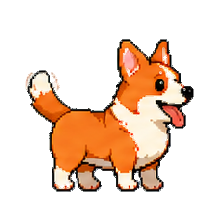
🌟 You may have met one

Queen Elizabeth II adored corgis for over 70 years and owned more than 30 of them, making the breed Buckingham Palace's unofficial royal guard.
Overview
The Welsh Corgi (柯基犬) is a medium-sized dog breed weighing 10–14 kg with a 12–15-year lifespan. The Queen's own - a natural-born herder in a stubby, big-bottomed package. Beneath the comic silhouette hides serious energy; expect plenty of exercise, socializing, and epic shedding.
Feeding
Prone to weight gain - measure meals strictly and choose joint-friendly formulas.
Exercise
About an hour a day. Skip long stair climbs to protect the spine.
Grooming
Double coat: brush 2-3 times a week, daily during coat blows.
Health
Prone to intervertebral disc disease (IVDD) - manage weight and discourage jumping.
Gallery
A closer look at the Welsh Corgi
From origins and personality to daily care and health — helping you judge whether this little companion is really the one for you.
Origin & history
Origin & history
There are actually two separate Corgi breeds: the Pembroke Welsh Corgi and the Cardigan Welsh Corgi. In the 1920s the UK Kennel Club first registered them as two varieties of "Welsh Corgi"; they were split into two independent breeds in 1934, with the AKC following the same split that year. In everyday speech, "Corgi" almost always refers to the Pembroke. [1][2][8]
On origins, two possibilities are widely accepted: one is that the Vikings brought ancestral dogs (like the modern Swedish Vallhund) to Pembrokeshire in the 9th-10th centuries; the other is that Flemish weavers, invited by a Welsh king to settle in Wales in the 10th-12th centuries, brought Spitz-type dogs like the Schipperke and old-style Pomeranian, which were then crossed with local herders. The word "Corgi" comes from Welsh: cor = dwarf, gi = dog. [1][2]
The breed's global fame owes a lot to the British royals. In 1933 the Duke of York (later George VI) bought a young Corgi named Dookie (registered as Rozavel Golden Eagle) from Thelma Gray's Rozavel Kennels as a pet for Princess Elizabeth. In 1944 the 18-year-old Elizabeth received Susan for her birthday, and Susan founded a 15-generation "Windsor Corgi dynasty." Queen Elizabeth II owned more than 30 Pembroke Corgis and Corgi-dachshund crosses ("dorgis") over her lifetime, which is how the Corgi became a national image of Buckingham Palace. [3][7]
Looks & breed standard
Looks & breed standard
Pembroke AKC standard: 10-12 inches (25-30 cm) at the shoulder; males 25-30 lbs, females 22-28 lbs; body length about 1.4 times height - a low, sturdy, long-bodied short-legged type. The head is fox-like, ears medium-sized, upright and slightly rounded. Only four coat colors are recognized: red, sable, fawn, and tricolor (black-white-tan), typically with white markings. [7]
The easiest way to tell the two Corgis apart is the tail: Pembrokes are naturally short-tailed or, historically, docked, while Cardigans keep the full fox-like long tail. Cardigans also run larger (males up to 38 lbs), have larger, rounder ears, and come in a wider palette (including brindle and blue merle). [7][8]
The Pembroke carries a dominant "bobtail" gene (naturally short tail). Norway was the first country to ban docking in 1987, and breeders worldwide have since deliberately preserved the natural bobtail line. An X-ray study by the Norwegian Veterinary Association found no spinal abnormalities in offspring of homozygous bobtail crosses - a natural short tail brings no structural defect. The standard also mentions "fluffies" - long-coated Corgis carrying a recessive gene. They're perfectly healthy but disqualified from the show ring under the current standard. [2][7]
Personality in depth
Personality in depth
The AKC and PWCCA (Pembroke Welsh Corgi Club of America) describe the breed as bold but kindly, intelligent and alert, focused, never shy or vicious - a framing that pushes back on the "cute little dog" stereotype. [1][7]
Bred as a low-slung cattle drover, the Corgi retains a strong "heeler" instinct: it will follow at a trot, bark low, and even nip at heels to manage every household member - toddlers and fast-moving cats are especially likely to be miscategorized as "cattle that need to be moved." This isn't aggression but does need directed training from puppyhood. [3][4][7]
The flip side of intelligence is negotiation. Corgis rank in the top 15% for canine obedience - quick learners, but the moment rewards or rules are inconsistent, they invent games and "train the human" right back. Under-exercised or under-stimulated Corgis often self-entertain by chewing furniture, chasing cars, or barking excessively. [7]
Daily care
Daily care
Exercise: The AKC and PWCCA both stress that the Pembroke is an energetic working dog. Plan for at least 60 minutes of active work each day (walks, scent games, structured play). Treating them like a "small dog that doesn't need walks" plants direct behavioral and weight problems. [1][7]
Spine protection is Corgi-specific: short legs plus a long spine mean jumping onto sofas or beds, repeated stair climbing, and lifting a Corgi by the front legs all wear on the discs. Lay non-slip mats throughout the home, add pet ramps to furniture, lift them with one hand under the chest and one under the rump, and keep hard stops and sharp turns to a minimum during play. [4][5]
Coat: A double coat sheds year-round, with two heavy blows in spring and autumn. Brush 2-3 times a week normally, daily during blows - an undercoat rake is nearly essential. [7]
Diet: Corgis have big appetites and poor satiety. The PWCCA is explicit: don't trust the recommended amounts on kibble bags, and don't trust that starving-Corgi face at dinner. Obesity crushes both spine and hips and is the single most controllable risk factor. [1][4]
Health & lifespan
Health & lifespan
Pembrokes live about 12-13 years on average, and 14-15 with excellent care - long-lived among small-to-medium breeds. [4][7]
Intervertebral disc disease (IVDD) is the number-one Corgi health risk. In a case-control study (Packer et al., 2013), the Pembroke was among the top five breeds for IVDD, with a prevalence of about 15.1%; DogMD and clinical reviews report that 20-25% of Corgis will experience an IVDD-related issue in their lifetime. The root cause is chondrodysplasia - the short-legged, long-spined body plan is itself a structural spinal defect. Acute Hansen Type I ruptures can cause paralysis within hours and require immediate decompressive surgery. [4][5]
Degenerative myelopathy (DM) is another Corgi-specific inherited disease: BreedTracker data show about 52.7% of tested Pembrokes carry the SOD1 mutation, though only around 1.51% develop clinical symptoms - usually starting after age 8, with progressive hindlimb weakness resembling human ALS, and irreversible. DM DNA testing is essential for breeders. [4][6]
Other common issues: hip dysplasia (~18-20% in OFA data), progressive retinal atrophy (PRA), cataracts, von Willebrand disease type 1 (vWD1, a clotting disorder), hypothyroidism, epilepsy, and urinary tract stones. Recommendations: puppy-stage hip X-rays, ophthalmic exam (CERF), and DM/PRA/vWD DNA testing; annual physicals as adults; and spinal + fundus exams starting in older age. [4][5][6]
Fit for your space
Fit for your space
The Pembroke can live in an apartment - but only if the owner commits to at least 60 minutes of daily outdoor activity plus training. A cramped space doesn't reduce their exercise needs; it magnifies the owner's responsibility to get them out. [1][7]
They handle cold better than heat: the double coat is comfortable in winter but heat-and-humidity-prone in summer, so plan early or evening walks and carry water. And with a long back on short legs, sliding around on tile or hardwood floors also aggravates the spine - non-slip rugs are a must indoors. [4][5]
Corgis are naturally alert with strangers and loud when they bark - the PWCCA calls the Pembroke an excellent watchdog. If you live in a thin-walled apartment or a tightly packed neighborhood, start doorbell and visitor desensitization from puppyhood, or a typical Corgi will bark dozens of times a day at elevator noises, delivery workers, and the neighbor's cat. [1][7]
Common myths & adoption tips
Common myths & adoption tips
Myth 1: Corgis are toy or lap dogs and don't need much exercise. - Wrong. The AKC classifies the Corgi in the Herding Group. Both the Pembroke and Cardigan are historic cattle drovers with high energy baked in. Under-exercise translates directly into destruction, barking, and chasing. [1][7]
Myth 2: Docked tails are a natural Corgi feature. - Partially true. The Pembroke does carry a dominant natural bobtail gene, but historically many short tails came from surgical docking. Norway banned non-medical docking in 1987, and Germany, the UK, Switzerland, and others have since followed. Most European Pembrokes today keep their natural tails. [2]
Myth 3: Corgis have short lifespans and health problems because they're a small breed. - The main cause isn't size but chondrodysplasia - the short-legged, long-spined build. Other small breeds in the same weight range have far lower IVDD rates. Choosing lines that avoid extreme "as short as possible" legs meaningfully reduces spinal risk. [4][5]
Adoption tips: prioritize Corgi rescues and reputable breeders. When buying, insist on parents' OFA hip scores, CERF eye clearance, and DM/PRA/vWD DNA test results, and ask openly about family IVDD history. Avoid "the shorter the cuter" extremes and "cheap puppies without CERF/DM reports." [1][4][6]
References
This is an educational overview — for specific health and care advice, please consult the authoritative sources below and your veterinarian.
- [1] An Introduction to the Pembroke Welsh Corgi - PWCCA / AKCOfficial
- [2] A Brief History of the Pembroke Welsh Corgi - PWCCAOfficial
- [3] History of the Queen's Corgis - Royal Kennel ClubOfficial
- [4] Pembroke Welsh Corgi Health Guide - DogMD (兽医审阅)Veterinary
- [5] Fact Sheet Dog Breeds Welsh Corgi Pembroke and Cardigan - QUEN Qualzucht DatabaseStudy
- [6] Breeding Pembroke Welsh Corgi (含 DM 52.7% 携带率数据) - BreedTrackerStudy
- [7] Pembroke Welsh Corgi: The Complete Breed Guide - Sidewalk DogEncyclopedia
- [8] Cardigan vs Pembroke Welsh Corgi Differences - Hearth JunctionEncyclopedia