Felidae · CAT
Egyptian Mau
🌟 You may have met one
'Mau' means 'cat' in ancient Egyptian. Egyptian tomb paintings from around 1400 BCE already depict spotted cats with clear mascara lines that closely resemble today's Egyptian Mau — possibly the oldest depicted domestic cat breed in history.
Overview
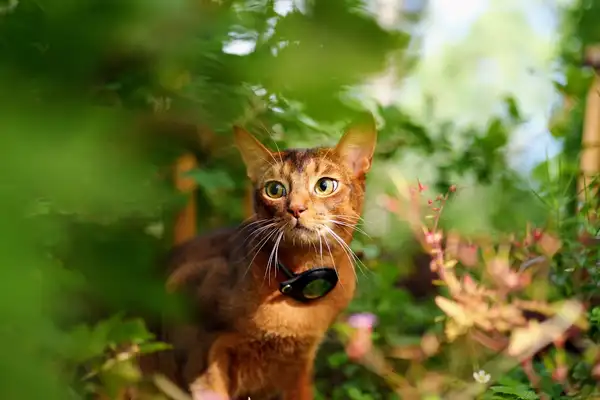
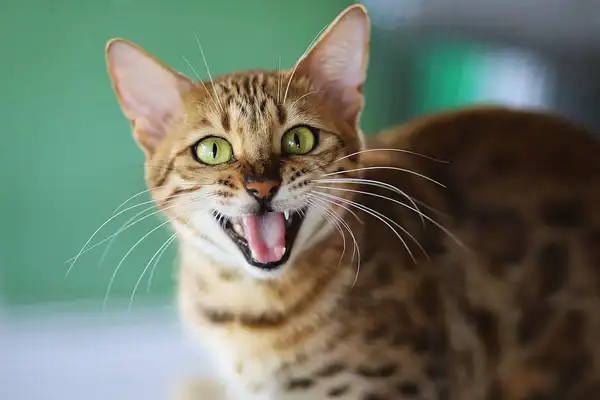
The Egyptian Mau (埃及猫) is a medium-sized cat breed weighing 3–6 kg with a 12–15-year lifespan. The Egyptian Mau is the only naturally spotted domestic cat breed — its spots were not created by hybridizing with wild cats but inherited from ancient Egyptian street cats. Signature features include a scarab-shaped M on the forehead, dark 'mascara lines' around the eyes, cherokee tear-line marks on the cheeks, and a loose belly-flap of extra skin that lets the hind legs extend further. It is the fastest domestic cat, clocked at up to 48 km/h.
Feeding
High-protein cat food; adult males eat noticeably more given their high activity level.
Exercise
High exercise needs — at least 40 minutes of daily interactive play, tall cat trees, and chase toys.
Grooming
Very easy short coat — comb once a week; low shedding.
Health
Generally healthy, but watch for PK-Def, HCM, anesthesia sensitivity (fast metabolism), and feline asthma.
Gallery
A closer look at the Egyptian Mau
From origins and personality to daily care and health — helping you judge whether this little companion is really the one for you.
Origin & history
Origin & history
The **Egyptian Mau is the only naturally spotted domestic cat breed** — 'naturally' meaning that its spots were **not created by hybridizing with wild cats or by intensive selective breeding**, but inherited from the ancient street cats of Egypt.
**Ancient Egyptian roots**: - New Kingdom-era Egyptian tomb paintings (c. 1550-1400 BCE), such as those in the tombs of Nakht and Nebamun in Thebes, already depict cats with clear spots and dark mascara-like eye markings — extremely close to the modern Egyptian Mau. - **'Mau'** is the ancient Egyptian word for 'cat' itself. - The Egyptians deified cats through the goddess Bastet, and the Nile valley is one of the earliest centers of cat domestication. - However, the spotted lineage almost disappeared from modern Europe and the USA, surviving mainly in Egypt, Italy and Turkish ports into the 20th century.
**Modern founding (1950s)**: - The key figure in the breed's revival was the exiled Russian princess **Nathalie Troubetskoy**. - In 1953, in **Rome, Italy**, she encountered a silver-spotted female named Baba (reportedly linked to Egyptian embassy staff) and later imported a male from the Middle East, Geppa. - In 1956 she moved to New Jersey, USA, with three Egyptian Maus and founded the **Fatima Cattery** — the base of modern pedigreed Egyptian Maus.
**International recognition timeline**: - **CFA** registered the breed in 1968 and granted championship status in **1977** for silver, bronze and smoke. - **TICA** awarded championship status in 1988. - **FIFe** followed in 1992 (breed code MAU). - **GCCF** in 2006.
**Genetic bottleneck**: Fatima Cattery was for decades the sole source of the pedigreed gene pool. Since the 1990s, the CFA has allowed the registration of Egypt-imported foundation cats (via the Egyptian Mau Rescue Organization) to broaden the gene pool. This means Egyptian Maus are entirely distinct in ancestry from other spotted breeds such as Ocicat and Bengal.
Looks & breed standard
Looks & breed standard
The Egyptian Mau's breed standard (CFA, TICA, FIFe) is uniquely detailed:
- **Body**: **medium-sized, lithe and muscular** — halfway between an Oriental and a domestic shorthair. Adult males weigh 4.5-6 kg, females 3-4.5 kg. **Hind legs are noticeably longer than the front legs** (as in a cheetah) — the anatomical basis of its speed. - **Head**: a **slightly rounded wedge**, rounder than an Abyssinian's and shorter than an Oriental's, with a gentle curve to the nose bridge. - **Ears**: medium-large, wide at the base, alert and erect, set with moderate spacing. - **Eyes**: **large, slightly almond-shaped, in a distinctive 'gooseberry green'** — this pale-to-medium clear green is the breed's signature eye color in adults. - **Facial markings (Mau-specific)**: - **Forehead M** — the **scarab beetle** mark, especially crisp in Maus. - **Mascara lines** — dark lines running back from the outer eye corners. - **Cherokee tear lines** — dark streaks running down from the inner eye corners along the cheeks (a Mau specialty). - **Cheek spots and a 'W' bridge marking**. - **Coat**: **medium-short, lying close to the body, smooth**, with a soft metallic sheen. - **Colors**: CFA recognizes **six patterns**: 1. **Silver** — silver-white ground with charcoal spots (the classic). 2. **Bronze** — warm brown ground with darker brown spots. 3. **Smoke** — silver undercoat with black tipping. 4. **Black** — not shown but used in breeding. 5. **Blue silver / Blue** variants (accepted by TICA). 6. **Caramel** series in GCCF. - **Spots**: **crisp, discrete and randomly distributed** — true round or oval spots rather than tabby stripes. - **Belly flap**: the **Mau-specific** loose double-layer belly skin runs from the elbow to the flank. It allows the hind legs to extend further, contributing to the breed's record **48 km/h** sprint speed — the fastest of any domestic cat. - **Tail**: medium-long, tapered, with a black-ringed tip ending in a black tip.
Personality in depth
Personality in depth
The Egyptian Mau combines **deep attachment with high vigilance** — a very different profile from the Ocicat or Bengal:
1. **Opens only to its family**: The Egyptian Mau is **intensely bonded and affectionate with its own people** — following them from room to room, sleeping against them, and often choosing a favorite person. Toward strangers, however, it is **extremely reserved**, often hiding when the doorbell rings. This is a cat that is 'not sociable' with visitors but forms unusually deep bonds at home. 2. **Sensitive and alert**: Excellent hearing and quick reactivity make it very sensitive to environmental change — moves, renovations, or a new roommate can trigger anxiety. It does not suit families that relocate often. 3. **A border-collie-type domestic cat**: Highly intelligent — learns to open doors and cupboards, retrieves objects, and picks up simple verbal cues. TICA notes it is **one of the most leash-trainable breeds**. 4. **Strong hunting drive**: Not because of any wild ancestry (it is fully domestic), but because the ancient street-cat instincts remain intact. Households with birds, hamsters or fish need extra safeguards. 5. **Voice**: A distinctive **'chortle'** — a short, cheerful trilling sound between a chirp and a purr, especially heard when the cat greets its owner or anticipates food. 6. **With other cats**: Coexists with other cats but tends to be the **dominant one**; pair a Mau with a calm-tempered breed (British Shorthair, Persian). 7. **With dogs**: Fine with mature, calm dogs; not fine with rambunctious, chasing dogs. 8. **With children**: **Older children (8+)** work best — the cat needs its space and dislikes being chased or squeezed.
At heart the Mau is an **ancient hunter with the sensitivity of a companion**. It needs a calm, stable home that truly respects its personality.
Daily care
Daily care
**Grooming**: - The Egyptian Mau is **one of the easiest breeds to groom** — a medium-short, close-lying coat that barely mats. - Weekly brushing with a rubber curry brush or fine steel comb is enough. - Slightly more frequent grooming during spring and autumn shedding. - **No professional grooming is required.**
**Bathing**: - A bath every 2-3 months is plenty. - Most Maus tolerate water reasonably well. - Silver individuals look markedly brighter after a bath.
**Diet**: - **High-protein cat food** (36-42%). - Adult males typically eat 110-120% of an average house cat's ration. - **A fast metabolism means the Mau gets hungry easily** — feed 3-4 small meals a day or use an automatic feeder. - Supplement with raw or wet food to keep hydration up.
**Exercise**: - **High activity needs** — at least 40 minutes of daily interactive play plus free-run time. - Tall cat trees, window perches and 'runway'-style furniture layouts help. - **Encourage hunting play** — wand toys, mice-shaped toys and laser pointers. - Consider **leash training**, especially if you have a garden or yard. - A flat-only environment leads to boredom and depression in this breed.
**Anesthesia and drug sensitivity (important)**: - Egyptian Maus, like Siamese and Abyssinians, have a **faster metabolism and lower body fat**, and can be **more sensitive to sedatives, anesthetics and antiparasitic drugs**. - Always tell your vet 'this is an Egyptian Mau' before any procedure — standard doses may be too high. - See Robertson et al. 2018 *J Feline Med Surg* for feline breed-specific anesthesia adjustments.
**Ears, claws, teeth**: - Check ears every two weeks (light on fur inside but still needs regular cleaning). - Weekly gum checks — periodontal disease is common in older Maus. - Regular claw trimming, and always provide a scratching post.
**Special note**: - The Mau **does not do well left alone for long stretches** (>8 hours/day). - Consider keeping in pairs or with another pet for company.
Health & lifespan
Health & lifespan
Egyptian Maus, because of their **narrow founding gene pool** (originally the Fatima cattery), carry a handful of documented risks. Lifespans of 12-15 years are typical, and healthy individuals can reach 18.
1. **Pyruvate Kinase Deficiency (PK-Def)**: - The same recessive mutation seen in Abyssinian, Somali, Bengal, Savannah and Singapura. - Presents as **episodic hemolytic anemia, lethargy, jaundice**, usually appearing between 6 months and adulthood. - **UC Davis VGL offers a genetic test** — breeders should screen parents and avoid mating two carriers.
2. **Hypertrophic Cardiomyopathy (HCM)**: - Egyptian Maus have a moderate HCM risk. - **Annual echocardiogram** for adults, every 1-2 years for breeding cats. - Unlike the Maine Coon MYBPC3 A31P mutation, no single causative gene is yet known for Mau HCM.
3. **Anesthesia sensitivity (Oriental-type trait)**: - Same profile as Siamese/Abyssinian — **fast metabolism, low body fat, and higher risk with standard doses**. - Recommend **lower doses, slow administration, and enhanced monitoring**.
4. **Feline Asthma**: - The Egyptian Mau is **one of the higher-prevalence breeds for feline asthma**. - Signs include intermittent coughing, wheezing, and reduced exercise tolerance. - Minimize smoke, perfume, deodorants and dusty carpets in the home. - See Reinero 2011 *Vet J* on feline asthma mechanisms.
5. **Periodontal disease**: Common with age; annual oral exams recommended.
6. **PRA-rdAc**: Rare in Maus but reported; VGL testing available.
7. **Feline Idiopathic Cystitis (FIC)**: A sensitive Mau under environmental stress may present with lower urinary tract signs. Provide **plentiful water stations, spacious litter boxes and quiet toileting areas**.
**Recommended screening**: PK-Def genetic test, PRA-rdAc genetic test, annual echocardiogram once adult, annual oral exam.
Fit for your space
Fit for your space
**A good match for**: - **Stable, quiet homes with predictable routines** — the Mau is unusually sensitive to household atmosphere. - Owners with 30-60 minutes per day for interactive play. - Homes that already have one calm resident cat or a mature, calm dog. - **Intermediate-level cat owners** (not the ideal first cat). - People who want a **'border-collie-like cat'** — clever, loyal, trainable, leash-friendly. - Buyers who value ancient beauty, athletic ability and a deep bond. - A garden or yard for supervised outdoor time is a bonus.
**Not a match for**: - Frequent movers, homes with constant visitors, or ongoing renovation. - Very young children (<6) — the Mau stresses when repeatedly interrupted. - Solo full-time workers with zero home presence — a Mau left alone >10 hours/day will become anxious and destructive. - Buyers who want a purely decorative, silent cat. - Homes with birds, hamsters or fish where safeguards cannot be improved. - Households that want a cat friendly to everyone at first meeting.
**Special notes**: - Request **PK-Def and PRA-rdAc genetic test results** before buying. - Request the parents' **HCM echocardiogram reports**. - Do **not** buy a kitten weaned before 12 weeks — early weaning worsens Mau sensitivity. - Egyptian Maus are extremely rare in China and mostly come through overseas breeders; legitimate kittens run roughly USD $1,000-$4,000. - Always tell your vet the breed before anesthesia. - **Adult gooseberry-green eyes** are one of the clearest signs of pedigree authenticity — kittens' eye color may not be settled before 12 months, but adult Maus must show a clear gooseberry green.
References
This is an educational overview — for specific health and care advice, please consult the authoritative sources below and your veterinarian.
- CFA — Egyptian Mau Breed Article国际猫协标准
- TICA — Egyptian Mau Breed Standard国际猫协标准
- FIFe — Egyptian Mau Breed Standard (MAU)国际猫协标准
- GCCF — Egyptian Mau Standard of Points国际猫协标准
- UC Davis VGL — PK Deficiency test (Abyssinian/Bengal/Egyptian Mau)基因检测
- UC Davis VGL — Progressive Retinal Atrophy rdAc test基因检测
- ICatCare — Egyptian Mau breed profile综合科普
- Reinero CR 2011 Vet J — Advances in feline asthma学术研究
- Egyptian Mau Rescue Organization (EMRO)血统救援组织
- Wikipedia — Egyptian Mau综合科普