Felidae · CAT
Havana Brown
🌟 You may have met one
The name may come from Havana cigar brown or from the Havana rabbit — but one thing is certain: the breed has no geographic link to Havana, Cuba.
Overview
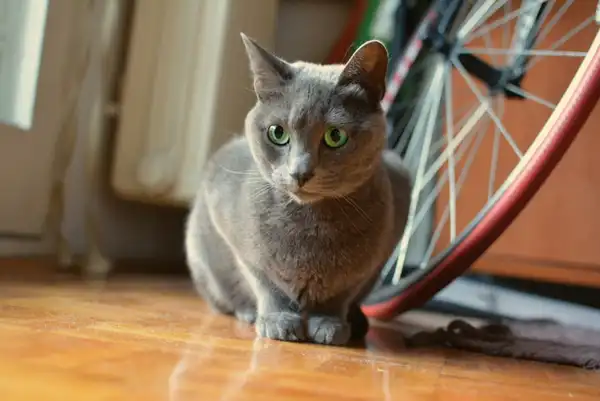
The Havana Brown (哈瓦那棕猫) is a small cat breed weighing 3–5 kg with a 12–15-year lifespan. The only domestic cat breed defined by a pure warm chocolate coat, matched with vivid oval green eyes and even a chocolate nose leather and whiskers. Gentle, affectionate and famous for patting owners with a soft paw. Its extremely small gene pool has earned it a 'protected breed' status.
Feeding
2-3 daily meals of high-protein cat food; moderate appetite — watch for weight gain.
Exercise
Moderate needs (level 3): 15-20 minutes of daily interactive play plus puzzle toys.
Grooming
The short, close-lying coat needs weekly rubber-glove grooming; wipe the chocolate nose leather regularly.
Health
Watch for HCM, urinary stones and gingivitis; support the immune system due to a very small gene pool.
Gallery
A closer look at the Havana Brown
From origins and personality to daily care and health — helping you judge whether this little companion is really the one for you.
Origin & history
Origin & history
The **Havana Brown** was developed in 1950s England and is **the only cat breed in the world defined by a pure chocolate coat**. Its ancestry combines the **chocolate-point Siamese**, **black domestic cats** and the **Russian Blue** in targeted crosses.
**Key timeline**: - **1951**: Baroness von Ullmann, together with Mrs Munroe-Smith and Mrs Hargreaves, formed a 'chocolate cat' breeding group in the UK aiming to **produce a cat with an all-over self-chocolate coat** - **1952**: the first registered chocolate male, **Elmtower Bronze Idol**, was born and is considered the founder of the breed - **1958**: the **GCCF** recognized 'Chestnut Brown Foreign' (the UK name) - **1959**: bloodlines were exported to the United States, where American breeders renamed the breed **Havana Brown** - **1964**: the **CFA** recognized Havana Brown as an independent breed - **1979**: **TICA** recognized the breed - **1998**: because of the extremely small gene pool, the CFA authorized **open outcrossing** to Siamese, Russian Blue and Oriental Shorthair to preserve breed health
**Genetic basis**: the chocolate color is determined by **homozygous recessive b/b at the TYRP1 gene** (tyrosinase-related protein 1). The mutation impairs eumelanin synthesis and produces a warm, even chocolate coat. This is **the same allele** as in chocolate-point Siamese, but the Havana Brown **lacks the colorpoint (cs) allele** — so the chocolate is expressed evenly all over the body rather than only at the points.
**British vs American divergence**: the GCCF permits continued outcrossing to Siamese, so the British 'Havana' has a longer, more Siamese-like build; the American Havana Brown preserves the rounder head and stockier bone of the 1960s. **The two are treated as different breeds** by CFA and GCCF.
With a very small population, the Havana Brown is on the **conservation lists** of both the CFA and GCCF.
Looks & breed standard
Looks & breed standard
The Havana Brown is nicknamed **'the little chocolate square-face'**. The CFA standard emphasises *muzzle length = width, glossy brown coat, oval green eyes*:
- **Head**: a distinctive wedge that is **slightly longer than wide**; the **muzzle looks like a corn-cob** from above, and this is the single most important trait to separate it from other breeds - **Muzzle**: a **stand-alone rectangle** whose **length equals its width**, with a clear break at the nose — very different from the continuous long line of a Siamese - **Nose leather**: **rose-brown (chocolate)** — not black, not pink - **Whiskers**: **brown** — one of the very few breeds with colored whiskers, matched to the coat - **Ears**: medium-large, **tips tilted slightly forward**, set at medium height, with little internal hair - **Eyes**: **vivid green to yellow-green** (the greener, the more desirable), oval, medium-sized, slightly slanted - **Body**: medium-long, medium bone, tight muscle but streamlined — sitting between Foreign and Semi-foreign types - **Legs**: slender, with **hind legs slightly longer than the front**, giving a subtle forward-leaning posture - **Coat**: short, close-lying, glossy, with no exaggerated undercoat; the feel is **like polished mahogany** - **Color**: **the only accepted color is a warm reddish-chocolate** — like a Havana cigar or polished rosewood
TICA later added a **lilac (Frost/Lavender)** variety. Adult weight 3-5 kg. **Note**: chocolate British Shorthairs and chocolate Exotics are NOT Havana Browns; a true Havana Brown must have all three: **chocolate nose leather + corn-cob muzzle + oval green eyes**.
Personality in depth
Personality in depth
The Havana Brown is described by both CFA and TICA as a **'pawing breed'** — its signature behavior is **tapping the owner's arm, cheek or a nearby object with a soft front paw** to ask for attention. This trait is uncommon in other breeds and is the Havana Brown's calling card.
**Key behavioral traits**: 1. **Deeply people-oriented**: shadows the owner from room to room, though not always physically clinging 2. **Gentle and quiet**: a fine, low voice, much softer than a Siamese — often called the **'quiet Siamese'** 3. **Smart and interactive**: learns to open doors, fetch and even play retrieve games 4. **Curious but cautious**: observes strangers before approaching, unlike the instantly friendly Siamese 5. **Prefers exclusive attention**: **often thrives as an only cat**, or paired with one calm companion 6. **Loves heights**: enjoys observing family life from the top of a bookcase or fridge 7. **Gentle with children**: as long as the child is calm, the Havana Brown is very patient
**Watch out for**: - Extremely attached to the owner; >6 hours alone triggers anxiety - Poor tolerance for **loud noise or big household changes** — moves, renovations and new babies require a long adjustment - Not great with dogs unless raised together from kittenhood - Sensitive individual — **not suited to loud, busy households**
The Havana Brown is a **top pick as a gentle, affectionate companion cat**, ideal for singles, retirees or quiet households.
Daily care
Daily care
The Havana Brown is **low-maintenance in grooming but high-maintenance in companionship**.
1. **Coat care**: - The short glossy coat needs only **weekly rubber-glove grooming** - Bump to twice a week during spring/autumn shedding - **Avoid metal combs** — the short brittle hair breaks easily
2. **Nose and whisker care**: - The rose-chocolate nose leather collects oil and dust — **wipe weekly with a damp cotton swab** - Brown whiskers can snap easily; choose water dishes that do not force whisker contact
3. **Diet**: - **2-3 meals per day** in measured portions to prevent bingeing - Protein >36%, moderate fat - Moderate appetite but easy to fatten after neutering — **monthly weigh-ins recommended**
4. **Exercise**: - Level-3 needs — **15-20 minutes of daily interactive play** is enough - Puzzle toys and treat-dispensing balls are ideal - A single 1.5 m cat tree suffices
5. **Companionship**: - **Companionship need is roughly twice its exercise need** - **Do not leave alone for long stretches** (>6 h leads to anxiety, over-grooming) - When you must be out, leave background TV/music and puzzle toys
6. **Dental care**: - Like other Oriental breeds, prone to **gingivitis and calculus** - **Weekly brushing plus annual scaling**
7. **Room temperature**: - Short close-lying coat means it gets cold below 20°C - Provide a warm bed, heater or heated pad in winter
8. **Emotional care**: - Sensitive breed — moves, new pets or renovations can trigger over-grooming or appetite loss - **Keep a stable daily routine** and avoid long-term change
Health & lifespan
Common health issues
Health & lifespan
Common health issues
The Havana Brown has **one of the narrowest gene pools of any domestic cat breed** (fewer than 1,000 registered worldwide), so health and inheritance receive close attention. The CFA has permitted **open outcrossing since 1998** to protect breed vitality.
1. **HCM (Hypertrophic Cardiomyopathy)**: moderate risk, in line with other Oriental breeds. **Echocardiogram every 1-2 years** for early detection.
2. **Urinary stones (struvite / calcium oxalate)**: a common issue in short-haired Oriental breeds. Ensure **water intake >60 ml/kg/day** and mix wet food with dry.
3. **Gingivitis and calculus**: incidence is above the domestic cat average. Weekly brushing plus annual dental cleaning.
4. **Allergy and skin sensitivity**: the short close-lying coat leaves skin directly exposed; sensitivity to detergents, perfumes and carpet cleaners is common. Any red patches or over-grooming should trigger a chemical audit.
5. **Immune fragility**: **narrow gene pool** occasionally means atypical vaccine reactions. Consider splitting multivalent vaccines across visits.
6. **Psychogenic alopecia**: **over-grooming** is a breed-specific issue. Investigate stressors before reaching for medication.
7. **Anesthesia sensitivity**: like other Oriental breeds, faster anesthetic metabolism — brief your vet before any procedure.
**Buyer's checklist**: with such small numbers globally, a legitimate lineage must come from a **CFA- or GCCF-registered cattery**. 'Chocolate British Shorthair mix' cats often masquerade as Havana Browns — insist on **a three-generation pedigree + a TYRP1 b/b DNA test**.
Fit for your space
Environment fit
Fit for your space
Environment fit
The Havana Brown is a **niche breed suited only to specific households**.
**Good match for**: - **Singles working from home** (best fit) - **Retired or semi-retired households** with plenty of daily companionship - Homes **without children or with children over 10** - **Single-cat households** or pairs with one calm companion (Russian Blue, Siamese work well) - **Stable daily routines**, no frequent moves, no loud environments - Owners able to afford **annual HCM screening + dental cleaning + pedigree/DNA verification**
**Poor match for**: - Households where **nobody is home for >8 hours/day** - Homes with **multiple loud children** — sensitive cats will chronically stress - **Multi-dog** households (unless raised together from kittenhood) - Lifestyles with **frequent moves or renovations** - Owners seeking a **high-energy interactive cat** — pick a Siamese or Cornish Rex instead - Homes without heating in cold climates
**Special notes**: - **Market scarcity**: essentially no CFA-registered Havana Brown catteries exist in mainland China — most kittens are imports - **Expensive**: a Havana Brown with a three-generation pedigree runs 15,000-30,000 RMB on the international market - **Beware of counterfeits**: chocolate British Shorthairs, chocolate Ragdolls etc. are NOT Havana Browns — **verify a TYRP1 (b/b) DNA report** - **Consider the Oriental Shorthair Chocolate**: if you only want a chocolate cat on a budget, the **Oriental Shorthair chocolate self** is livelier and cheaper - **Indoor only**: high value + strong curiosity + low wariness toward strangers = very high outdoor risk
References
This is an educational overview — for specific health and care advice, please consult the authoritative sources below and your veterinarian.
- CFA — Havana Brown Breed Article国际猫协标准
- TICA — Havana Breed国际猫协标准
- GCCF — Havana Breed Standard of Points国际猫协标准
- FIFe — Havana / Oriental Chocolate Breed Standard国际猫协标准
- Schmidt-Kuntzel et al. 2005 J Hered — TYRP1 chocolate coat color mutation in cats学术研究
- Lyons 2015 Vet Clin North Am Small Anim Pract — Feline genetics & breed history学术研究
- ICatCare — Havana Brown breed profile综合科普
- UC Davis VGL — Coat color testing (TYRP1 chocolate/cinnamon)基因检测
- Wikipedia — Havana Brown综合科普
- Havana Brown Fanciers (CFA breed club)俱乐部官网