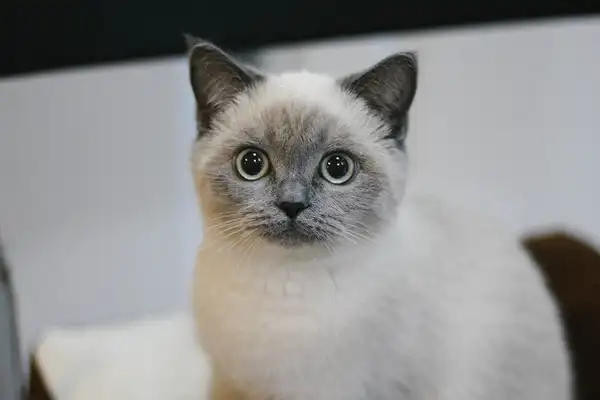
Felidae · CAT
Russian Blue
🌟 You may have met one

Widely believed to be the inspiration for Tom in Tom and Jerry — silver-blue fur, green eyes, and lean physique all match. In Europe the Russian Blue was once the province of Russian royalty; Tsar Nicholas II kept one.
Overview
The Russian Blue (俄罗斯蓝猫) is a medium-sized cat breed weighing 3–5.5 kg with a 15–20-year lifespan. A short, dense silver-blue coat and vivid green eyes make for a classic silhouette. Quiet and sensitive, deeply loyal to family but wary of strangers.
Feeding
Prone to weight gain — feed measured portions of a low-fat, high-protein diet.
Exercise
Moderate activity needs; enjoys structured play with familiar family.
Grooming
Short coat is easy to maintain — brush once a week. Sheds little, and may be gentler on allergy-sensitive owners.
Health
Overall an exceptionally healthy and long-lived breed. Watch for obesity and urinary issues.
Gallery
A closer look at the Russian Blue
From origins and personality to daily care and health — helping you judge whether this little companion is really the one for you.
Origin & history
From the port of Arkhangelsk to Victorian salons
Origin & history
From the port of Arkhangelsk to Victorian salons
The Russian Blue is traditionally said to have originated in the northern Russian port of Arkhangelsk on the White Sea, and early literature actually calls the breed the Archangel Cat. In the mid-19th century British sailors brought these blue-and-green-eyed shorthairs back to England, and they were first shown in 1875 at the Crystal Palace cat show in London, competing alongside other blue shorthairs like the Chartreux and British Blue Shorthair.
The GCCF didn't formally recognize the Russian Blue as a distinct breed until 1912. The two World Wars nearly wiped the breed out in Europe — during and after WWII British, Swedish, and American breeders outcrossed with Siamese, British Shorthairs, and Blue Point Siamese to preserve the bloodline, which is why some post-war Russian Blues have a more Siamese-like elongated bone structure.
In the 1950s British and Scandinavian breeders collaborated to restore the "original type": a short but not stubby nose, green (not yellow) eyes, and a lean rather than cobby body. Modern CFA and TICA standards use this restored type as the benchmark.
Looks & breed standard
A double-layered short coat in silver-blue with vivid almond eyes
Looks & breed standard
A double-layered short coat in silver-blue with vivid almond eyes
Three traits define the Russian Blue: **an even, unspotted blue-gray coat, brilliant green eyes, and a short, dense, standing double coat.**
The coat texture is the breed's most distinctive feature — short, dense, double-layered, with silver tipping at the ends, so it looks like a soft mist has settled over the cat from any angle. Breeders describe it as seal-like or plush. Unlike the tight coat of a British Shorthair, this feels like a short-pile, springy velvet blanket.
Eyes are yellow at birth, start turning green at around four months, and reach their most vivid green in adulthood. The CFA standard demands "vivid green" — any yellow tone is a fault.
The body is Foreign type: slim, elegant, fine-boned. Adult males weigh 4-5.5 kg, females 3-4 kg.
Personality in depth
Discreet and devoted: gentle with family, hidden from strangers
Personality in depth
Discreet and devoted: gentle with family, hidden from strangers
The Russian Blue is the introverted archetype of the domestic cat. Deeply devoted and gentle with its own people, but nearly invisible to strangers — when the doorbell rings and guests arrive, it will vanish into a closet or under the bed and observe for half an hour before emerging. This isn't coldness; it's deep caution and selective intimacy.
Both CFA and GCCF describe the breed as "shy but affectionate." Once trust is built, a Russian Blue will greet you at the door like a small dog every day and maintain a stable emotional bond over 15-20 years (this breed often reaches 20+).
Their voice is quiet and gentle, nothing like the yelling of a Siamese. Russian Blues are ideal companions for singles, seniors, desk-bound writers, and quiet child-free households.
Daily care
Low-maintenance shorthair + a stable environment first
Daily care
Low-maintenance shorthair + a stable environment first
The Russian Blue is one of the easiest domestic cats to care for day to day: the short double coat rarely mats, weekly brushing is enough, and shedding is on the low side for a shorthair. Baths aren't needed unless a specific area gets dirty.
Activity needs are moderate. Russian Blues prefer directed play (laser pointers, wand toys, Da Bird) over solo entertainment. Twenty to thirty minutes of high-quality interaction daily keeps them mentally and physically healthy.
**Environmental stability is central to good care.** Moving house, renovation, sudden new pets, or long absences will all noticeably affect a Russian Blue's mood and appetite. If you travel, it's better to have a familiar friend come stay in your home than to board it in unfamiliar surroundings.
They aren't picky about food, but portion control matters — this is a weight-prone breed. Water intake tends to be low; use a pet fountain and add wet food.
Health & lifespan
A leading candidate for domestic-cat longevity
Health & lifespan
A leading candidate for domestic-cat longevity
The Russian Blue is one of the longest-lived domestic breeds — 15-20 years is common with good care, and individuals reaching 25 have made it into the Guinness records. This ties back to the breed's remarkable lack of hereditary problems: no PKD or HCM mutation hotspots, no family clusters like those seen in Maine Coons or Ragdolls.
The main things to watch:
1. **Obesity** — moderate exercise, poor short-coat insulation, and hearty appetite mean weight gain is the top mid-life threat. Control calories and add interactive play.
2. **FLUTD (feline lower urinary tract disease)** — low water intake, more common in males. Fountains and wet food substantially reduce risk.
3. **Dental disease** — a general problem in shorthairs; annual professional dental cleaning plus daily brushing is recommended.
Allergen advantage: Russian Blues secrete less Fel d 1 in their sebum than the average domestic cat (Butt et al. 2012 J Allergy Clin Immunol), making them a relatively better option for allergy-sensitive owners — though they are not truly allergen-free.
Fit for your space
Indoor + quiet home + long-term companionship
Fit for your space
Indoor + quiet home + long-term companionship
The Russian Blue is strictly an indoor cat — never let it roam. Its true vigilance level is high, and a novel environment can leave it refusing food and water for a long time, risking dehydration and stress-related illness.
Space demands are modest — a 40 m² one-bedroom apartment is entirely adequate. But it is sensitive to sound: nearby construction, frequent parties, and loud voices will send it into hiding. The ideal household is quiet-voiced, with steady routines — singles or child-free couples fit best.
A Russian Blue can share a home with another gentle cat or dog, but introductions must be extremely slow — a 7-14 day graduated protocol, starting with scent exchange and progressing to face-to-face meetings. Russian Blues carry unpleasant first impressions for a long time; one bad first meeting can create lifelong avoidance.
References
This is an educational overview — for specific health and care advice, please consult the authoritative sources below and your veterinarian.
- CFA — Russian Blue Breed Standard官方猫协会
- TICA — Russian Blue Breed Standard国际猫协标准
- GCCF — Russian Blue Standard of Points英国猫协标准
- Russian Blue Fanciers Society (UK)全国单猫种俱乐部
- Butt et al. 2012 J Allergy Clin Immunol — Fel d 1 in cat breeds学术研究
- ICatCare — Russian Blue breed profile综合科普
- Bontempo 2005 Compend Contin Educ Vet — Feline nutrition and longevity学术研究
- Guinness World Records — Oldest cat records记录档案
- The Cat Fanciers' Association — Russian Blue breed article综合科普